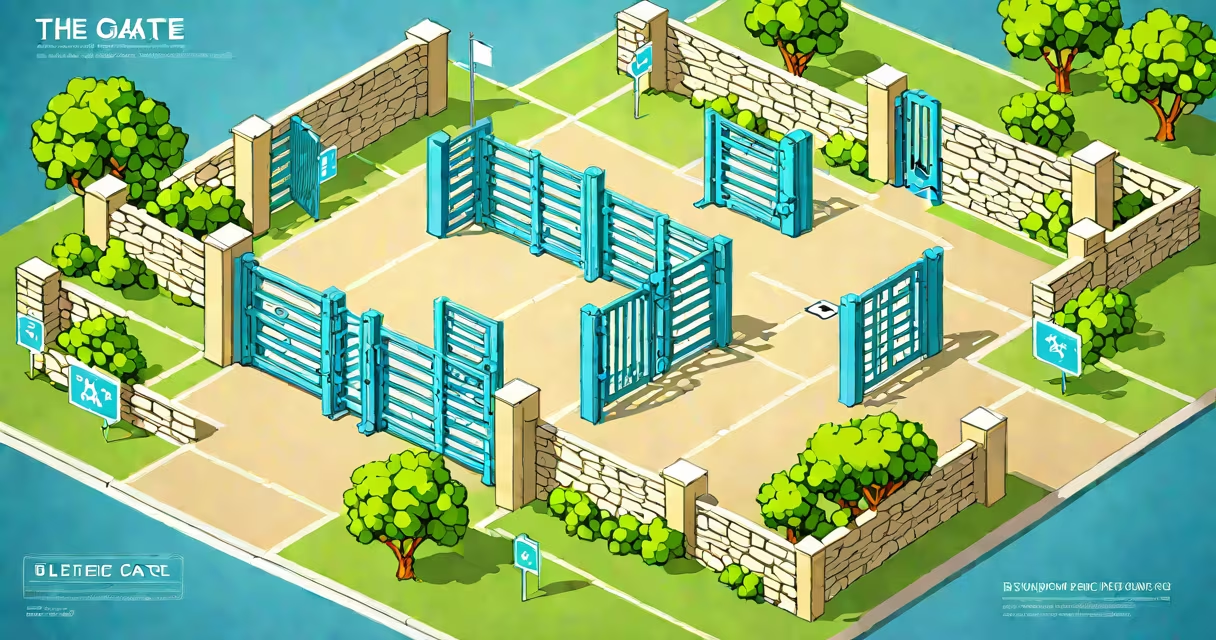
rtmc the gate dltc is a phased project management system that divides development into distinct stages separated by formal decision points called gates. Each gate requires approval before advancing to the next phase, ensuring alignment between technical progress and strategic objectives.
This structure originated in industrial and engineering sectors to manage complex product development under high risk and cost. It enforces accountability by requiring documented evidence of feasibility, resource readiness, and market fit at each stage. The acronym RTMC stands for Requirements, Technical, Management, and Control-core elements validated at each gate. DLC stands for Design, Launch, and Control, representing the final execution phases.
Unlike ad-hoc project methods, rtmc the gate dltc mandates predefined criteria for passing each gate. Teams must demonstrate compliance with technical specifications, budget constraints, timeline adherence, and stakeholder alignment. Without approval, projects halt or return to prior phases for revision. This prevents costly failures late in development cycles.
The system operates in four primary phases: Concept, Development, Validation, and Production. Each phase ends with a gate review where leadership assesses whether to proceed, pause, or terminate the project.
At the Concept gate, teams submit a business case, initial requirements, and risk assessment. Approval triggers funding allocation and team formation. The Development phase focuses on prototyping, testing, and iterative refinement. Before entering Validation, teams must deliver a working prototype and confirm it meets design specifications.
Validation includes real-world testing, regulatory compliance checks, and pilot deployments. Only after successful validation does the project enter Production. Launch is not automatic-it requires final sign-off from finance, operations, and legal teams.
Each gate uses a standardized checklist. For example, the Development gate requires proof of functional testing, safety certifications, and supply chain readiness. Failure to meet thresholds results in a "stop" decision, not a delay. Projects cannot bypass gates even under time pressure.
The structure is built around five core elements: phase boundaries, gate criteria, decision authority, documentation standards, and feedback loops.
Phase boundaries define clear start and end conditions. A phase ends only when all gate criteria are met. Criteria include technical performance metrics, cost variance limits, and customer acceptance scores. For instance, a medical device project must achieve 99.7% accuracy in clinical trials before advancing past the Validation gate.
| Phase | Duration (avg) | Gate Decision Criteria | Approval Authority |
|---|---|---|---|
| Concept | 2-4 weeks | Market need confirmed, ROI > 15%, risk profile acceptable | Executive Steering Committee |
| Development | 6-12 months | Prototype passes 95% of test cases, cost within 10% of forecast | Engineering & Product Leadership |
| Validation | 3-6 months | Regulatory clearance obtained, pilot success rate ≥ 90% | Compliance Officer + Customer Advisory Board |
| Production | 12+ months | Manufacturing capacity verified, distribution plan approved | Operations Director + Finance Lead |
Documentation is mandatory at every gate. Teams submit reports detailing progress, deviations, and corrective actions. These records serve as audit trails and support future improvements. Internal audits occur quarterly to ensure consistency across projects.
A common misunderstanding is that rtmc the gate dltc is rigid. In practice, it allows for adaptive iteration within phases. Teams may rework designs multiple times during Development as long as they stay within budget and timeline bounds. However, changing the phase boundary requires formal change request approval.
rtmc the gate dltc is often mistaken for waterfall methodology. While both use sequential phases, waterfall lacks formal gates. Waterfall assumes all requirements are known upfront and proceeds linearly-even if new risks emerge mid-cycle. rtmc the gate dltc stops work when risks exceed thresholds.
Another misconception is that gates are purely bureaucratic hurdles. In reality, they are decision-making tools. A gate failure doesn't indicate poor performance-it signals incomplete information. For example, a failed Validation gate due to low pilot adoption rates prompts root cause analysis, not blame.
Some assume rtmc the gate dltc applies only to hardware. It's widely used in software, pharmaceuticals, and infrastructure. A semiconductor company used it to launch a new chip line. After failing the Development gate due to yield issues below 70%, the team redesigned the fabrication process and passed on the second attempt.
One non-obvious fact: the most frequent reason for gate rejection is missing stakeholder alignment-not technical failure. A 2021 study by the Project Management Institute found that 63% of failed gates involved unmet expectations from end-users or regulators. This highlights the importance of early engagement in the Concept phase.
In 2019, a biotech firm developed a gene therapy treatment using rtmc the gate dltc. Phase 1 (Concept) took 3 months. They secured FDA pre-approval and identified 120 eligible patients. Gate 1 approval came after presenting clinical trial feasibility and investor commitment.
Phase 2 (Development) lasted 14 months. The team created a viral vector delivery system and tested it in animal models. At the Development gate, they submitted 1,200 pages of lab data, including toxicity profiles and dosing stability. Approval required a 95% success rate in three separate trials.
Phase 3 (Validation) ran for 18 months. Human trials began with 15 patients. Two experienced adverse reactions, leading to a temporary hold. The team revised the protocol, added monitoring steps, and resubmitted. After achieving 92% positive response rate across 45 patients, the gate passed.
Phase 4 (Production) began with manufacturing scale-up. The facility had to pass ISO 13485 certification. Final approval came after third-party audits confirmed sterility and batch consistency. The therapy launched in Q2 2023.
Without rtmc the gate dltc, the project would have advanced despite safety concerns. The structure caught issues early and prevented patient harm.
rtmc the gate dltc reduces project failure rates by enforcing discipline. According to a 2022 McKinsey report, organizations using phased gate systems saw a 40% drop in cost overruns compared to those using agile-only models. The structure balances speed with control.
It also improves cross-functional coordination. Engineers, marketers, and finance teams engage at specific gates, reducing misalignment. A study by Harvard Business Review showed that teams using rtmc the gate dltc reported 30% higher satisfaction with project outcomes.
For leaders, it provides visibility into project health. A dashboard tracking gate completion rates helps identify bottlenecks. One automotive supplier reduced cycle time by 22% after implementing weekly gate status reviews.
When applied correctly, rtmc the gate dltc is not a constraint-it's a safeguard. It prevents wasted effort, protects budgets, and increases the likelihood of delivering viable products.
Understanding rtmc the gate dltc begins with recognizing it as a decision architecture, not just a scheduling tool. It structures uncertainty into manageable steps. Teams don't guess whether to continue-they base decisions on evidence.