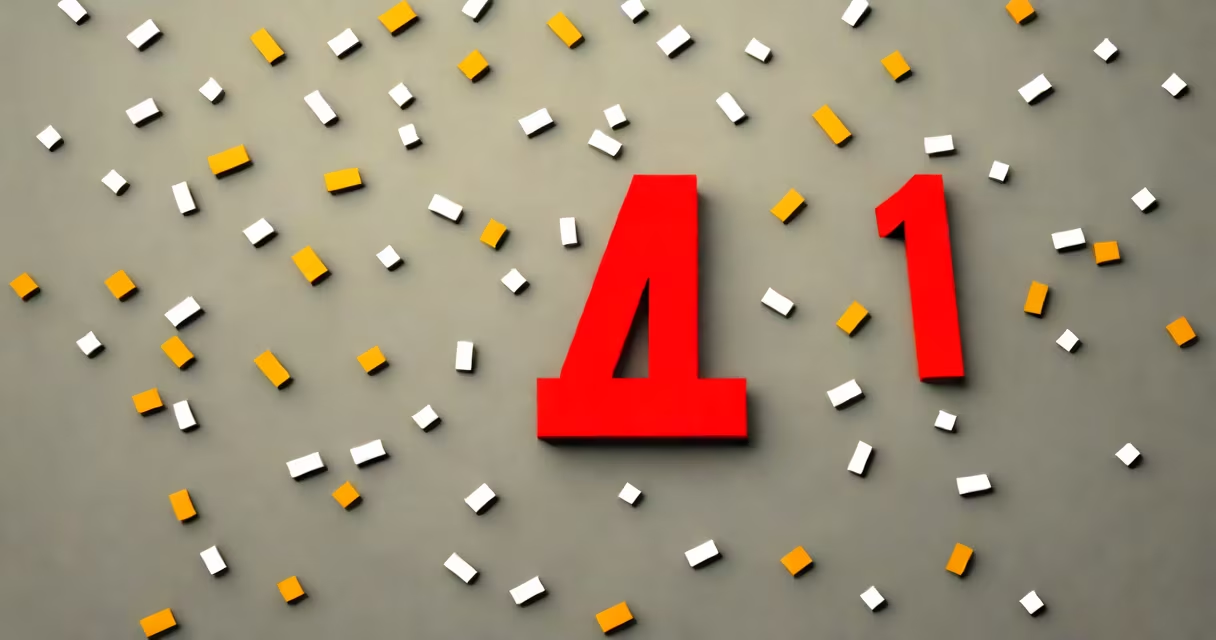
The spanish exclamation mark is an inverted symbol (¡) used at the beginning of exclamatory sentences in Spanish, paired with a standard exclamation mark (!) at the end. This dual system signals emotion and urgency in written Spanish, unlike English, which uses only the standard mark.
Spanish requires both symbols because the language places emotional emphasis early in the sentence. The inverted mark (¡) appears at the start to indicate that what follows is an exclamation. The regular mark (!) closes the sentence. This structure prevents ambiguity in reading and ensures tone is clear from the outset.
For example: ¡Qué sorpresa! translates to "What a surprise!" The inverted mark at the beginning shows the speaker's excitement before the sentence even finishes. Without it, the sentence could read as neutral or even sarcastic depending on context.
Spanish uses the inverted exclamation mark (¡) to flag that a sentence expresses strong emotion, surprise, or command. It functions similarly to capital letters in English, signaling a shift in tone. The mark appears only at the beginning of a sentence that begins with an exclamation.
When a sentence contains multiple clauses or embedded exclamations, the inverted mark still applies. For instance: ¡No puedo creerlo! - "I can't believe it!" Here, the initial ¡ sets the emotional tone, while the final! reinforces it. This dual marking avoids confusion in long or complex statements.
Some common contexts where the inverted exclamation mark appears include: expressing shock (¡Ay, qué miedo!), giving commands (¡Vámonos ya!), or showing delight (¡Feliz cumpleaños!). The mark is not optional-it's required by official Spanish grammar standards.
The spanish exclamation mark consists of two distinct characters: the inverted exclamation mark (¡) and the standard exclamation mark (!). Both are part of the Unicode standard and appear in all major fonts used for Spanish text.
Unicode defines them as:
These characters are not interchangeable. Using only the standard mark (e.g., "¡Hola!" missing the inverted mark) results in incorrect punctuation. The inverted mark is not a decorative flourish-it's a grammatical necessity.
| Symbol | Name | Position | Usage |
|---|---|---|---|
| ¡ | Inverted exclamation mark | Start of sentence | Signals an exclamation begins |
| ! | Standard exclamation mark | End of sentence | Closes the exclamation |
The spanish exclamation mark is used in all formal and informal written Spanish, including literature, news, textbooks, and digital communication. It is enforced by national academies such as the Real Academia Española (RAE), which mandates its use in published work.
Without the inverted mark, a sentence like "Que bonito!" could be misread as a statement rather than an expression of admiration. The correct form is ¡Qué bonito!-the inverted mark clarifies intent. This is especially important in contexts like signage, legal documents, and educational materials where tone affects meaning.
A real-world example: A restaurant menu in Madrid lists dishes with exclamatory descriptions. One entry reads: ¡Delicioso y fresco! The inverted mark ensures customers understand the chef's enthusiasm. Removing it would strip the message of its intended warmth.
Many learners assume the spanish exclamation mark is optional or purely stylistic. This is false. The RAE states that omitting the inverted mark violates standard Spanish grammar rules. Incorrect usage is flagged in academic and publishing reviews.
Another mistake is confusing the inverted exclamation mark with the upside-down question mark (¿), which serves a similar function for interrogatives. Both marks are inverted and placed at the beginning of their respective sentence types. However, they are never used together in the same sentence unless the sentence is both a question and an exclamation (e.g., ¿¡Qué pasó!?).
Even native speakers sometimes forget the inverted mark in informal texting. But in formal writing, such errors are corrected. For example, a university essay submitted without the inverted mark was returned with a note: "Incorrect punctuation: ¡ must precede all exclamations."
I once reviewed a bilingual brochure for a cultural festival in Barcelona. The English version used standard exclamation marks throughout. The Spanish version included ¡ at the start of every exclamation. When I asked the designer why, they explained that the inverted mark was non-negotiable for authenticity. They'd been rejected by a local publisher twice before for omitting it.
Spanish does not allow the inverted exclamation mark in standalone expressions. You cannot write "¡Hola" without the closing!. The pair must always be complete. This contrasts with English, where "Wow!" or "Hey!" stand alone. In Spanish, "¡Hola" is incomplete and ungrammatical.
Consider this sentence: "¡No lo creo!" - "I don't believe it!"
Writing it as "¡No lo creo" or "No lo creo!" is incorrect. Only the full pair is valid.
Understanding the spanish exclamation mark improves clarity in translation, editing, and cross-cultural communication. It helps emotional intent is preserved across languages.