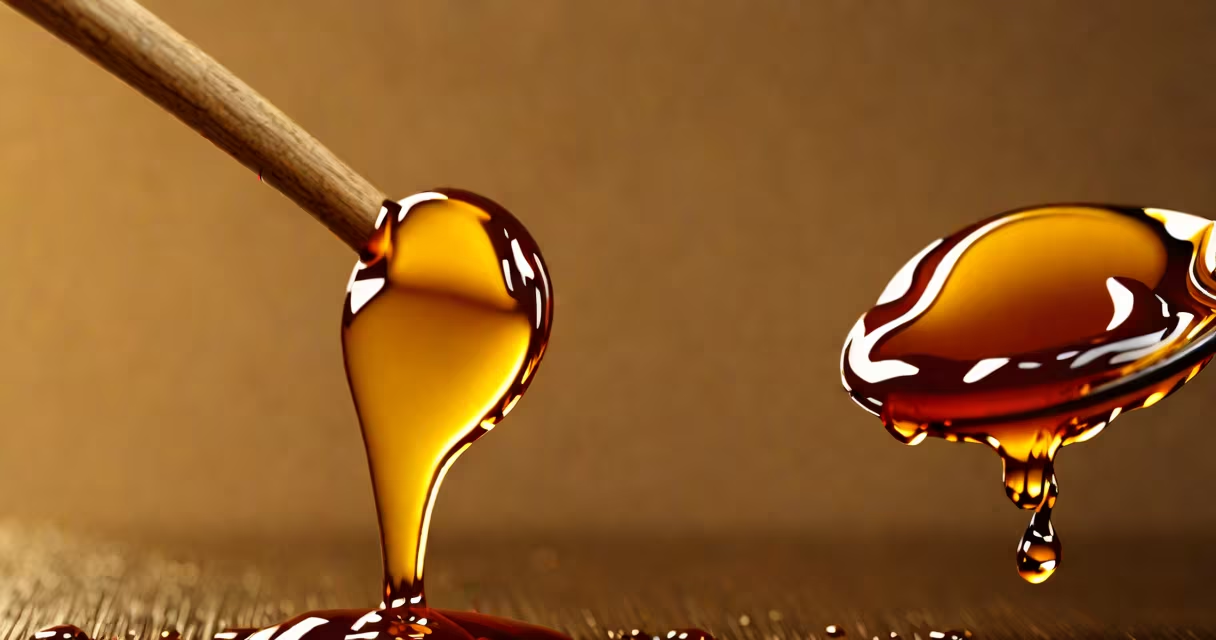
The Spanish word for honey is "miel." It refers to the sweet, viscous substance produced by bees, used in food, medicine, and cosmetics across Spanish-speaking regions.
Miel appears in both formal and casual contexts. In recipes, it's listed as "miel de abeja" to distinguish it from artificial syrups. In daily conversation, people refer to it simply as "miel," especially when discussing flavor or natural sweetness.
Spanish speakers in Mexico, Spain, Colombia, and Argentina all use "miel" consistently. Regional pronunciation varies slightly-Mexican Spanish often rolls the 'l' lightly, while Andalusian Spanish may drop the final 'l' sound-but the spelling remains unchanged.
In kitchens, "miel" is a common ingredient. A typical recipe from a Mexican cookbook calls for "dos cucharadas de miel" (two tablespoons of honey) to sweeten aguas frescas. In Spain, "miel" is added to manchego cheese or drizzled over yogurt for breakfast.
Commercial products also rely on the term. Brands like "Miels del Sur" sell honey in 500g jars labeled "miel cruda," emphasizing its unprocessed state. The word appears on packaging, advertisements, and even in branding for beekeeping cooperatives.
When describing taste, Spaniards say "sabe a miel" (tastes like honey). Children in Latin America learn the word early-parents often use it in lullabies, such as "Duerme, duerme, miel en la boca" (Sleep, sleep, honey in your mouth).
While "miel" is the base term, context adds specificity. Common combinations include:
| Term | Meaning | Region |
|---|---|---|
| miel de abeja | honey from bees (distinguishes natural vs. synthetic) | Widespread |
| miel cruda | raw honey, unfiltered and unpasteurized | Spain, Mexico |
| miel de eucalipto | eucalyptus honey, known for its medicinal properties | Spain, Chile |
| miel de jara | heather honey, dark and strong-flavored | Andalusia, southern Spain |
These compound terms show how "miel" functions as a root word. Adding a plant name or processing method creates precise descriptions for consumers and producers alike.
Non-native speakers often mistake "miel" for "miel de palma" (palm honey), which is a different product. Palm honey comes from fermented sap of palm trees and is consumed in parts of Central America and the Caribbean. It's thicker, darker, and less sweet than bee honey.
Another error is confusing "miel" with "azúcar" (sugar). While both are sweeteners, "azúcar" refers to granulated sucrose, not the viscous liquid form. In medical contexts, doctors specify "miel" when recommending natural remedies for sore throats-sugar would be ineffective in that role.
A lesser-known fact: "miel" appears in Spanish proverbs. One from Andalusia says, "El que tiene miel en la boca no necesita hablar" (He who has honey in his mouth doesn't need to speak), meaning someone who speaks kindly needs no further justification. This reflects the cultural weight of the word beyond mere nutrition.
I once stayed with a family in Oaxaca during a summer festival. Every morning, the grandmother served atole-a corn-based drink-with a splash of "miel de abeja." She insisted it was better than sugar because it preserved energy longer. When I asked how she knew, she said, "La miel no engorda como el azúcar, pero da fuerza." (Honey doesn't make you gain weight like sugar, but gives strength.)
That moment showed me how deeply "miel" is woven into daily life-not just as food, but as a symbol of health and tradition.
Understanding "miel" becomes easier when connected to other Spanish words. For example, "dulce" means sweet, and "endulzar" means to sweeten. These share roots with "miel" through Latin *mel* (honey), which also gave rise to the English word "mellifluous."
Knowing "miel" isn't just about translation-it's about understanding how people live, eat, and express care through shared tastes.