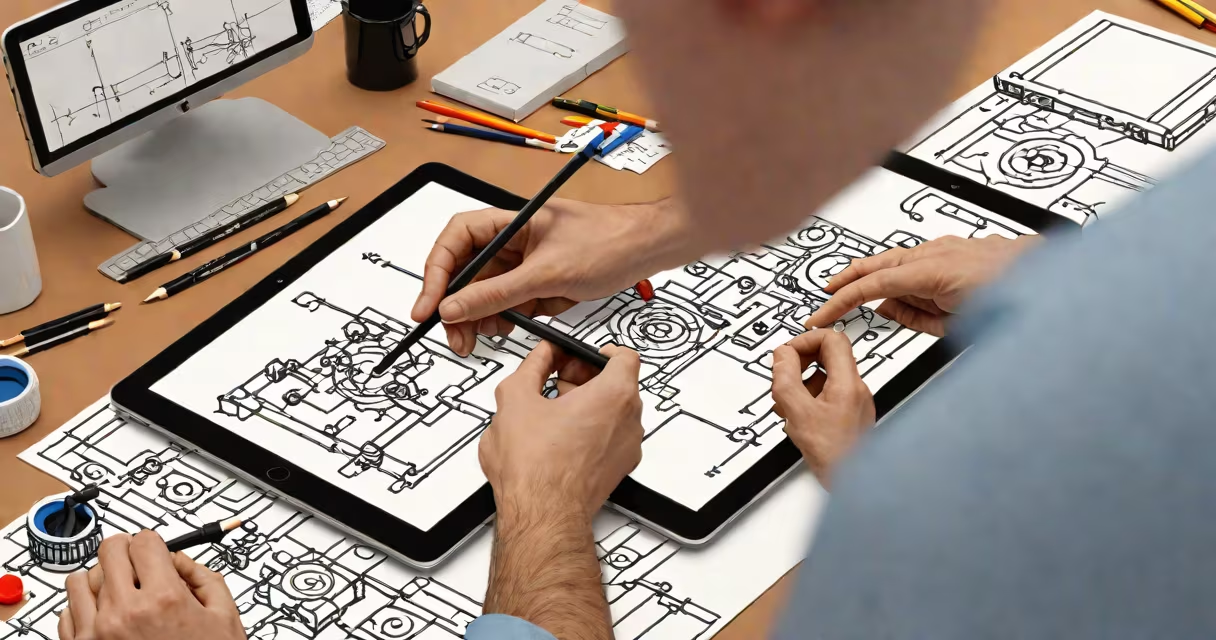
A speed draw game is a timed art challenge where participants create a drawing within a set time limit-typically 30 seconds to 5 minutes-to improve speed, gesture control, and visual memory. The goal is not perfection but rapid execution under pressure, simulating real-world sketching conditions.
These games are commonly played solo or in groups via apps, livestreams, or social media challenges. They emphasize process over product, rewarding consistency and adaptability rather than polished results. A single session may involve drawing a random prompt like "a cat wearing sunglasses" or "a robot riding a unicycle."
Professional illustrators, animators, and concept artists use speed draw games to maintain hand-eye coordination and reduce hesitation. The format originated in traditional animation studios during the 1930s, where artists practiced quick figure sketches to develop fluid motion and timing.
Participants choose a time limit-commonly 30 seconds, 1 minute, or 3 minutes-and select a subject. The timer starts, and they must begin drawing immediately. No erasing or pausing is allowed during the session. Once time ends, the drawing stops, even if incomplete.
For example, a user sets a 60-second timer and draws "a dragon flying over a city at sunset." The result is a rough, gestural sketch capturing basic shapes, silhouettes, and key features-like wings, flames, and skyline outlines-without detail. The focus is on capturing the idea quickly.
Afterward, the artist reviews their work for accuracy, flow, and clarity. Over time, repeated sessions build muscle memory and faster decision-making. Many platforms track progress across days or weeks, showing improvement in stroke economy and form recognition.
Speed draw games vary by medium, duration, and structure. Common formats include:
| Type | Duration | Common Use | Tools |
|---|---|---|---|
| Quick Gesture | 10-30 seconds | Warm-ups, daily practice | Pencil, paper or stylus |
| Character Focus | 1-3 minutes | Animation, manga, character design | Digital tablet, app |
| Scene Challenge | 3-5 minutes | Environmental storytelling, concept art | Procreate, Photoshop, iPad |
Some games introduce constraints: drawing only with one hand, using a single color, or avoiding lines entirely (using only shapes). These variations increase difficulty and encourage creative problem-solving.
Platforms like SpeedDraw.org and DoodleBuddy host live events with global participants. Weekly prompts are posted, and users submit entries via social media using hashtags like #speeddrawchallenge.
Art schools and animation programs integrate speed draw games into curricula. According to the Animation Guild Education Committee, consistent timed drawing improves spatial awareness and reduces mental blocks during production. Students who practice daily show 40% faster response times in character layout tasks.
Many freelance artists use speed draw games to stay sharp between projects. One animator I observed during a 2023 convention demo completed 120 drawings in 4 hours using 30-second intervals. He reported that his ability to visualize complex poses improved after six weeks of daily practice.
These games also appear in online communities like Reddit's r/SpeedDrawing and Discord servers dedicated to digital art. Members share recordings of their sessions, critique each other's timing and composition, and participate in themed months-such as "all animals" or "cyberpunk cities."
Many assume speed draw games are about producing finished artwork. This is incorrect. The output is a raw sketch meant to be discarded after review. The value lies in the act of creation under constraint, not in the final image.
Another error is equating speed with quality. A 30-second sketch of a running horse may lack anatomy precision, but it captures motion and weight shift effectively. As noted in *The Artist's Way* by Julia Cameron, "The first mark is always the most honest." Speed draw games preserve that honesty by eliminating overthinking.
Some confuse speed draw games with doodling. While both involve loose marks, doodling lacks structure and time limits. Doodling is freeform and exploratory; speed draw games are structured, goal-oriented exercises designed to train specific skills.
Set a timer for 90 seconds. Prompt: "a ninja sneaking through a bamboo forest at night."
The result is a simplified, expressive sketch. It doesn't resemble a professional illustration-but it demonstrates understanding of pose, environment, and mood under pressure.
After reviewing, the artist notes: "I missed the left arm's position. Next time, I'll focus on centerline stability." This feedback loop is central to growth.
Begin with 30-second sessions. Use a phone timer or apps like Draw & Guess or Sketchy. Choose simple subjects: animals, faces, objects. Avoid complex scenes early on.
Consistency matters more than duration. Practice daily for 10 minutes. Track progress weekly. Over time, your brain learns to anticipate forms and movements, reducing hesitation.
Speed draw game is not about winning. It's about training the eye, hand, and mind to respond instantly. With regular practice, artists gain confidence, reduce fear of blank pages, and develop a stronger visual vocabulary.