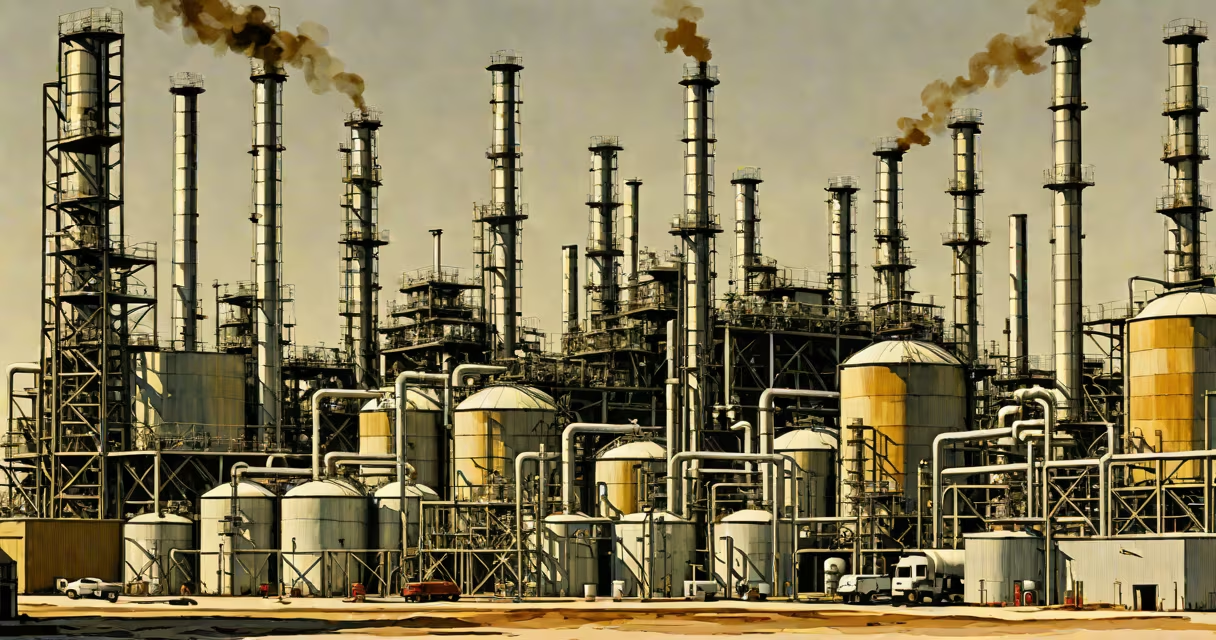
A tema oil refinery is a large industrial facility that transforms crude oil into refined petroleum products such as gasoline, diesel, jet fuel, and petrochemical feedstocks using thermal and catalytic processes.
These refineries operate on a massive scale, processing hundreds of thousands of barrels of crude oil per day. They are central nodes in global energy supply chains, turning raw hydrocarbons extracted from underground reservoirs into the fuels that power vehicles, aircraft, and industrial machinery.
The term "tema oil refinery" refers specifically to facilities located near the TEMA region in Ghana, which includes the port city of Tema. This area hosts one of West Africa's most significant refining hubs, developed as part of national efforts to reduce dependence on imported refined fuels and support regional energy security.
Crude oil enters a tema oil refinery as a complex mixture of hydrocarbons with varying boiling points. The first stage is atmospheric distillation, where heated crude separates into fractions based on volatility. Lighter components like naphtha rise to the top, while heavier residues remain at the bottom.
After distillation, intermediate products undergo further processing. Catalytic cracking breaks down heavy molecules into lighter ones suitable for gasoline. Hydrocracking uses hydrogen and catalysts to improve yield and quality. Alkylation combines small molecules into high-octane components for premium fuels.
Final steps include treating products to remove sulfur and other impurities. Hydrotreating removes sulfur compounds to meet environmental standards like those set by the International Maritime Organization (IMO) and the U.S. Environmental Protection Agency (EPA).
Each unit in a tema oil refinery performs a distinct function. The primary units include:
| Unit Type | Function | Output Example |
|---|---|---|
| Atmospheric Distillation Unit (ADU) | Separates crude into base streams using heat | Naphtha, kerosene, gas oil |
| Catalytic Cracker (FCC) | Breaks heavy molecules into lighter fuels | High-octane gasoline, propylene |
| Hydrocracker | Uses hydrogen and catalysts to upgrade heavy oils | Diesel, jet fuel |
| Sulfur Recovery Unit (SRU) | Removes hydrogen sulfide and recovers elemental sulfur | Elemental sulfur for fertilizer production |
Modern tema oil refineries integrate these systems with advanced control systems that monitor temperature, pressure, and flow rates in real time. This ensures consistent product quality and reduces operational risk.
Refineries like the one in Tema contribute to national economies. Ghana's Tema Refinery, operated by the state-owned Ghana National Petroleum Corporation (GNPC), processes approximately 120,000 barrels per day of domestic and imported crude.
This capacity allows Ghana to produce over 80% of its domestic fuel demand locally, reducing reliance on imports and stabilizing fuel prices during global market fluctuations. During the 2022 energy crisis, local refining helped buffer price spikes in West African markets.
Refineries also generate downstream industries. Byproducts like ethylene and propylene serve as feedstock for plastics, synthetic rubber, and textiles. A single refinery can support dozens of chemical plants within a 50-kilometer radius.
Many assume that all oil refineries are identical. In reality, their design depends heavily on crude oil composition. Heavy crude from Venezuela requires different processing than light crude from North Dakota. A tema oil refinery optimized for West African crude may struggle with high-sulfur feedstocks without retrofitting.
Another misconception is that refining is purely mechanical. In fact, chemistry drives efficiency. Catalysts in cracking units increase gasoline yield by up to 30% compared to thermal cracking alone. The choice of catalyst affects both output and emissions.
One non-obvious fact: the largest tema oil refinery in Ghana was originally designed in the 1960s by a Soviet engineering firm. Its original configuration included outdated heat exchangers and low-efficiency distillation columns. Modern upgrades have increased throughput by 45% since 2015, demonstrating that legacy infrastructure can be revitalized with targeted investment.
In 2023, the Tema Refinery processed 4.3 million barrels of crude oil. Of that volume:
During a maintenance outage in Q2 2023, the refinery temporarily reduced output to 70,000 barrels/day. This caused a 14% spike in fuel prices across Accra and Kumasi due to supply constraints. The incident highlighted the critical role of stable refining capacity in national energy resilience.
I observed the refinery's flare stack during a site visit in 2022. Flames burned continuously during a startup phase, releasing visible black smoke. An engineer explained that this was normal during warm-up cycles but that emissions were monitored hourly to comply with Ghana's Environmental Protection Agency (EPA) regulations.
A tema oil refinery is not a fuel distribution terminal. While terminals store and dispatch refined products, refineries create them. Confusing the two leads to misjudging infrastructure needs. For example, building a new terminal won't solve low gasoline availability if the refinery cannot process enough crude.
It is also not a petrochemical plant. Although refineries produce feedstocks for plastics and fertilizers, they do not manufacture finished goods. That task belongs to separate chemical facilities downstream.
Finally, a tema oil refinery is not synonymous with a country's entire oil sector. The sector includes upstream drilling, midstream pipelines, and downstream marketing. A refinery is just one component of a larger system.
Understanding the role of a tema oil refinery clarifies how energy flows. These facilities convert raw material into essential resources, enabling transportation, manufacturing, and daily life.
For investors seeking exposure to refining capacity, best oil refinery stocks offer diversified access to global refining assets, including those in emerging markets like Ghana.
Refining remains a core pillar of modern energy systems. The tema oil refinery exemplifies how localized infrastructure supports regional stability and economic development.