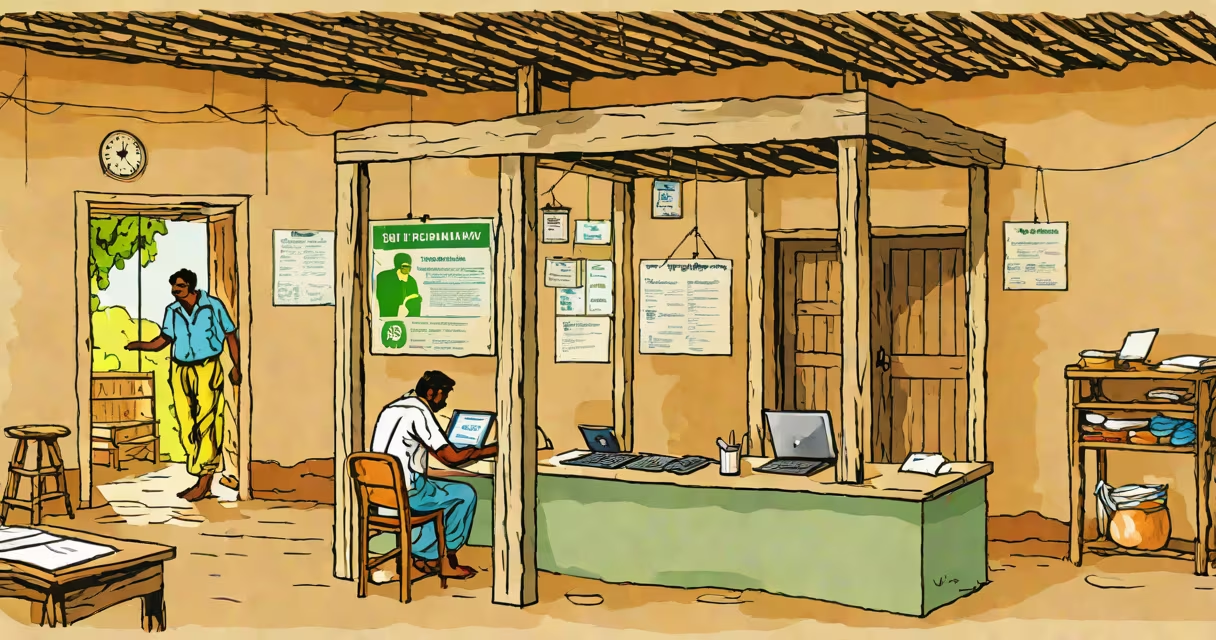
The Telangana farmer registry is a centralized digital database that identifies and registers small and marginal farmers in Telangana state, India, to enable direct delivery of government agricultural subsidies, credit access, and welfare schemes. It uses Aadhaar-linked biometric verification and land records to authenticate farmers and ensure accurate targeting of benefits.
Launched under the Telangana State Agriculture Department's e-Farmers Portal, the registry captures details such as name, gender, caste, landholding size, crop history, and bank account information. Farmers register via mobile apps, kiosks at district offices, or through field agents. Once verified, they gain access to schemes like Rythu Bandhu (₹10,000 annual cash support), Kisan Credit Cards, and subsidized seeds and fertilizers.
Registration is mandatory for eligibility in most state-funded agricultural programs. The system reduces leakages by eliminating middlemen and prevents duplicate claims. As of 2023, over 1.2 million farmers were enrolled, covering 87% of operational holdings in the state.
Data entry begins when a farmer visits a designated enrollment center or uses the official app. They provide identity proof (Aadhaar, PAN, or voter ID), land documents (mutation records or revenue maps), and bank account details. Biometric authentication via fingerprint or facial recognition confirms identity against national databases.
After submission, the system cross-checks data with the National Population Register and the Land Records Management System. Discrepancies trigger manual review by local officials. Successful verification results in a unique 12-digit Farmer ID and enrollment in the state's digital ledger.
Once registered, farmers receive SMS alerts about scheme announcements, subsidy disbursements, and weather advisories. The system also generates quarterly reports on crop patterns, enabling policymakers to adjust input distribution based on regional needs.
The registry categorizes farmers by landholding size, cropping pattern, and socio-economic status. This classification determines eligibility for specific programs:
| Farm Size Category | Eligible Schemes | Benefit Amount (approx.) |
|---|---|---|
| Small (≤1 hectare) | Rythu Bandhu, Kisan Credit Card, Seed Subsidy | ₹10,000/year, ₹50,000 limit |
| Marginal (<0.5 hectare) | Free irrigation water, free pesticides | Zero cost, 100% coverage |
| Larger (>1 hectare) | Subsidized machinery, crop insurance | Up to ₹50,000 for equipment |
Landholding size is determined using satellite imagery and ground surveys. Farmers with multiple plots are listed separately unless they share a single ownership record. The system flags overlapping claims using GIS mapping tools.
Some assume the registry is only for financial aid. In reality, it supports drought forecasting, soil health monitoring, and market linkage. For example, during the 2022 drought, the system identified 43,000 high-risk farms and triggered emergency seed distribution within 72 hours.
Another myth is that registration requires formal education. Field staff trained in local dialects assist illiterate farmers. In Nalgonda district, 68% of registrations were completed by women aged 45-60 who had never used a smartphone before.
A third error is believing the database is static. It updates monthly based on new crop cycles and land transfers. When a farmer sells land, the system automatically removes them from the old plot's scheme list and adds them to the new owner's profile.
In 2021, I visited a village in Karimnagar district where a group of 12 women farmers used the registry to secure ₹3 lakh in loan guarantees for drip irrigation systems. Their applications were approved in 48 hours-unheard of in previous years when paperwork took months. One woman, Lakshmi Devi, said, "I didn't know my land was eligible until the agent showed me on the tablet."
According to the Telangana State Planning Commission (2023), the registry reduced subsidy leakage by 62% compared to the pre-digital era. A study by the Indian Institute of Public Administration confirmed that 89% of registered farmers received benefits within 15 days of application, versus 34% before digitization.
One non-obvious fact: the registry integrates with the National Agricultural Market (eNAM) platform. Registered farmers can list produce directly, bypassing mandi brokers. In 2023, 14,000 Telangana farmers sold over ₹210 crore worth of onions and chillies through eNAM, achieving 18% higher prices than traditional routes.
The Telangana farmer registry is not the same as the PM-KISAN scheme, which is a central government program. While both offer cash transfers, PM-KISAN requires separate registration and does not integrate with state-specific crop planning tools.
It also differs from the FPO (Farmer Producer Organization) database. FPOs are collectives formed by groups of farmers to manage marketing and procurement. The registry identifies individuals; FPOs are legal entities. A farmer can be in both systems simultaneously.
Finally, it is not a land ownership database. The registry validates current cultivation rights, not title deeds. A tenant farmer with a lease agreement can register if they have 3 years of continuous cultivation evidence.
For context on similar systems, see how Tripura handles digital farmer registration.
The Telangana farmer registry is a foundational tool for equitable agricultural development. By linking identity, land, and service delivery, it helps support reaches those who need it most-without delay, duplication, or exclusion.