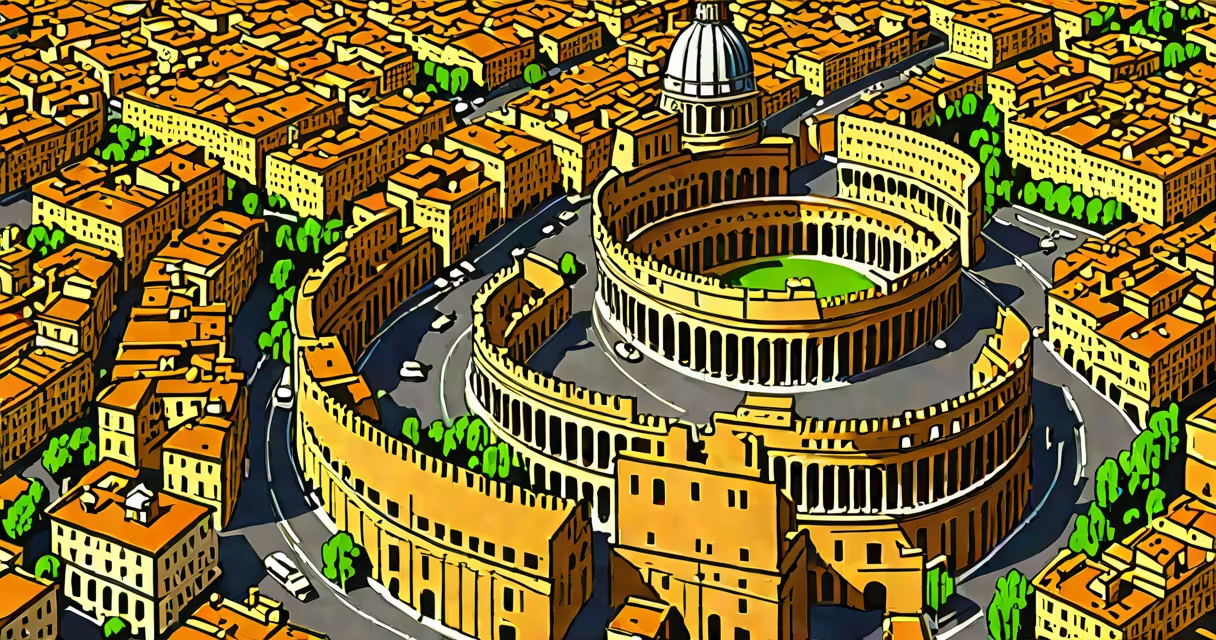
tourist attractions in rome italy include ancient ruins like the Colosseum and Roman Forum, religious sites such as St. Peter's Basilica and the Sistine Chapel, and iconic fountains like the Trevi Fountain. These sites draw over 30 million visitors yearly, blending imperial history, Renaissance art, and Baroque grandeur.
The Colosseum, built in 80 CE under Emperor Titus, hosted gladiator battles, animal hunts, and public spectacles for up to 50,000 spectators. Its elliptical design spans 188 meters long and 156 meters wide. Visitors enter through the ground-level arches, walk past the hypogeum-the underground network where animals and fighters waited-and climb to the upper tiers for panoramic views of the city. Entry requires a timed ticket; standard admission costs €16.50, with free access for EU citizens under 18.
The Roman Forum lies just west of the Colosseum. This sprawling complex was the political, religious, and commercial heart of ancient Rome. Excavations reveal the Rostra (speaker's platform), the Temple of Saturn, and the Arch of Titus. The site covers 6.5 hectares and includes 12 major structures. Archaeologists have uncovered inscriptions, altars, and remnants of marble statues. Access is via the Colosseum ticket, or separately for €12.50.
St. Peter's Basilica, located in Vatican City, is the largest church in the world by interior area. Designed by architects including Bramante, Michelangelo, and Bernini, construction began in 1506 and concluded in 1626. The dome rises 136 meters above the floor, visible from much of central Rome. Inside, visitors see Michelangelo's Pietà sculpture, Bernini's baldachin (a bronze canopy), and the gilded mosaics of the apse. Admission is free, but guided tours cost €15 and include access to the Vatican Museums and Sistine Chapel.
| Site | Key Feature | Entry Fee (2024) | Hours |
|---|---|---|---|
| Colosseum | Gladiator arena and hypogeum | €16.50 | 8:30 AM - 4:00 PM (last entry 3:00 PM) |
| Roman Forum | Republican-era temples and basilicas | €12.50 | 8:30 AM - 4:00 PM |
| Trevi Fountain | Baroque fountain with Neptune statue | Free | Open 24/7 |
| Pantheon | Rotunda with oculus and Roman concrete dome | €12 | 9:00 AM - 4:00 PM (closed Mondays) |
The Trevi Fountain, completed in 1762, is the largest Baroque fountain in Rome. It depicts Oceanus, god of the sea, riding a chariot pulled by hippocamps. Visitors toss coins into the water-over 3,000 thrown daily-to ensure a return to Rome. The tradition dates to the 19th century. The fountain's water flows from an aqueduct system originally built by Emperor Agrippa in 19 BCE. It is open 24 hours, though best viewed at dawn or dusk when crowds thin.
The Pantheon, originally built as a temple to all gods in 126 CE under Emperor Hadrian, remains the best-preserved ancient Roman building. Its concrete dome, 43.3 meters in diameter, features a central oculus (opening) that lets in natural light. The interior measures 142 feet in height. The building served as a church since 609 CE, when Pope Boniface IV consecrated it. Entry is €12, or free for those under 18.
Many travelers confuse the Vatican Museums with St. Peter's Basilica. The museums contain over 20,000 artworks, including Raphael's frescoes in the Stanze and the Sistine Chapel ceiling painted by Michelangelo between 1508 and 1512. The chapel's ceiling spans 5,000 square feet and took four years to complete. A separate ticket is required for the Sistine Chapel, priced at €20. The museum closes on Sundays and holidays.
A common error is assuming all Roman landmarks are within walking distance. The Colosseum, Roman Forum, and Palatine Hill form a cluster near the city center. However, the Vatican Museums require a 30-minute metro ride from Termini Station. Trains run every 10 minutes during peak hours. Buses 40 and 64 stop near the Trevi Fountain and Pantheon. Walking is practical only for short distances due to uneven cobblestones and heat exposure in summer.
One non-obvious fact: the Trevi Fountain's water is not recycled. It draws from the Acqua Vergine aqueduct, constructed in 19 BCE. Water flows continuously from the fountain's basin into the Tiber River via underground channels. The system still functions today, maintaining the original engineering principles.
In 2023, the Colosseum recorded 7.2 million visitors. That's nearly 20,000 people per day. Over 1 million coins are tossed into the Trevi Fountain annually. The Vatican Museums saw 4.8 million visitors in 2022, making them among the most visited cultural institutions globally. UNESCO recognizes the historic center of Rome as a World Heritage Site, citing "outstanding universal value" for its layered urban development spanning 2,500 years.
I visited the Pantheon in late September. The sun streamed through the oculus at noon, casting a single beam across the floor. I stood at the center and watched the light move slowly across the marble tiles. The effect lasted 15 minutes. It was silent except for footsteps echoing off the walls. That moment-stillness beneath a hole in the sky-made me understand why the structure has endured.