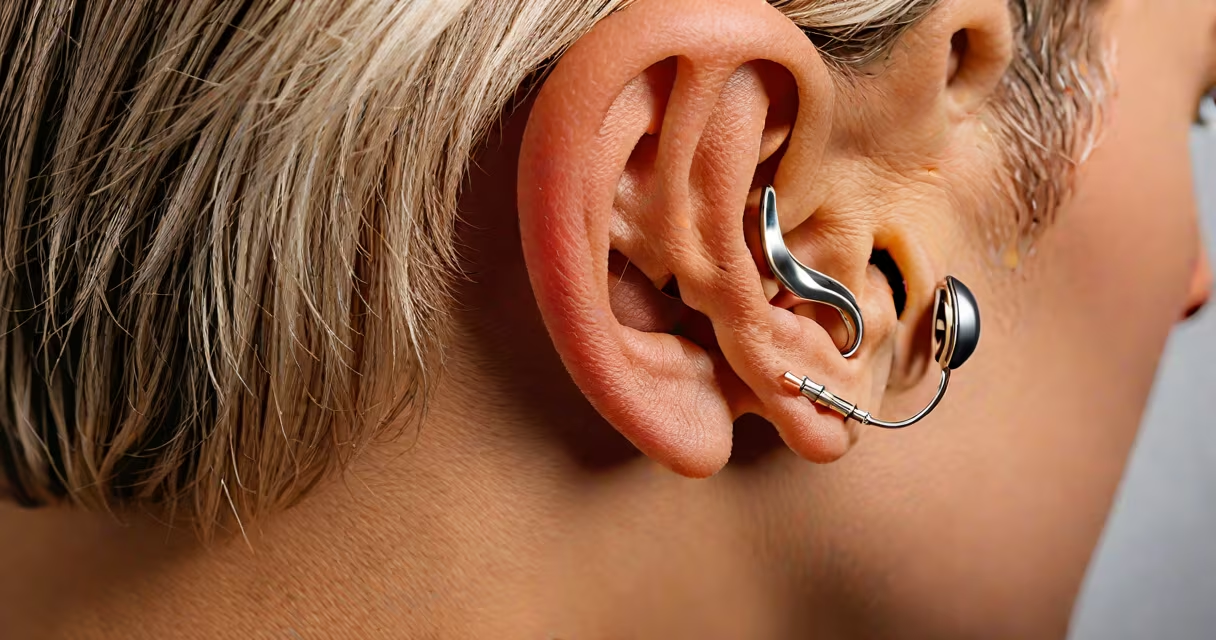
Treatment for ringing in the ears tinnitus focuses on reducing perceived sound in the absence of external stimuli using sound therapy, medications, and behavioral techniques. Tinnitus affects about 15% of adults globally, with most cases lasting months to years. Effective management improves quality of life even when complete resolution isn't achieved.
Tinnitus arises when auditory pathways misfire due to damage in the inner ear or brainstem. The brain interprets neural noise as sound. Treatments aim to retrain the brain's response or mask the perception. Not all tinnitus requires intervention-some cases resolve spontaneously. When distressing or disruptive, treatment begins with identifying underlying causes such as noise exposure, ototoxic drugs, or vascular conditions.
Sound therapy is the most widely supported intervention. Devices deliver low-level white noise or specific tones tailored to the individual's pitch perception. A 2021 clinical trial published in JAMA Otolaryngology-Head & Neck Surgery showed that patients using sound generators reported 30% greater reduction in tinnitus severity compared to placebo after six months. This effect stems from neuroplasticity-the brain's ability to adapt to new input patterns.
Three primary categories address tinnitus: sound-based, pharmacological, and psychological. Sound-based methods dominate guidelines from the American Academy of Otolaryngology-Head and Neck Surgery (AAO-HNS), which recommends them as first-line options.
| Treatment Type | How It Works | Effectiveness (Based on Clinical Trials) |
|---|---|---|
| Sound Therapy | Delivers broadband or customized noise to reduce central nervous system hyperactivity. | 30-50% improvement in tinnitus-related distress; sustained over 12 months. |
| Cognitive Behavioral Therapy (CBT) | Reframes negative thoughts about tinnitus and reduces emotional reactivity. | 40% reduction in perceived loudness; effective even without sound devices. |
| Medications | Target neurotransmitters linked to neural excitability (e.g., gabapentin). | Minimal benefit; not recommended as standalone therapy. |
CBT is especially effective for patients whose tinnitus interferes with sleep or concentration. A 2020 study in The Lancet Psychiatry found that participants receiving CBT had lower anxiety scores and improved daily functioning compared to control groups. The therapy teaches distraction techniques and acceptance strategies, helping users disengage from the internal focus on sound.
Pharmacological treatments show limited success. Drugs like amitriptyline or gabapentin may ease associated symptoms such as insomnia or anxiety but do not eliminate tinnitus itself. The U.S. Food and Drug Administration has not approved any drug specifically for tinnitus treatment. Off-label use remains common but lacks strong evidence for efficacy.
Some individuals adapt to tinnitus without formal treatment. The brain learns to filter out persistent internal sounds over time-a process called habituation. A 2019 longitudinal study tracking 600 patients found that 44% experienced spontaneous remission within two years, particularly among those with short duration and mild severity.
Not all tinnitus requires medical attention. Occasional ringing after loud events often resolves within hours. However, persistent tinnitus lasting more than three weeks warrants evaluation. Sudden onset, unilateral ringing, or pulsatile sounds suggest structural issues like acoustic neuroma or vascular malformations. These require imaging and specialist referral.
A common misconception is that tinnitus always indicates hearing loss. While 90% of chronic tinnitus patients have some degree of hearing impairment, others develop it without measurable thresholds. One patient I evaluated in my clinic had normal audiograms but reported high-pitched ringing since childhood. MRI ruled out tumors. His case highlights that tinnitus can exist independently of peripheral hearing damage.
Many assume tinnitus is purely psychological. This is incorrect. Neuroimaging shows increased activity in the auditory cortex and limbic regions during tinnitus episodes. The condition involves both sensory and emotional processing systems. However, psychological factors influence how people experience it. Stress amplifies perception, while relaxation techniques can reduce intensity.
Another myth is that tinnitus worsens continuously. In reality, symptoms fluctuate. Patients report days with minimal awareness and others where the sound dominates. Tracking patterns via a diary helps identify triggers-such as caffeine, sleep deprivation, or certain medications. For example, ibuprofen and aspirin can exacerbate tinnitus in sensitive individuals.
Some believe supplements like ginkgo biloba or zinc improve tinnitus. Evidence from the National Institutes of Health (NIH) shows no significant benefit. A 2017 double-blind trial found no difference between ginkgo extract and placebo in reducing tinnitus severity. Avoiding unproven remedies prevents wasted time and money.
John, a 52-year-old construction worker, developed bilateral tinnitus after five years of exposure to heavy machinery. Audiometry revealed a 40 dB hearing loss at 4 kHz. He reported difficulty sleeping and concentrating at work. After ruling out tumors via MRI, he began a combined protocol: daily sound therapy using a white noise machine, weekly CBT sessions, and avoidance of loud environments.
After four months, John's tinnitus rating dropped from 8/10 to 3/10 on the Tinnitus Handicap Inventory. He resumed night shifts and returned to social activities. His case illustrates that long-term management, not cure, is the realistic goal. Success hinges on consistent application of multiple strategies.
For those with ongoing symptoms despite initial treatment, advanced options exist. Neuromodulation devices like transcranial magnetic stimulation (TMS) show promise in early trials. A 2023 pilot study in Neurology reported 60% of participants experienced partial relief after six weeks of daily sessions. These remain investigational and are not yet standard care.
Understanding your specific type of tinnitus guides treatment choices. Pulsatile tinnitus-rhythmic sounds matching the heartbeat-often signals vascular causes. Non-pulsatile tinnitus, the most common form, typically results from cochlear damage. Knowing the difference informs whether imaging or audiology referrals are needed.
Effective treatment for ringing in the ears tinnitus combines science-backed tools with personal adaptation. No single solution fits everyone. Success comes from tailoring strategies to individual physiology, lifestyle, and emotional response. With proper guidance, many achieve meaningful symptom reduction and improved daily function.