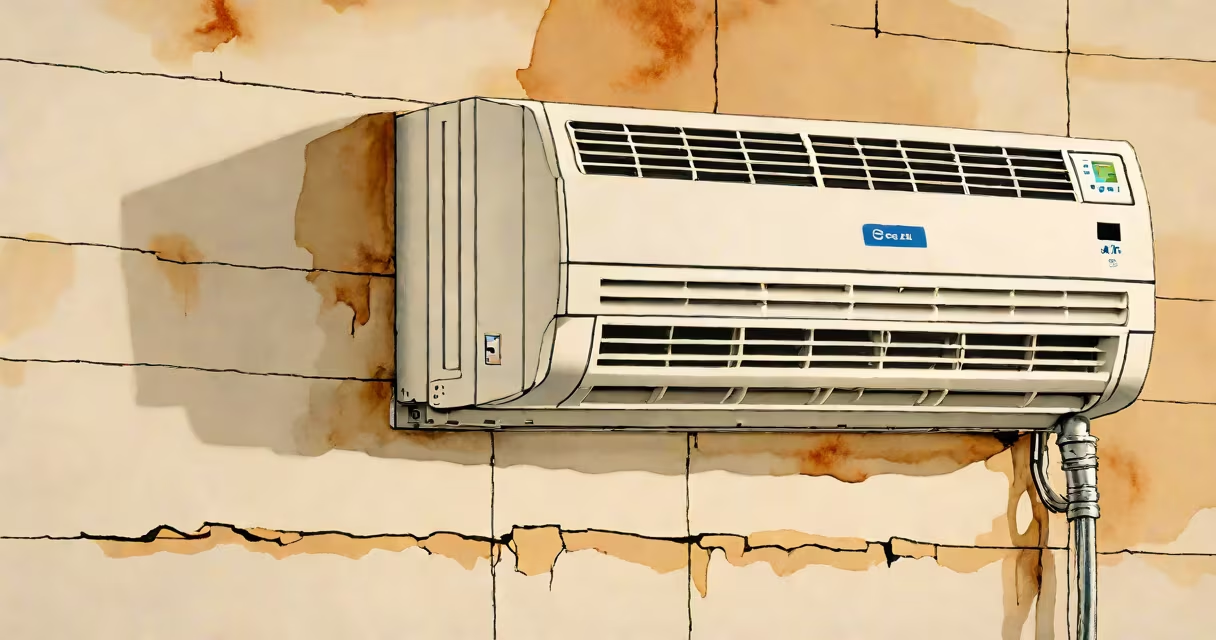
A wall ac unit not blowing cold air typically results from a blocked airflow, low refrigerant, or a malfunctioning compressor. The unit may run normally but fail to lower room temperature below ambient levels.
When a wall-mounted air conditioner runs but produces warm or room-temperature air, the core issue lies in the cooling cycle. This cycle relies on refrigerant flowing through sealed components: the evaporator coil inside the unit, the compressor, and the condenser coil outside. If any part fails, cooling stops even if the fan operates.
Common triggers include clogged air filters, obstructed vents, incorrect thermostat settings, or refrigerant leaks. A unit may appear functional-blowing air, cycling on and off-but still fail to cool. This behavior differs from a complete failure, where no air moves at all.
Wall AC units use a vapor-compression refrigeration cycle. The compressor pressurizes refrigerant gas, turning it into a hot liquid. This liquid flows through the condenser coil outside the room, releasing heat. As it passes through an expansion valve, pressure drops, turning the liquid into a cold, low-pressure gas. This gas absorbs heat from indoor air as it travels through the evaporator coil. A fan blows room air over the cold coil, cooling it before returning it indoors.
If any stage fails, cooling stops. For example, if the evaporator coil freezes due to restricted airflow, it cannot absorb heat. If the compressor doesn't activate, refrigerant doesn't circulate. If the condenser coil is blocked by dirt or debris, heat rejection fails.
Even minor obstructions disrupt the entire process. A filter 20% clogged reduces airflow by up to 30%, according to the U.S. Department of Energy's guidelines on HVAC efficiency. Reduced airflow causes the evaporator coil to freeze, which halts cooling entirely.
Problems fall into three categories: airflow issues, refrigerant problems, and electrical faults. Each has distinct symptoms.
| Issue Type | Signs | Typical Fix |
|---|---|---|
| Airflow Blockage | Warm air output, loud fan noise, ice on coils | Clean or replace filter; clear vents; ensure no furniture blocks intake |
| Low Refrigerant | Unit runs long but never cools; hissing sounds; frost on copper lines | Call a licensed technician-refrigerant recharge requires EPA certification |
| Compressor Failure | No cooling despite running; humming sound without airflow; tripped breaker | Electrical diagnostics needed; replacement likely |
One non-obvious sign: if the unit cools briefly then stops, it may indicate a refrigerant leak. The system loses charge over time, reducing cooling capacity until it fails completely. The Environmental Protection Agency (EPA) mandates that only certified technicians handle refrigerant recovery and charging under Section 608 of the Clean Air Act.
Another overlooked factor is installation angle. Wall units must be level. An improperly angled unit drains poorly, leading to water accumulation that damages internal components. A 2-degree tilt can reduce drainage efficiency by 40%, per ASHRAE Standard 160.
This issue occurs most frequently in older units (over 5 years), high-humidity environments, or homes with poor insulation. Units in kitchens or near windows are more prone to overheating due to external heat gain.
For example, a 2018 model wall AC in a New York City apartment failed to cool during a July heatwave. The unit ran continuously but maintained 78°F in a 90°F room. Inspection revealed a filter clogged with pet hair and dust. After cleaning, cooling returned within 15 minutes. The unit had been running at 80% efficiency before the fix.
Units in rental properties often suffer from deferred maintenance. A 2022 study by the National Apartment Association found that 63% of wall AC failures in rentals stemmed from neglected filter changes. Filters were replaced less than once per year in 41% of cases.
Many assume that "not blowing cold" means the unit is broken. But a unit can blow air while failing to cool. This confusion leads users to replace working parts or call technicians prematurely.
Another mistake: adjusting the thermostat too low. Setting it to 60°F when the room is 85°F forces the unit to run continuously. It may not reach the setpoint, causing the compressor to overheat and shut down. The unit appears dead, but it's simply overwhelmed.
Some users attempt refrigerant recharge themselves. This is illegal and dangerous. The EPA prohibits unlicensed individuals from handling refrigerants. Improper charging risks equipment damage, environmental harm, and injury from high-pressure leaks.
I once encountered a tenant who added coolant from a hardware store canister. The unit initially cooled better but soon failed with a loud bang. A technician later confirmed the system was overcharged-pressure exceeded safe limits. Repair cost: $850. The unit was beyond repair.
Start with the simplest checks:
If cooling remains absent, the issue likely involves refrigerant or compressor. Contact a licensed HVAC technician. Do not attempt repairs unless trained.
Understanding the difference between airflow and refrigerant failure prevents costly errors. A wall ac unit not blowing cold air is rarely a single problem-it's a cascade of mechanical, thermal, and maintenance factors. Addressing them in sequence restores function reliably.