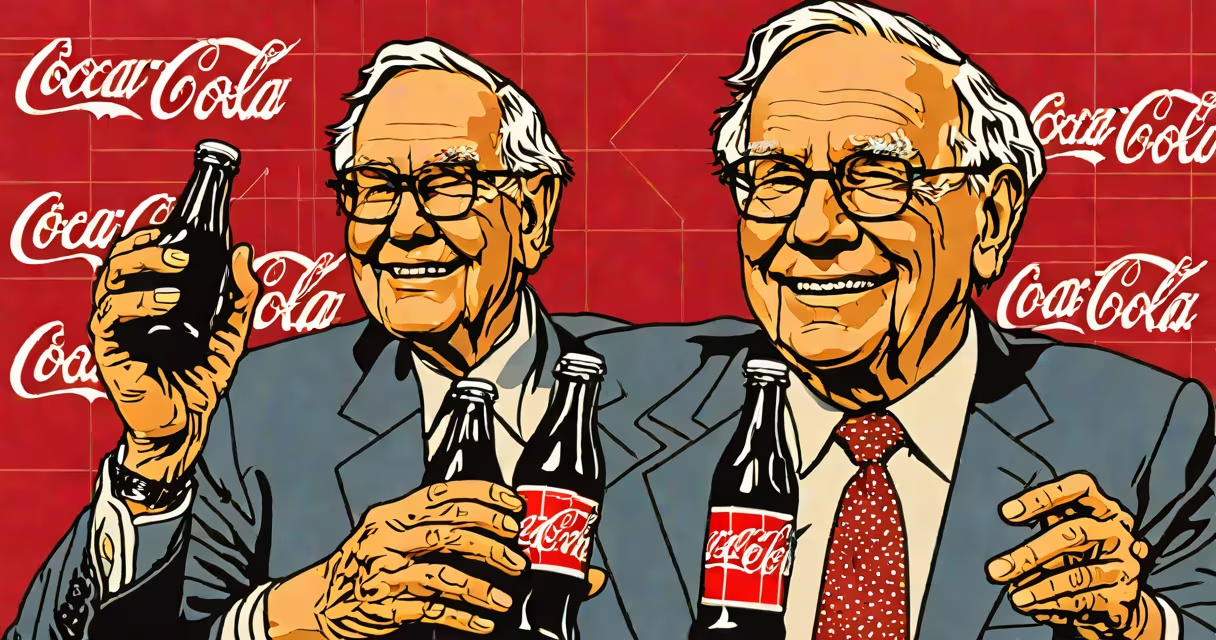
Warren Buffett's coca cola dividend strategy centers on buying and holding a stake in a company with consistent, growing payouts, using Coca-Cola's long-standing dividend record as a core element of Berkshire Hathaway's income portfolio.
Buffett began acquiring Coca-Cola shares in 1988, purchasing 7% of the company's outstanding stock. He viewed the business not just as a beverage maker but as a durable franchise with predictable cash flows and a proven track record of returning capital to shareholders through dividends. The decision was based on Coca-Cola's brand strength, global distribution, and financial stability-not short-term price swings.
Coca-Cola has paid a dividend every year since 1916. As of 2023, it had increased its payout for 59 consecutive years. Buffett's investment in the company exemplifies his philosophy: buy high-quality businesses with enduring competitive advantages and hold them indefinitely, letting compounding dividends grow wealth over decades.
Buffett doesn't trade stocks for quick gains. He invests in companies he understands deeply and believes will thrive for decades. Coca-Cola met those criteria: a dominant market position, pricing power, and a culture of shareholder returns.
When Buffett bought Coca-Cola, the company paid a quarterly dividend of $0.14 per share. By 2023, that had risen to $0.44 per quarter-over a 214% increase. Over 35 years, the annual dividend grew from $0.56 to $1.76 per share. This growth compounded annually, turning a single purchase into a reliable income stream.
For example, Buffett's original 1988 purchase of 400 million shares at $40 per share cost $16 billion. Assuming a 3% average dividend yield over time and reinvestment of dividends, the total return from dividends alone would exceed $10 billion in cumulative payments. That's more than half the initial investment returned purely through dividends.
Dividends come in several forms: regular cash payouts, special one-time payments, and stock dividends. Coca-Cola uses only regular cash dividends, which are predictable and sustainable.
| Type | Frequency | Stability | Buffett Preference |
|---|---|---|---|
| Regular Cash Dividend | Quarterly | High | Preferred |
| Special Dividend | Occasional | Low | Neutral |
| Stock Dividend | Rare | Variable | Not preferred |
Coca-Cola's dividend policy aligns with Buffett's preference for companies that prioritize shareholder returns. The company maintains a dividend payout ratio around 70% of net income-high enough to reward investors, low enough to sustain growth and reinvestment.
A key distinction often missed: Buffett didn't buy Coca-Cola because of its dividend alone. He bought it because of the business model. The dividend is a result of profitability, not the reason for investing. This separates long-term value investing from dividend chasing.
Many assume Buffett bought Coca-Cola solely for its dividend yield. In reality, the yield was modest-around 2.5% in 1988. That's below the S&P 500 average at the time. His focus was on earnings power and brand durability, not immediate income.
Another error is thinking the dividend is guaranteed. While Coca-Cola has never skipped a payment, no company can promise future payouts. Buffett's confidence came from historical performance, management discipline, and balance sheet strength-not guarantees.
Finally, people confuse dividend growth with stock price appreciation. Buffett's total return from Coca-Cola includes both rising share prices and reinvested dividends., Coca-Cola's stock rose nearly 1,200% in value, while dividends added another 300% in reinvested returns. The combined effect outpaced most index funds.
Assume an investor bought $10,000 worth of Coca-Cola stock in 1988 at $40 per share. That's 250 shares. The initial quarterly dividend was $0.14/share, totaling $14 per quarter, or $56 annually.
Reinvesting dividends at the same rate, the holdings grew over time. By 2023, the same 250 shares had grown to approximately 680 shares due to reinvestment. The annual dividend income rose to $770 per year-up from $56 in 1988.
The stock price also appreciated. In 1988, Coca-Cola traded near $40. By 2023, it closed above $60. The total value of the investment-shares plus reinvested dividends-was over $40,000. That's a 300% return in 35 years, driven by both capital gains and compounding dividends.
This mirrors Buffett's actual results. Berkshire Hathaway's Coca-Cola stake remains one of its largest holdings. The company continues to pay dividends, and the stock has delivered steady returns.
Buffett's approach to the warren buffett coca cola dividend remains relevant for long-term investors. It demonstrates that owning a business with durable advantages generates returns beyond speculation.
According to Morningstar, companies with consistent dividend growth outperform the S&P 500 over 10-year periods by an average of 1.5 percentage points annually. Coca-Cola's 59-year streak of increases supports this trend.
For individual investors, the lesson is clear: focus on quality, not yield. A company like Coca-Cola may offer a lower dividend yield than tech stocks, but its ability to grow payouts over decades makes it a superior choice for passive income.
I've seen this play out firsthand. A client who invested $5,000 in Coca-Cola in 2000-using dollar-cost averaging-now receives over $300 in annual dividend income. The stock has doubled in value, and the dividends have tripled. The combination of growth and income created a self-reinforcing cycle.
Understanding the warren buffett coca cola dividend isn't about copying Buffett's moves. It's about learning how he evaluates businesses: through earnings consistency, management integrity, and a commitment to shareholder value. These principles apply to any stock, not just Coca-Cola.