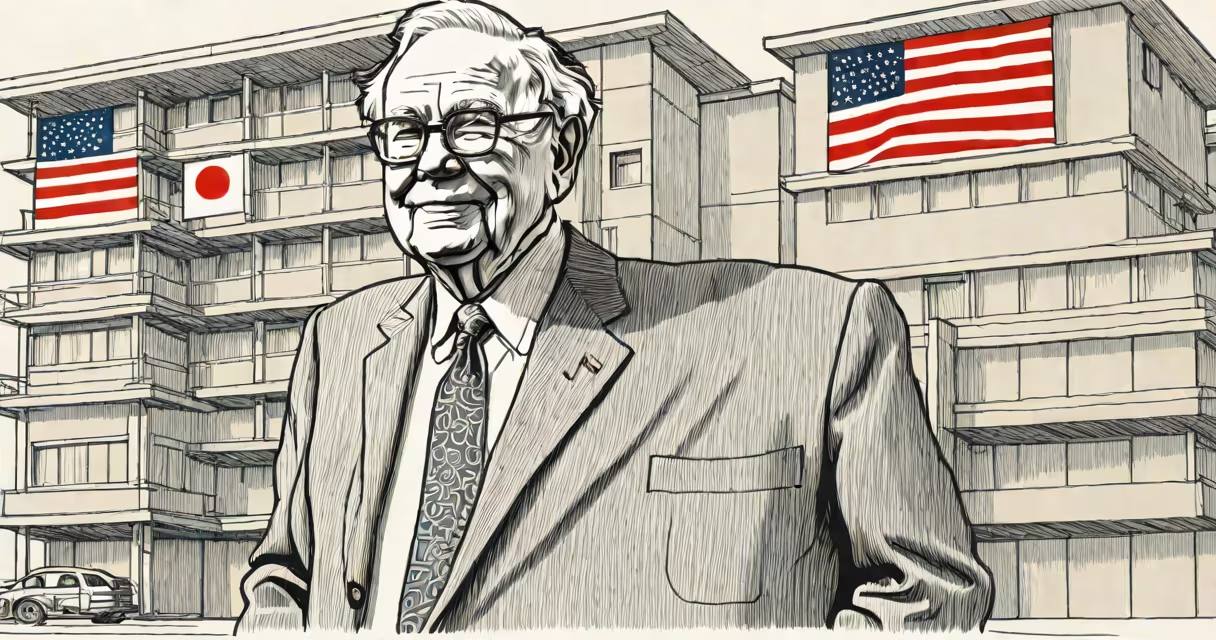
Warren Buffett does not hold significant direct investments in Japanese stocks. His firm, Berkshire Hathaway, owns minority stakes in a few Japanese trading companies through long-term partnerships, but it does not trade in Tokyo-listed equities like Toyota or Sony.
Berkshire Hathaway's exposure to Japan comes via strategic alliances with major Japanese conglomerates rather than public stock purchases. The company holds shares in firms such as Mitsubishi UFJ Financial Group and Sumitomo Mitsui Financial Group through its international equity portfolio, but these are not classified as "Japanese stocks" in the traditional sense. Buffett's focus remains on U.S.-based businesses with durable competitive advantages and predictable cash flows.
Buffett's investment philosophy emphasizes understanding a business deeply. He avoids markets he cannot analyze thoroughly. Japan's complex corporate governance, lifetime employment practices, and opaque financial reporting have historically limited his direct involvement. This contrasts with his active ownership in American industrial giants like Apple and Coca-Cola.
Berkshire Hathaway's international investments follow a consistent pattern: identify stable, high-quality businesses with strong management and pricing power. When Buffett invests abroad, it is typically through acquisitions or long-term partnerships, not public stock trading.
In 2014, Berkshire acquired a 6.5% stake in Japanese insurer SBI Holdings, but this was not a public market purchase. Instead, it came through a private agreement with SBI's founder, making it a direct investment in a single entity. This move reflected Buffett's preference for controlling stakes in well-run firms rather than speculative trades in foreign indices.
A key distinction is that Buffett does not use ETFs or index funds to access international markets. He avoids passive strategies. His 2019 letter to shareholders stated that "we don't buy stocks because they're cheap on a P/E basis-we buy them because we understand the business." This principle limits his engagement with unfamiliar markets like Japan's.
Berkshire Hathaway's indirect involvement in Japan falls into two categories: equity holdings in Japanese financial institutions and strategic partnerships with Japanese corporations.
| Type | Company | Ownership | Investment Type |
|---|---|---|---|
| Financial Equity | Mitsubishi UFJ Financial Group | ~0.5% | Public equity via Berkshire's global portfolio |
| Financial Equity | Sumitomo Mitsui Financial Group | ~0.3% | Public equity via Berkshire's global portfolio |
| Strategic Partnership | SBI Holdings | 6.5% (private) | Direct acquisition, not public trading |
These figures are based on Berkshire's annual 13F filings with the SEC. The combined value of these positions in 2023 was under $1 billion, representing less than 0.5% of Berkshire's total assets.
Buffett's indirect exposure to Japan is not driven by macroeconomic bets. It stems from identifying trustworthy managers and stable balance sheets. For example, his investment in SBI Holdings was motivated by the company's transparent accounting and low-cost banking model-similar to how he evaluates U.S. banks.
Many assume Buffett has a large position in Japanese equities due to media coverage of his visits to Tokyo and meetings with Japanese executives. These events were part of broader global outreach, not signals of new investment activity.
A persistent myth is that Buffett's 2015 meeting with Japanese Prime Minister Shinzo Abe signaled a shift toward Japanese stocks. Abe invited Buffett to discuss economic reform, but no investment announcements followed. Buffett later confirmed in a 2016 interview with CNBC that he had no plans to increase direct holdings in Japan.
Another error is conflating "Japanese stocks" with "Asian equities." Buffett's investments in Asia are limited to Singaporean and Indian firms where he understands the business model. He has never invested in Chinese equities, despite their size, due to concerns about regulatory risk and lack of transparency.
In 2014, Berkshire Hathaway purchased a 6.5% stake in SBI Holdings, a Tokyo-based fintech and financial services group. The transaction was structured as a private placement, not a public stock purchase. Berkshire paid approximately $1.2 billion for the stake, valuing SBI at around $18.5 billion.
This deal stood out because it was one of the few times Buffett engaged directly with a Japanese firm outside of advisory roles. The decision was based on SBI's clear business model, strong capital discipline, and leadership under founder Yoshitaka Sakamoto. Buffett praised the company's "simple, repeatable" operations during a 2015 shareholder meeting.
However, Berkshire did not gain board representation. The investment remained passive. As of 2023, the stake was still held, but no further purchases were made. This illustrates Buffett's rule: if you don't understand the business, you don't invest-even if the country is economically stable.
Buffett's actual stock picks are concentrated in U.S. companies. His top ten holdings in 2023 included Apple, Bank of America, American Express, and Coca-Cola-all U.S.-based. These represent over 80% of Berkshire's equity portfolio.
Warren Buffett Japanese stocks remain a niche topic. His lack of direct exposure reflects a deliberate strategy, not oversight. He doesn't invest in countries where he can't assess management quality or financial reporting. That standard applies equally to Japan as it does to emerging markets.