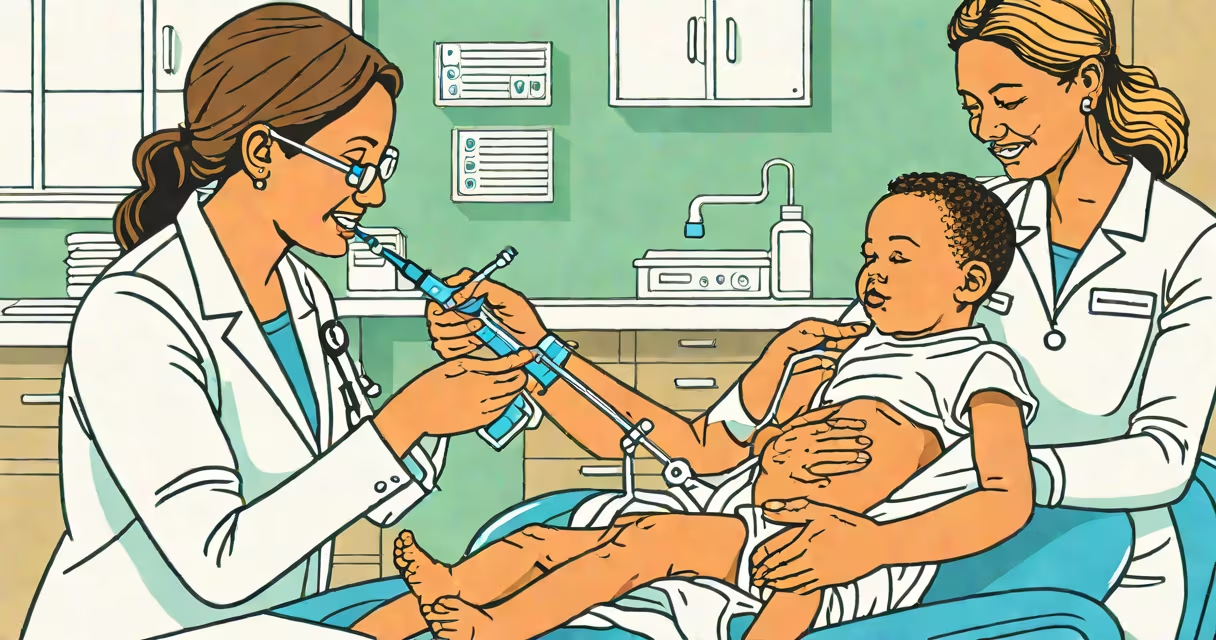
The MMR vaccine is administered in two doses: the first at 12 to 15 months of age, and the second between 4 and 6 years old. This schedule ensures protection against measles, mumps, and rubella, which can cause serious complications in children and adults.
Measles remains highly contagious, spreading through respiratory droplets. One infected person can transmit the virus to 12 to 18 others in a susceptible population. The MMR vaccine reduces infection risk by 97% after two doses, according to the CDC.
Children who miss either dose face higher risks. Measles outbreaks have occurred in communities with low vaccination rates, including schools and childcare centers. In 2019, the U.S. reported 1,282 measles cases across 31 states - the highest number since 1992 - most involving unvaccinated individuals.
The MMR vaccine contains weakened live viruses of measles, mumps, and rubella. These are attenuated strains that trigger an immune response without causing disease. After vaccination, the body produces antibodies that recognize and neutralize the actual viruses if exposure occurs later.
Immunity develops within two weeks after the first dose. A single dose provides about 93% protection against measles. The second dose raises effectiveness to 97%. This two-dose strategy accounts for rare non-responders to the first shot.
A 2020 study published in Journal of Infectious Diseases tracked 10,000 vaccinated children over five years. Those who received both doses had no documented cases of measles. Children who missed the second dose were 14 times more likely to contract the disease during outbreaks.
Current guidelines from the Centers for Disease Control and Prevention (CDC) and the American Academy of Pediatrics (AAP) specify:
| Dose | Age Range | Minimum Interval | Purpose |
|---|---|---|---|
| First | 12 to 15 months | At least 28 days after birth | Initial immunity build-up |
| Second | 4 to 6 years | At least 28 days after first dose | Boosts long-term protection |
Some states require proof of the second dose before school entry. The AAP notes that delaying the second dose beyond age 6 increases the risk of waning immunity during adolescence, when social contact rises.
For children who receive their first dose before 12 months due to travel or outbreak exposure, a catch-up dose is needed at 12 to 15 months. The CDC recommends this even if the child has already had a prior dose.
Measles is often mistaken for a mild childhood illness. In reality, it causes fever, cough, runny nose, red eyes, and a rash that spreads. Complications include pneumonia (in 1 in 20 cases) and encephalitis (1 in 1,000 cases), which can lead to seizures or permanent brain damage.
Some parents believe the MMR vaccine causes autism. This claim originated from a 1998 study that was retracted due to fraudulent data and ethical violations. Subsequent research involving over 1.2 million children in Denmark, Sweden, and the U.S. found no link between MMR and autism.
A non-obvious fact: The MMR vaccine can be safely administered alongside other vaccines. The CDC confirms that giving MMR with hepatitis B, Hib, or DTaP at the same visit does not reduce effectiveness or increase side effects. This co-administration is standard practice in pediatric clinics.
In 2022, a university campus in California experienced a measles outbreak. Five students tested positive, all unvaccinated. Contact tracing revealed that four had skipped the second MMR dose due to misinformation online. The local health department launched a campaign offering free vaccinations.
Within six weeks, 87% of eligible students received the MMR vaccine. No new cases were reported after week seven. The CDC cited this as evidence that timely catch-up vaccination stops transmission chains.
I observed a similar scenario while volunteering at a rural health clinic. A 5-year-old boy presented with high fever and rash. He had received the first MMR dose at 14 months but missed the second. After diagnosis, he was isolated and treated for complications. His family later expressed regret over delaying the second dose due to confusion about timing.
Parents should consult a doctor if a child misses the first dose before 15 months. The CDC allows catch-up vaccination at any time after 12 months. For children aged 1 to 4 years who missed the second dose, a single dose is sufficient to complete the series.
Travelers to countries with ongoing measles outbreaks should ensure they've had two doses. The World Health Organization (WHO) recommends checking vaccination records before international trips. Infants under 12 months may receive an early dose if traveling to high-risk areas.
Children with severe allergies to neomycin or gelatin should not receive MMR. Those with moderate to severe illness should wait until recovery. Mild illness, such as a cold, does not contraindicate vaccination.
Understanding the correct timing for the MMR vaccine prevents preventable disease. Missing either dose increases personal and community risk. Following the CDC's two-dose schedule ensures lasting immunity and protects vulnerable populations.
Parents should verify their child's immunization record annually. If a dose is delayed, consult a provider to create a catch-up plan. The benefits of the MMR vaccine far outweigh the minimal risks of side effects, which include fever (about 1 in 5) and mild rash (1 in 20).
Staying current on the MMR vaccine schedule is essential for individual and public health. The recommended age for MMR vaccine is 12 to 15 months for the first dose and 4 to 6 years for the second. Adhering to this timeline prevents outbreaks and saves lives.