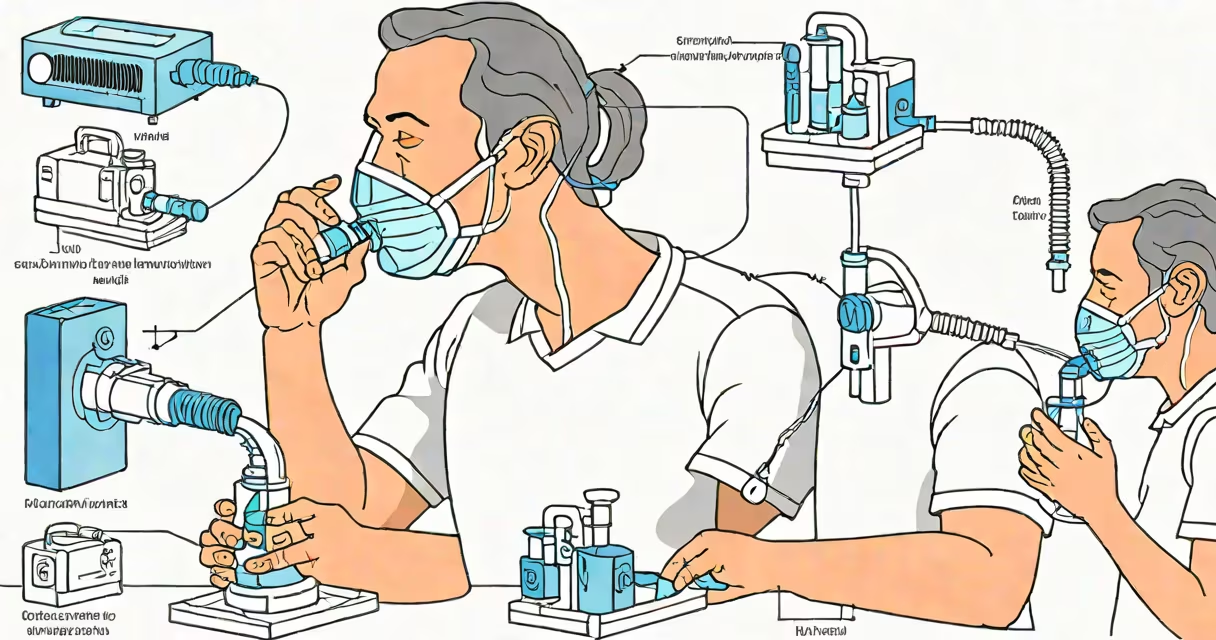
Breathing treatments are medical interventions that deliver medication directly to the lungs to improve airflow, reduce inflammation, and manage symptoms of chronic or acute respiratory conditions. These treatments are essential for patients with obstructive lung diseases such as asthma and chronic obstructive pulmonary disease (COPD), and are often prescribed during flare-ups or as part of long-term management.
They work by targeting the airways-where mucus buildup, swelling, and muscle constriction restrict breathing. Medications delivered via inhalers, nebulizers, or oxygen devices act locally to relax bronchial muscles, shrink inflamed tissues, or thin secretions. The goal is to restore normal breathing patterns and prevent complications like hypoxia or respiratory failure.
According to the American Lung Association, nearly 26 million Americans live with asthma, and over 16 million have COPD-conditions where breathing treatments are standard care. Without them, daily activities become difficult, hospitalizations rise, and quality of life declines.
These treatments rely on aerosolized medications that reach the lower airways through controlled delivery systems. The most common methods are metered-dose inhalers (MDIs), dry powder inhalers (DPIs), and nebulizers. Each uses different mechanics to ensure particles reach deep into the lungs.
For example, MDIs use a pressurized canister to release a measured dose of medication. When activated, the propellant carries the drug in fine droplets. To be effective, users must coordinate pressing the canister with inhaling deeply-a skill many patients struggle with. A spacer device improves accuracy by holding the medication in a chamber until inhalation begins.
Nebulizers convert liquid medication into a mist using compressed air or ultrasonic waves. They require no coordination and are ideal for young children, elderly patients, or those experiencing severe breathlessness. A 2021 study published in Chest found that nebulized albuterol improved peak expiratory flow rates by an average of 35% within 15 minutes in moderate-to-severe asthma attacks.
Medications used in breathing treatments fall into two main categories: bronchodilators and anti-inflammatory agents. Bronchodilators relax tightened airway muscles, while anti-inflammatories reduce swelling and mucus production.
| Type | Common Examples | Primary Use | Onset Time |
|---|---|---|---|
| Short-acting beta agonists (SABAs) | Albuterol, levalbuterol | Quick relief during asthma attacks | 5-10 minutes |
| Inhaled corticosteroids (ICS) | Fluticasone, budesonide | Long-term control of airway inflammation | Hours to days |
| Anticholinergics | Ipratropium, tiotropium | Reduce mucus secretion and bronchoconstriction | 15-30 minutes |
| Combination inhalers | Salmeterol/fluticasone, formoterol/budesonide | Dual action: opens airways and reduces inflammation | Varies |
Each medication targets a specific physiological issue. Albuterol, for instance, binds to beta-2 receptors in the lungs, triggering muscle relaxation. This effect typically lasts four to six hours and is used as needed during episodes of shortness of breath.
When used correctly, inhaled corticosteroids reduce airway hyperresponsiveness by suppressing immune cell activity in lung tissue. Long-term use lowers the risk of exacerbations by up to 50%, according to a 2020 meta-analysis in The Lancet Respiratory Medicine.
Breathing treatments are central to managing several chronic and acute respiratory disorders. Asthma, characterized by reversible airway obstruction, relies heavily on regular use of controller medications and rescue inhalers during flare-ups.
COPD, which includes emphysema and chronic bronchitis, involves irreversible airflow limitation. Patients often require daily maintenance therapies and frequent use of bronchodilators. A 2022 report from the Global Initiative for Chronic Obstructive Lung Disease (GOLD) recommends long-acting bronchodilators as first-line therapy for symptomatic COPD patients with moderate to severe airflow limitation.
Other indications include bronchiectasis, cystic fibrosis, and postoperative pulmonary complications. In intensive care units, breathing treatments are used to prevent atelectasis-the collapse of lung tissue after surgery. Nebulized saline or mucolytics like acetylcysteine help loosen secretions in patients unable to cough effectively.
During the 2020-2022 pandemic, breathing treatments were critical in managing respiratory distress in patients with severe COVID-19. Nebulized dexamethasone was studied in clinical trials as a way to reduce airway inflammation in hospitalized patients, though results remain mixed.
A widespread misunderstanding is that breathing treatments are only for emergencies. In reality, many are designed for daily use to prevent symptoms. Skipping doses because "I feel fine" increases the risk of sudden worsening.
Another error is improper inhaler technique. The National Heart, Lung, and Blood Institute reports that up to 70% of patients misuse their inhalers, leading to ineffective dosing and poor symptom control. Common mistakes include not shaking MDIs before use, failing to hold breath after inhalation, or not rinsing the mouth afterward when using steroid inhalers.
There's also confusion between nebulizers and humidifiers. Humidifiers add moisture to the air but do not deliver medication. Nebulizers are medical devices that aerosolize prescription drugs. Using a humidifier instead of a nebulizer during an asthma attack offers no therapeutic benefit.
During a clinic visit in 2021, I observed a 7-year-old child with poorly controlled asthma who had been using a nebulizer incorrectly for months. The device was set to high flow, causing rapid dispersion of medication before inhalation. After training with a spacer and proper timing, his peak flow improved from 65% to 88% of predicted values within two weeks.
Use of breathing treatments should follow a personalized care plan. Self-treatment without diagnosis increases risks. If a person requires a rescue inhaler more than twice a week, or experiences nighttime awakenings due to breathlessness, they should consult a healthcare provider.
Red flags include increased reliance on medication, persistent wheezing, or difficulty speaking in full sentences. These signs indicate uncontrolled disease and may require adjustments in treatment, such as adding inhaled steroids or switching to combination therapy.
Emergency care is necessary if oxygen saturation drops below 92% on room air, or if lips or fingertips turn blue. These are signs of respiratory failure requiring immediate intervention.
Breathing treatments are important tools in managing lung conditions like asthma and COPD. They deliver targeted medication to reduce inflammation, open airways, and support breathing during both routine care and acute episodes. Proper use, correct technique, and adherence to a doctor's plan maximize effectiveness and minimize complications.