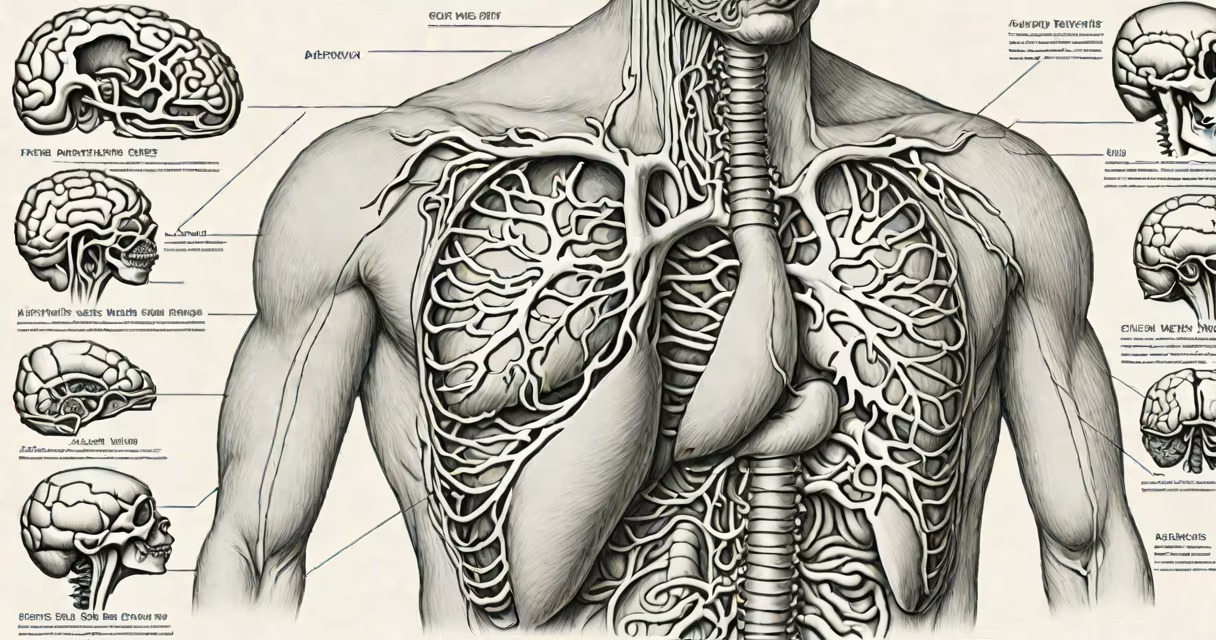
Your organs are distinct, functional units within your body that carry out specific physiological roles necessary for survival. They operate as part of interconnected systems-like the heart pumping blood or the lungs exchanging gases-each contributing to homeostasis and health.
Organs are composed of multiple tissue types working in concert. The heart, for example, contains cardiac muscle, connective tissue, and nervous tissue-all structured to contract rhythmically and maintain circulation. This integration allows organs to perform complex functions beyond what any single tissue type could achieve alone.
According to the National Institutes of Health (NIH), the human body contains approximately 78 distinct organs, though definitions vary slightly depending on whether smaller structures like the tonsils or pineal gland are included. The core set includes the brain, heart, lungs, liver, kidneys, pancreas, spleen, and reproductive organs.
Each organ performs a unique task critical to sustaining life. The liver detoxifies blood, produces bile for digestion, and regulates glucose levels. The kidneys filter waste from the bloodstream and maintain fluid balance. The brain controls bodily functions through electrical signals and processes sensory input.
These organs don't act independently. The endocrine system releases hormones that regulate organ activity across the body. For instance, insulin from the pancreas signals cells to absorb glucose, affecting energy use throughout the body. Disruption in one organ's function often impacts others-diabetes, for example, damages nerves, kidneys, and blood vessels over time.
A 2021 study published in Frontiers in Physiology demonstrated that organ failure in one system increases mortality risk in others. When the heart fails, oxygen delivery drops, leading to kidney dysfunction and brain hypoxia. This interdependence underscores why organ health is systemic, not isolated.
Organs fall into major functional categories based on their primary role:
| System | Key Organs | Primary Function |
|---|---|---|
| Cardiovascular | Heart, blood vessels | Transports oxygen, nutrients, and waste via blood |
| Respiratory | Lungs, trachea | Exchanges oxygen and carbon dioxide between air and blood |
| Digestive | Stomach, intestines, liver, pancreas | Breaks down food, absorbs nutrients, eliminates waste |
| Renal | Kidneys, ureters, bladder | Filters blood, balances electrolytes, removes metabolic waste |
| Nervous | Brain, spinal cord, peripheral nerves | Processes information, coordinates movement, regulates internal states |
Some organs serve dual purposes. The pancreas, for example, acts as both an endocrine and exocrine gland-it secretes insulin into the bloodstream and digestive enzymes into the small intestine.
One lesser-known fact: the appendix, long dismissed as vestigial, may play a role in immune function. Research from the University of New Mexico suggests it serves as a reservoir for beneficial gut bacteria, helping repopulate the intestines after infections.
Many people assume organs are static or unchanging. In reality, they adapt continuously. The liver regenerates up to 70% of its mass within weeks after injury-a process documented in clinical studies at Johns Hopkins Medicine.
Another misconception is that all organs are visible or palpable. The hypothalamus, located deep in the brain, regulates hunger, thirst, and body temperature but cannot be felt or seen without imaging tools like MRI.
Some confuse organs with tissues. While tissues are groups of similar cells (e.g., muscle tissue), organs combine multiple tissue types. A lung contains epithelial tissue lining air sacs, connective tissue forming structural support, and smooth muscle for airway constriction.
Consider a patient diagnosed with congestive heart failure. The heart's inability to pump effectively leads to fluid buildup in the lungs (pulmonary edema), reduced kidney perfusion, and impaired brain oxygenation. Over time, this affects nearly every organ system.
Medical records show that patients with advanced heart failure have a 60% higher risk of developing acute kidney injury. This illustrates how one failing organ cascades into widespread dysfunction. Early detection of organ stress markers-like elevated BNP (brain natriuretic peptide)-can prevent further decline.
I once observed a 65-year-old man whose routine blood test revealed high creatinine levels. Further imaging showed bilateral kidney shrinkage. His symptoms had been mild-fatigue, swelling-but the issue stemmed from undiagnosed hypertension damaging renal blood vessels. Treating his blood pressure slowed progression, proving that early organ monitoring saves lives.
Modern medical imaging reveals organ structure and function in real time. Ultrasound shows the heart beating, CT scans display cross-sections of abdominal organs, and PET scans track metabolic activity. These tools allow doctors to detect abnormalities before symptoms appear.
Your organs are the biological engines of life-each designed to execute precise, irreplaceable functions. They work in concert across systems, respond dynamically to changes, and maintain balance through feedback loops. Without them, survival is impossible.
Understanding what are your organs begins with recognizing their diversity, interdependence, and resilience. From the microscopic level of cellular cooperation to the macroscopic view of organ systems, this knowledge forms the foundation of personal health awareness and medical literacy.