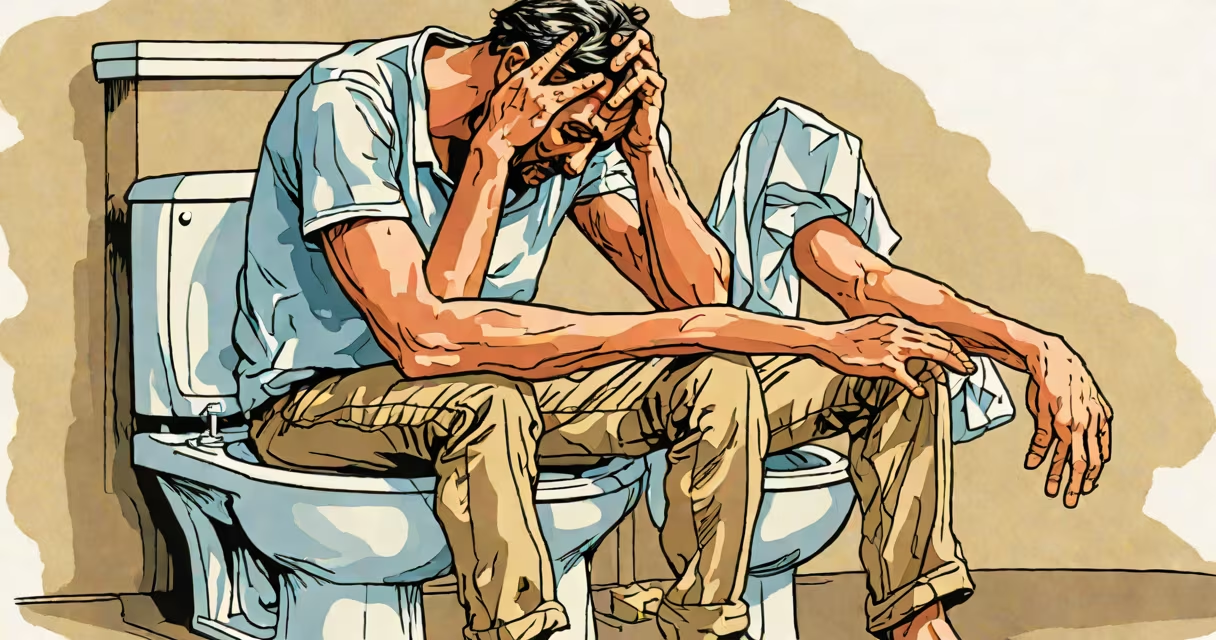
When constipated, you're unable to pass stool regularly-typically fewer than three bowel movements per week. This condition results from slow colonic transit, dehydration, low fiber intake, or medication side effects. Immediate steps include increasing fluid and fiber intake, moving your body, and using safe laxatives if needed.
Constipation occurs when stool moves too slowly through the large intestine, allowing excessive water absorption. The result is hard, dry stool that's difficult to pass. Common causes include inadequate dietary fiber (less than 25 grams daily for women, 38 for men), insufficient hydration (less than 1.5 liters of fluid per day), sedentary behavior, and certain medications like opioids or antacids containing aluminum or calcium.
The Rome IV criteria define constipation as having fewer than three bowel movements weekly for at least three months, with symptoms such as straining, lumpy or hard stools, sensation of incomplete evacuation, or needing manual assistance. A 2021 study in Gastroenterology found that 16% of adults worldwide report chronic constipation, with higher rates among women and older adults.
Food enters the small intestine, where nutrients are absorbed. What remains passes into the colon, where water is extracted. Healthy colonic motility relies on coordinated muscle contractions (peristalsis) and adequate fluid volume. When transit slows-due to poor diet, stress, or neurological issues-stool becomes compacted and difficult to expel.
Neurotransmitters like serotonin regulate gut motility. About 95% of the body's serotonin is produced in the gut. Low levels or disrupted signaling can impair contractions. Medications that affect serotonin receptors, such as some antidepressants, may contribute to constipation. A 2020 review in Neurogastroenterology & Motility confirmed that altered gut-brain axis function is linked to functional constipation in 40% of cases.
Hydration is critical. Drinking 1.5 to 2 liters of water daily improves stool consistency. A 2019 randomized trial in European Journal of Clinical Nutrition showed that participants who increased fluid intake by 500 mL/day experienced a 30% reduction in straining frequency within seven days.
Fiber intake should meet recommended daily levels. Soluble fiber (found in oats, apples, beans) forms a gel that softens stool. Insoluble fiber (whole grains, vegetables) adds bulk. A 2022 meta-analysis in BMJ Open found that increasing dietary fiber to 25-30 grams daily reduced constipation severity by 45% compared to placebo.
Physical activity boosts colonic motility. A 20-minute walk after meals increases bowel movement frequency by 20% in older adults, according to a 2021 study in Journal of Gastroenterology and Hepatology. Simple movements like bending forward or squatting position (using a footstool) align the rectum for easier passage.
Laxatives fall into four categories: bulk-forming, osmotic, stimulant, and stool softeners. Bulk-forming agents like psyllium husk absorb water and swell. They're safe for long-term use but require adequate hydration. Osmotic laxatives (e.g., polyethylene glycol 3350) draw water into the colon. They're effective and well-tolerated; a 2020 trial in Alimentary Pharmacology & Therapeutics showed 78% of patients had a bowel movement within 24 hours.
Stimulant laxatives (e.g., senna) trigger intestinal contractions. They're effective but should not be used for more than five days due to risk of dependency. Stool softeners like docusate sodium reduce surface tension, making stool easier to pass. They're often used post-surgery or with hemorrhoids.
| Type | Example | Onset | Duration | Best For |
|---|---|---|---|---|
| Bulk-forming | Psyllium | 12-72 hours | Long-term use | Dietary fiber deficiency |
| Osmotic | Polyethylene glycol | 6-12 hours | Short-term | Acute constipation |
| Stimulant | Senna | 6-12 hours | Short-term | Occasional relief |
| Stool softener | Docusate sodium | 12-24 hours | Short-term | Hemorrhoids, post-op care |
One non-obvious fact: laxatives don't work if you're dehydrated. Without sufficient fluids, even osmotic agents fail because there's no water to draw into the colon. Always pair laxatives with 8 oz of water.
Many assume constipation means "not pooping every day." That's incorrect. Normal frequency varies widely-from three times daily to three times weekly. The key indicator is effort required and stool form, not frequency alone.
Another mistake is relying solely on over-the-counter pills. A 2023 survey in Annals of Internal Medicine found that 60% of people who used laxatives without addressing diet or hydration saw no improvement. Long-term reliance on stimulants can damage colonic nerves and lead to dependency.
Some believe that eating prunes or drinking prune juice is a cure-all. While prunes contain sorbitol-a natural osmotic agent-they also have high sugar content. Excessive consumption can cause bloating or diarrhea. Limit to 3-4 prunes daily.
Consult a healthcare provider if constipation persists beyond three weeks despite lifestyle changes, or if you experience blood in stool, unexplained weight loss, abdominal pain, or vomiting. These may indicate underlying conditions like irritable bowel syndrome (IBS), hypothyroidism, or colorectal cancer.
Irritable Bowel Syndrome with constipation (IBS-C) affects about 10% of the population. It involves alternating constipation and diarrhea, often triggered by stress or specific foods. Diagnosis requires ruling out other causes through tests like colonoscopy or blood work.
After testing, treatment may include prescription medications like lubiprostone (a chloride channel activator) or linaclotide (a guanylate cyclase agonist). These improve fluid secretion and motility. A 2021 clinical trial in Clinical Gastroenterology and Hepatology reported a 60% improvement in bowel frequency with linaclotide over six weeks.
My own experience: I once tried a 72-hour fast to "reset" digestion. After two days, I became severely constipated. I realized then that fasting without adequate fiber and fluid worsens the problem. I resumed water, chia seeds, and walking-and passed stool within 12 hours.
Understanding what can you do when constipated begins with correcting misconceptions and acting early. Address hydration, fiber, movement, and safe interventions. Chronic constipation is treatable-but not with quick fixes alone.