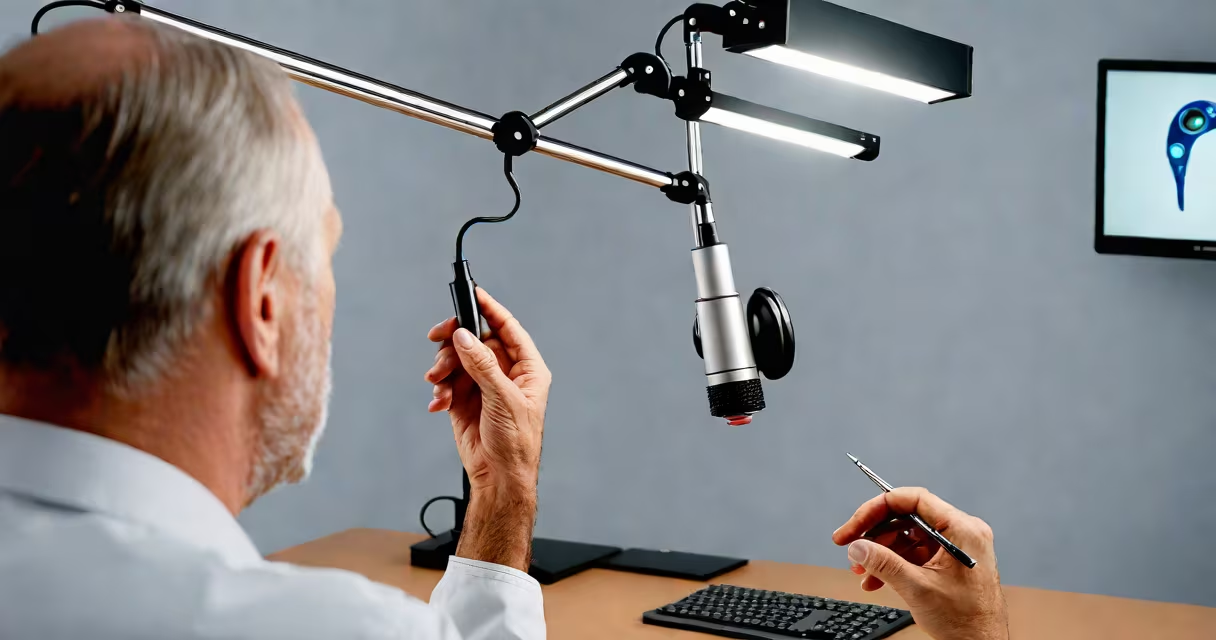
Audiologists are healthcare professionals who diagnose, manage, and treat hearing loss, balance disorders, and other auditory system conditions. They evaluate hearing function through standardized testing, recommend and fit hearing aids or cochlear implants, and provide rehabilitation strategies for individuals with auditory processing challenges.
Audiologists work in clinics, hospitals, schools, private practices, and research institutions. Their role spans preventive care, early detection, treatment planning, and long-term management of hearing-related conditions. They hold doctoral degrees (Au.D.) and are licensed to practice in all U.S. states.
The field requires specialized training in acoustics, neurology, anatomy of the ear, and psychophysics. Audiologists do not prescribe medication or perform surgery, but they collaborate closely with otolaryngologists (ear, nose, and throat doctors) when medical intervention is needed.
Audiologists begin with a detailed patient history, including symptoms, noise exposure, family history of hearing loss, and current medications. This context guides the selection of appropriate diagnostic procedures.
Standard assessments include pure-tone audiometry, which measures sensitivity to sounds across frequencies (typically 250 Hz to 8000 Hz). Patients listen to tones through headphones and indicate when they hear them. Thresholds are plotted on an audiogram-a graph showing hearing sensitivity per ear.
Additional tests include speech audiometry (measuring ability to understand spoken words), tympanometry (assessing middle ear function), and otoacoustic emissions (OAEs), which detect inner ear activity. For children or individuals unable to respond reliably, behavioral observation audiometry or visual reinforcement audiometry may be used.
Audiologists manage many hearing and balance disorders. Common diagnoses include sensorineural hearing loss (damage to hair cells in the cochlea), conductive hearing loss (obstruction in sound transmission through the outer/middle ear), and mixed hearing loss (combination of both).
Balancing disorders such as benign paroxysmal positional vertigo (BPPV), Meniere's disease, and vestibular neuritis fall under their purview. These conditions affect the semicircular canals and otolith organs in the inner ear, leading to dizziness, imbalance, and nausea.
Some patients experience auditory processing disorder (APD), where the brain struggles to interpret sounds correctly despite normal hearing sensitivity. Audiologists use specialized tests like dichotic listening tasks and gap detection to identify APD and develop compensatory strategies.
| Condition Type | Common Causes | Treatment Approach |
|---|---|---|
| Sensorineural Hearing Loss | Age, noise exposure, genetics, ototoxic drugs | Hearing aids, cochlear implants, auditory training |
| Conductive Hearing Loss | Otitis media, impacted cerumen, otosclerosis | Medication, ear cleaning, surgical referral |
| Balance Disorders | BPPV, viral infections, head trauma | Vestibular rehabilitation therapy (VRT) |
Audiologists fit and program hearing devices based on individual needs. Modern hearing aids use directional microphones, noise reduction algorithms, and Bluetooth connectivity to improve clarity in noisy environments. They tailor settings to specific listening situations-like conversations in restaurants or phone calls.
Cochlear implants are surgically implanted devices for severe-to-profound hearing loss. Audiologists map the device post-surgery, adjusting electrical stimulation levels to match neural responses. Follow-up sessions ensure optimal performance and patient adaptation.
Rehabilitation includes auditory training exercises, communication strategies, and counseling. For adults with sudden hearing loss, early intervention improves outcomes. A 2021 study published in Ear and Hearing found that patients receiving audiological rehab within 72 hours of onset had better speech recognition scores at six months compared to delayed treatment.
Audiologists are not the same as hearing aid salespeople. While some retail locations employ audiologists, many hearing aid dispensers lack formal education beyond a certificate program. The American Speech-Language-Hearing Association (ASHA) emphasizes that only licensed audiologists can diagnose hearing disorders and provide evidence-based treatment plans.
Another misconception is that hearing loss only affects older adults. In reality, 15% of Americans aged 6-19 have some degree of hearing difficulty, according to the Centers for Disease Control and Prevention (CDC). Noise-induced hearing loss from headphones, concerts, or occupational exposure is increasingly common among younger populations.
There's also confusion about whether audiologists can treat tinnitus. While they cannot eliminate ringing in the ears, they offer sound therapy, cognitive-behavioral techniques, and device-based masking solutions. The National Institute on Deafness and Other Communication Disorders (NIDCD) reports that 80% of tinnitus sufferers benefit from structured audiological management.
I once observed an audiologist conduct a full evaluation on a 7-year-old boy referred due to academic delays and frequent classroom distractions. Standard hearing screening showed normal thresholds, but speech-in-noise testing revealed significant difficulty understanding language in background noise. The audiologist diagnosed central auditory processing disorder (CAPD).
After confirming the diagnosis with additional tests, the audiologist recommended classroom accommodations-such as preferential seating, reduced background noise, and use of FM systems. Follow-up sessions included auditory training games and parent education. Within four months, the child's reading comprehension improved by two grade levels, and teacher reports noted increased engagement.
Individuals should seek an evaluation if they notice persistent symptoms such as muffled speech, needing to increase TV volume, trouble following conversations in groups, or frequent dizziness. Early detection prevents further decline and supports better outcomes.
Adults over 50 should have baseline hearing screenings every 3-5 years. Children should undergo newborn hearing screening and follow-up testing if results are abnormal. Workers in loud environments-construction, music, manufacturing-require annual monitoring under OSHA guidelines.
For those experiencing sudden hearing loss, prompt care within 72 hours maximizes recovery chances. The American Academy of Otolaryngology-Head and Neck Surgery (AAO-HNS) recommends immediate referral to an audiologist or ENT specialist.
Understanding what a audiologist does helps individuals access accurate care. These specialists play a important role in maintaining quality of life through early detection, personalized treatment, and ongoing support. With proper intervention, most people with hearing and balance issues can maintain independence and social connection.