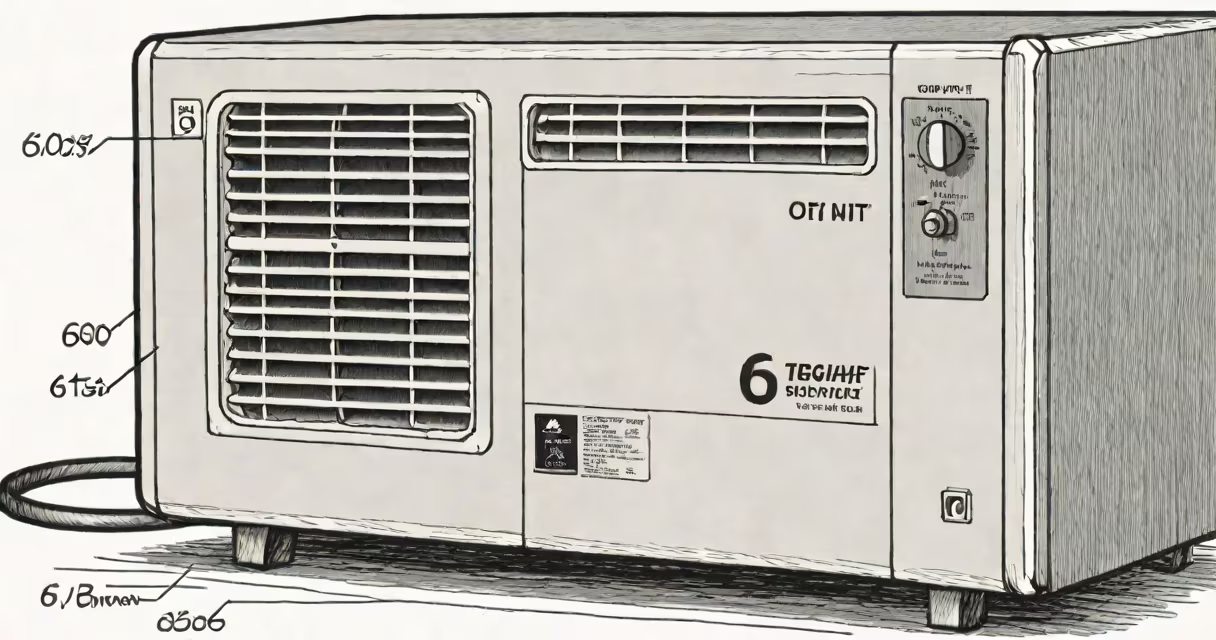
A 6000 BTU rating means an air conditioner removes 6,000 British Thermal Units of heat per hour. This measure indicates cooling power. A unit with this output cools small spaces effectively.
BTU stands for British Thermal Unit. It's a standard measure of thermal energy. One BTU equals the amount of heat needed to raise one pound of water by one degree Fahrenheit. In air conditioning, BTU per hour (BTU/h) quantifies how much heat a system can extract from a room.
For context, a typical window or portable AC unit rated at 6000 BTU can cool a space between 100 and 150 square feet. Larger units exceed 10,000 BTU and serve bigger rooms or entire homes. The higher the BTU number, the greater the cooling capacity.
When an air conditioner runs, it pulls warm indoor air over cold evaporator coils. Refrigerant inside those coils absorbs heat. The cooled air returns to the room. The heat moves to the outdoor condenser unit and vents outside.
The 6000 BTU rating describes how efficiently this process happens. A 6000 BTU unit extracts 6,000 BTUs of heat every hour. Over time, this reduces room temperature until the thermostat senses the desired level and cycles off.
Running a unit below its intended room size wastes energy. Running one above its size causes short cycling-frequent on-off patterns that reduce efficiency and wear out components faster. Proper sizing prevents both issues.
Most portable and window-mounted ACs come in standard BTU sizes. These ratings align with room dimensions based on industry guidelines from the U.S. Department of Energy and ENERGY STAR.
| Room Size | Recommended BTU | Typical Use Cases |
|---|---|---|
| 100-150 sq ft | 6000 BTU | Bedroom, small office, dorm room |
| 150-250 sq ft | 8000 BTU | Living room, home office, studio apartment |
| 250-300 sq ft | 10,000 BTU | Medium-sized bedroom, kitchenette |
Portable units often list their BTU rating on the front panel or in the product manual. Window units may display it on the side or inside the casing. Always check the label before buying.
Some models offer adjustable fan speeds and multiple operating modes. But the BTU rating stays constant-it defines the maximum cooling output under standard conditions.
People often assume higher BTU means better performance. That's incorrect. A 12,000 BTU unit in a 100 sq ft room will cool too quickly, leading to frequent cycling. This wastes electricity and fails to dehumidify properly.
Another myth is that BTU measures energy efficiency. It doesn't. Efficiency is measured in SEER (Seasonal Energy Efficiency Ratio). A 6000 BTU unit with a SEER of 14 uses less energy per cooling cycle than one with a SEER of 10-even if both have the same BTU rating.
There's also confusion between BTU and watts. While both measure energy, they're not interchangeable. A 6000 BTU AC typically draws about 550-650 watts of electrical power. The conversion factor is roughly 3.41 BTU per watt-hour.
I once replaced an old 6000 BTU window unit in my 120 sq ft bedroom. The original unit ran constantly during summer. It barely lowered the temperature past 78°F even with the fan on high.
I checked the room's insulation and sun exposure. The west-facing window got direct afternoon sun. I recalculated cooling needs using the U.S. Department of Energy's formula: 20 BTU per sq ft for moderate climates.
120 sq ft × 20 BTU = 2,400 BTU. But I added 10% for extra heat from electronics and people. That brought the total to 2,640 BTU. A 6000 BTU unit was overkill-but still within safe range.
I chose a new model with 6000 BTU and a SEER of 13. After installation, the room dropped to 72°F in 20 minutes. The unit cycled on for 15 minutes, then off for 10. It maintained comfort without noise or energy spikes.
Brands like LG, Frigidaire, and Honeywell produce 6000 BTU units. All meet federal standards for cooling output. Differences lie in noise levels, airflow design, and features-not raw cooling power.
ENERGY STAR-certified 6000 BTU units use 10-15% less electricity than non-certified models. They also include smart thermostats and eco-modes. But the core cooling ability remains tied to the BTU rating.
6000 BTU means a cooling capacity of 6,000 British Thermal Units per hour. It's ideal for small rooms up to 150 sq ft. Correct sizing ensures comfort, low energy use, and long equipment life. Always verify the BTU rating before purchasing.