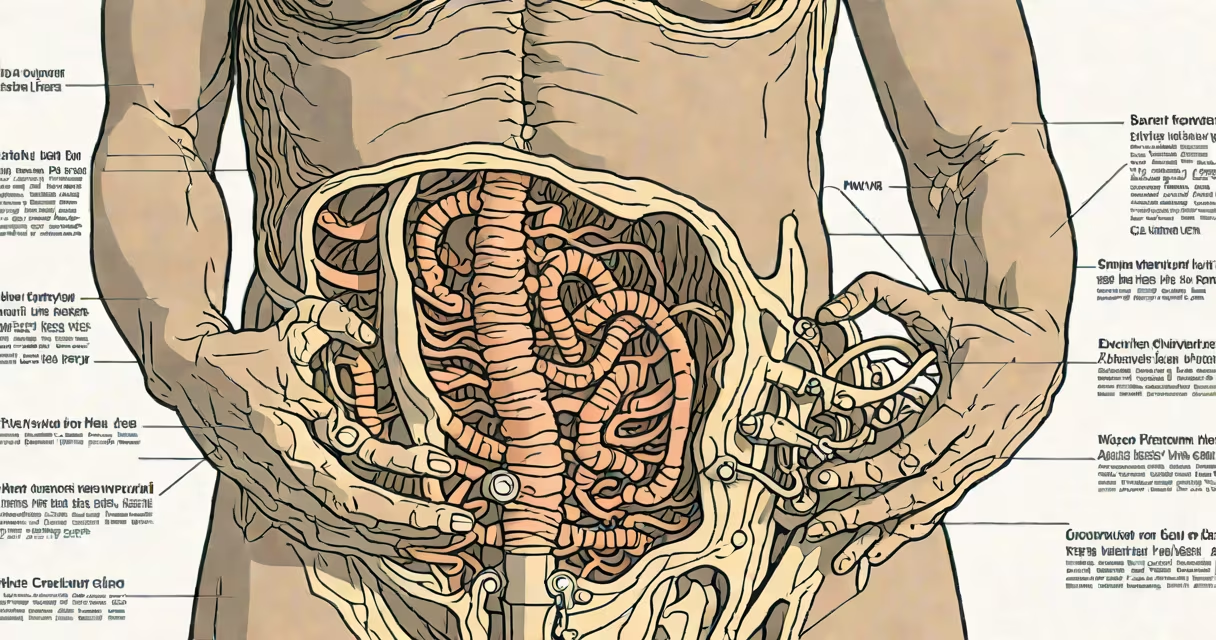
A ruptured bowel, or bowel perforation, causes intense, sharp abdominal pain that develops rapidly and worsens quickly. The pain typically starts in the center of the abdomen and may spread to the entire torso. This condition is a surgical emergency requiring immediate treatment to prevent life-threatening infection or sepsis.
Bowel perforation occurs when a hole forms in the wall of the small intestine or colon. The most common causes include diverticulitis, trauma, inflammatory bowel disease, cancer, and complications from surgery. Once the intestinal lining tears, digestive contents leak into the abdominal cavity, triggering inflammation and infection. Without prompt intervention, this can lead to peritonitis or septic shock.
Patients describe the pain as "like being stabbed" or "worse than labor." It's often constant, unrelenting, and worsens with movement. The sensation is not vague discomfort-it's a deep, burning ache that feels like the inside of the belly is tearing apart. Some report feeling cold, dizzy, or faint due to shock. Others experience nausea, vomiting, and an inability to pass gas or stool.
The pain from a ruptured bowel is not localized. It begins centrally and spreads outward, often radiating to the back or shoulders. Patients frequently adopt a rigid posture-lying still with knees drawn up-to reduce movement-related pain. This position is a physical sign of guarding, where muscles tense involuntarily to protect the inflamed area.
Other symptoms include a distended (swollen) abdomen, low-grade fever, rapid heartbeat, and confusion. As infection spreads, blood pressure drops, leading to cold, clammy skin and weakness. These are signs of systemic infection and require urgent hospitalization.
One patient I treated after a car accident described the moment he realized something was wrong: "I felt a pop in my lower belly, then the pain hit like a wave. I couldn't stand. I just curled up and waited for help." He had a perforated colon from blunt abdominal trauma. He was admitted within 90 minutes and underwent emergency laparotomy. Survival rates drop sharply beyond four hours of symptom onset.
Bowel perforations vary by location and cause. The most frequent sites are the sigmoid colon (lower left side) and the terminal ileum (end of the small intestine).
| Type | Common Cause | Typical Pain Location | Onset Speed |
|---|---|---|---|
| Diverticular perforation | Diverticulitis, age-related weakening | Lower left abdomen | Acute (hours) |
| Surgical site rupture | Post-op complication, usually 5-7 days after surgery | Incision site or nearby | Delayed (days) |
| Traumatic perforation | Blunt force, penetrating injury, or foreign object | Varies by impact zone | Immediate |
| Cancer-related | Advanced colorectal tumors eroding through tissue | Generalized or localized | Gradual, then sudden |
Diverticulitis accounts for about 60% of non-traumatic bowel perforations in adults over 50, according to the American College of Surgeons. Trauma-related cases are more common in younger populations, especially those involved in high-speed accidents or assaults.
Early symptoms mimic less serious conditions. Abdominal pain is a common complaint in primary care, and many patients initially receive antibiotics for suspected infection. A ruptured bowel can be mistaken for appendicitis, food poisoning, or even heartburn.
One study published in the Journal of the American College of Surgeons found that 28% of perforation cases were misdiagnosed on initial presentation. Delayed diagnosis increases mortality risk by 30%. The key red flag is pain that doesn't improve with rest or medication-and that worsens over time.
Doctors use imaging to confirm. A CT scan with oral contrast can detect free air under the diaphragm-a sign sign of perforation. Free air indicates gas from the intestines has leaked into the abdominal cavity. This finding, known as pneumoperitoneum, is diagnostic in 95% of cases.
If you experience sudden, severe abdominal pain that doesn't ease with rest, especially after trauma, surgery, or chronic gastrointestinal issues, seek emergency care. Do not wait for fever or vomiting to appear-they may come later.
Red flags include:
Survival rates exceed 90% when surgery is performed within six hours of symptom onset. After 12 hours, survival drops below 60%. Time is tissue, and tissue is life.
For comparison, endocarditis-the infection of heart lining-often presents with fatigue, fever, and joint pain. While both conditions are emergencies, endocarditis progresses slowly over weeks. A ruptured bowel acts like a bomb going off inside the body. The difference in timeline is critical.
Understanding what a ruptured bowel feels like isn't about fear-it's about recognizing danger signals early. The pain is not just "bad"-it's a biological alarm system screaming that your body's integrity is failing. Acting fast saves lives.