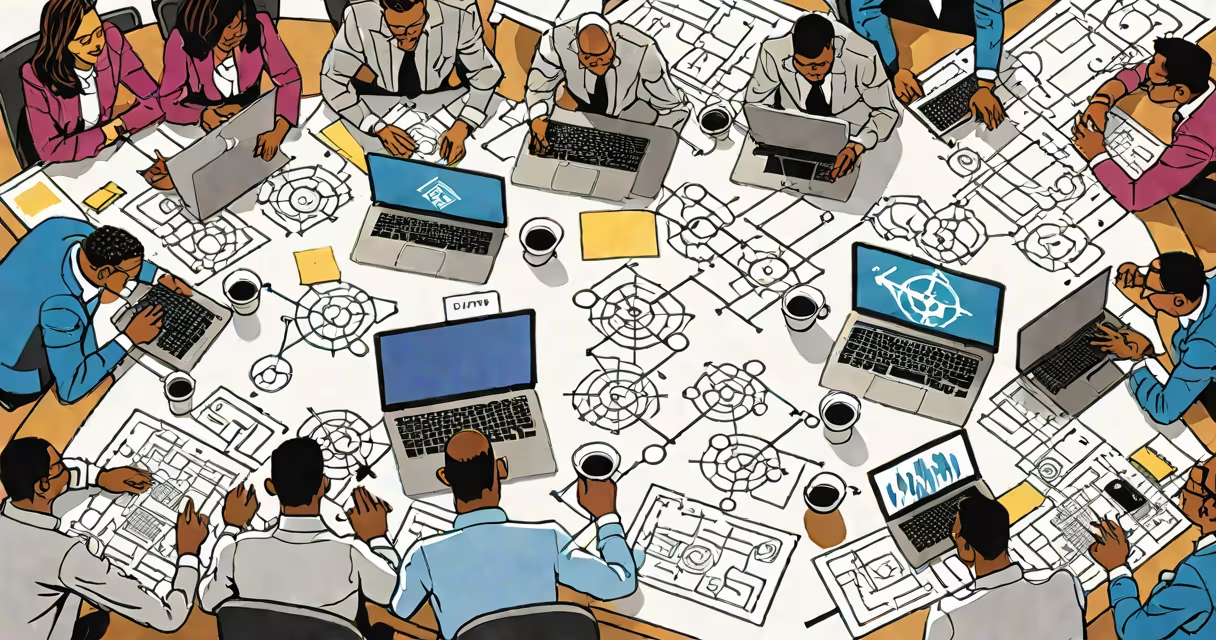
Being a team player means prioritizing collective success over individual recognition by contributing reliably, communicating openly, and adapting to group needs. This involves showing up prepared, listening actively, offering help without being asked, and accepting feedback constructively. In practice, it's demonstrated through consistent actions-not just words.
Team players don't wait to be told what to do. They anticipate gaps, volunteer for tasks, and step in during high-pressure moments. A software developer who stays late to debug a critical feature before a client demo, even though it wasn't in their original scope, exemplifies this behavior. Their focus isn't on credit-it's on ensuring the team meets its commitment.
Research from the Harvard Business Review shows that teams with high levels of psychological safety-where members feel safe taking risks-perform 50% better on complex tasks. Psychological safety is built when individuals act as team players: they speak up about mistakes, ask clarifying questions, and support peers under stress. These behaviors aren't optional-they're foundational to effective teamwork.
Team players function through predictable patterns of behavior. They complete assigned work on time, notify others when delays occur, and offer updates proactively. They avoid blaming others for setbacks and instead focus on solutions. When conflict arises, they seek common ground rather than asserting dominance.
A sales manager who shares customer insights with the product team, even though it's outside their formal role, strengthens cross-functional alignment. This kind of initiative reduces duplication, prevents misaligned messaging, and accelerates decision-making. The result is faster product iteration and higher customer satisfaction.
According to Gallup, employees who feel engaged in their team's mission are 2.6 times more likely to report high performance. Engagement isn't just about motivation-it's about participation. Team players contribute ideas, challenge assumptions respectfully, and follow through on commitments. They don't wait for permission to improve processes.
Not all collaborative behaviors are equal. The most effective team players exhibit five key traits:
These traits are measurable. For example, a project manager tracking task completion rates across team members found that those scoring high on reliability delivered projects 22% faster than average. Adaptability correlated with a 34% reduction in rework due to changing requirements.
People often confuse being a team player with being passive or overly agreeable. That's incorrect. A true team player speaks up when something is wrong-even if it challenges the group consensus. They don't suppress concerns to maintain harmony.
Another error is equating team play with constant availability. Being responsive matters-but burnout undermines long-term effectiveness. A team player sets boundaries, communicates workload limits, and asks for help when overwhelmed. This protects both their well-being and the team's output.
One study published in Organizational Behavior and Human Decision Processes found that teams with "yes" people-those who always agree-made worse decisions than teams with balanced dissent. The most successful groups had members who voiced disagreement early, leading to better problem-solving and fewer implementation failures.
In 2021, a marketing team at a mid-sized tech firm was behind schedule on a major product launch. The initial plan had assumed a single designer would handle all assets, but that person fell ill. Instead of blaming the delay, the team lead asked, "Who can help?"
Two developers stepped forward. One volunteered to assist with asset optimization, reducing file sizes for faster web loading. Another offered to build a temporary dashboard to track campaign metrics manually until the design system was updated. Both were not part of the original workflow, but they acted based on shared goals.
The team met daily for 15 minutes to sync progress. Everyone reported blockers immediately. By the end of the week, the launch timeline was recovered. The client praised the team's responsiveness. Internal surveys showed a 40% increase in perceived trust among team members.
This outcome wasn't luck. It resulted from deliberate team player behaviors: ownership, transparency, and mutual support. No one waited to be asked. No one hid problems. The culture of accountability emerged from small, consistent choices.
Being a team player doesn't mean sacrificing your expertise to please others. It doesn't require agreeing with every idea. It doesn't mean doing extra work without recognition. True collaboration respects individual roles while advancing shared objectives.
Some managers mistake compliance for contribution. An employee who completes every task exactly as instructed may appear cooperative-but if they never suggest improvements or raise red flags, they're not truly contributing to team success. A team player identifies risks early and proposes alternatives.
Also, being a team player isn't synonymous with being quiet or unassertive. In fact, research from Stanford University indicates that high-performing teams have moderate levels of assertiveness. Members express opinions, defend reasonable positions, and engage in respectful debate. This balance leads to better innovation and decision quality.
When reviewing candidates, look beyond résumé bullet points. Ask behavioral questions like: "Tell me about a time you helped someone else succeed on a team." Listen for specifics: what they did, how they communicated, and what the outcome was.
For existing staff, track observable behaviors. Did they volunteer for a difficult task? Did they acknowledge a peer's contribution in a meeting? Did they adjust their approach after receiving feedback?
Performance reviews should include team impact metrics. Examples: number of peer recommendations received, frequency of cross-team collaboration, or improvement in team cycle time after a member joined.
One HR director at a healthcare nonprofit reported that teams using structured peer feedback systems saw a 30% drop in conflict-related turnover. The system didn't rely on managers alone-it empowered team members to recognize and reinforce positive behaviors.
Understanding what being a team player means enables clearer expectations, better hiring, and stronger organizational culture. It's not about fitting in-it's about contributing meaningfully to shared goals.
Being a team player means aligning actions with group success. It requires consistency, emotional awareness, and a willingness to serve the whole. This isn't a soft skill-it's a measurable driver of performance and resilience.