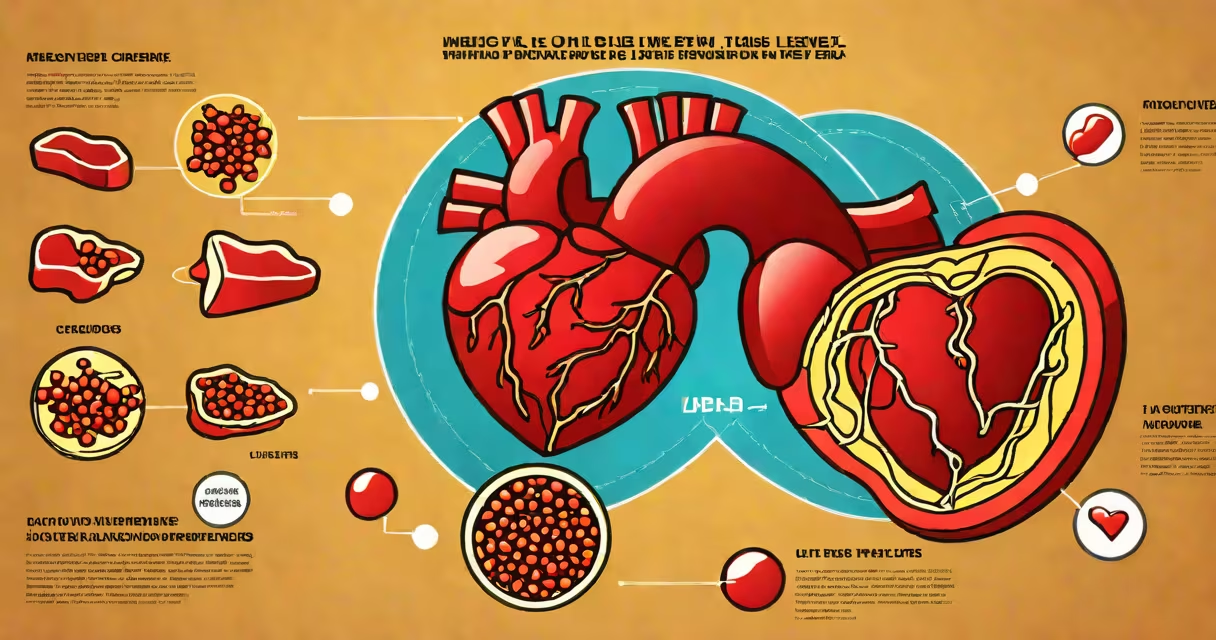
A high LDL level means your blood contains excessive low-density lipoprotein cholesterol, which deposits fatty plaques in arterial walls. This process, called atherosclerosis, narrows blood vessels and increases the risk of heart attack or stroke. LDL is often labeled "bad" cholesterol because it contributes directly to vascular damage.
LDL cholesterol travels through the bloodstream carrying cholesterol to cells. When levels exceed 130 mg/dL, excess LDL particles penetrate the inner lining of arteries. Immune cells called macrophages engulf them, forming foam cells that accumulate into plaque. Over time, plaque hardens and restricts blood flow. A single episode of plaque rupture can trigger a clot, leading to acute events like myocardial infarction.
The American Heart Association states that LDL levels above 160 mg/dL are considered very high and increase cardiovascular risk. For individuals with existing heart disease or diabetes, the target is below 70 mg/dL. Levels between 130-159 mg/dL fall into the high-risk category, requiring lifestyle changes or medication.
LDL levels are derived from a standard lipid panel drawn after a 9-12 hour fast. The test measures total cholesterol, HDL ("good") cholesterol, triglycerides, and calculates LDL using the Friedewald equation: LDL = Total Cholesterol - HDL - (Triglycerides ÷ 5). This method is accurate when triglycerides are under 400 mg/dL.
For example, a patient with total cholesterol of 220 mg/dL, HDL of 50 mg/dL, and triglycerides of 150 mg/dL would have an estimated LDL of 120 mg/dL. Values above 130 mg/dL prompt clinical concern. Some labs now use direct LDL assays, especially when triglycerides are elevated, to avoid estimation errors.
Recent research shows that particle size matters. Small, dense LDL particles are more likely to penetrate arterial walls than large, buoyant ones. Even if LDL numbers appear normal, small-particle LDL can still drive atherosclerosis. This explains why some people with "normal" LDL levels develop heart disease.
Not all high LDL levels carry equal danger. Risk depends on age, family history, blood pressure, smoking status, and presence of other conditions. The ASCVD Risk Estimator from the American College of Cardiology classifies patients into low, moderate, high, or very high risk based on multiple factors.
| LDL Category | mg/dL Range | Clinical Implication |
|---|---|---|
| Optimal | <100 | Low risk for heart disease |
| Borderline High | 130-159 | Requires lifestyle intervention |
| High | 160-189 | Medication typically recommended |
| Very High | ≥190 | Genetic cause likely; aggressive treatment needed |
Individuals with familial hypercholesterolemia, a genetic disorder affecting LDL receptor function, often have LDL levels above 190 mg/dL from birth. Without treatment, they face a 50% chance of heart attack by age 50. Early diagnosis and statin therapy reduce this risk by over 80%, according to the National Lipid Association.
Many assume that high LDL always leads to heart attacks. That's incorrect. While high LDL is a major contributor, outcomes depend on metabolic health. A person with high LDL but normal blood pressure, no diabetes, and healthy weight may never experience cardiac events.
Another myth is that dietary cholesterol directly raises LDL. Studies show that for most people, saturated fat intake affects LDL more than egg consumption. The 2020 Dietary Guidelines for Americans state that dietary cholesterol has minimal impact on blood cholesterol for 70% of the population. However, individuals with high baseline LDL may see modest increases from high-cholesterol foods.
Some confuse LDL with triglycerides. Triglycerides store excess energy and rise after eating. High triglycerides (>150 mg/dL) correlate with insulin resistance and metabolic syndrome. Elevated triglycerides plus high LDL create a particularly dangerous combination known as dyslipidemia. This dual abnormality increases atherosclerosis risk more than either alone.
In 2021, a 48-year-old man with no symptoms had a routine checkup. His lipid panel showed: total cholesterol 260 mg/dL, HDL 40 mg/dL, triglycerides 180 mg/dL. Using the Friedewald equation: LDL = 260 - 40 - (180 ÷ 5) = 220 - 36 = 184 mg/dL. His LDL was classified as high.
He had no family history of early heart disease and maintained a healthy BMI. Despite this, his cardiologist recommended a statin due to his LDL level and elevated triglycerides. After six months on atorvastatin 40 mg daily, his LDL dropped to 85 mg/dL. He also reduced red meat intake, added daily walking, and cut out sugary drinks. His follow-up panel confirmed sustained improvement.
This case illustrates that even asymptomatic individuals benefit from managing high LDL. The American Heart Association emphasizes treating LDL regardless of symptoms when levels exceed 130 mg/dL in adults with two or more risk factors.
High LDL doesn't exist in isolation. It often co-occurs with low HDL and high triglycerides, creating a triad linked to insulin resistance. Patients with this pattern have higher rates of coronary events than those with isolated high LDL.
For instance, a study published in JAMA Cardiology found that individuals with both high LDL and low HDL had a 3.2-fold greater risk of heart attack compared to those with normal lipid profiles. This synergy underscores why clinicians evaluate the entire lipid panel, not just LDL.
Finally, some patients present with high HDL and high LDL simultaneously. While high HDL is generally protective, high LDL overrides this benefit. A 2022 analysis in European Heart Journal showed that such patients had similar cardiovascular risk to those with high LDL alone. This challenges the idea that "good" HDL can compensate for "bad" LDL.
I once reviewed the records of a 55-year-old woman who had a silent heart attack during a routine physical. Her LDL was 195 mg/dL, yet she'd dismissed her results as "not bad." She had no chest pain, no shortness of breath. Only a stress echocardiogram revealed a 30% reduction in left ventricular function.
After starting rosuvastatin and adopting a Mediterranean diet, her LDL fell to 78 mg/dL within nine months. Follow-up imaging showed partial recovery of heart function. Her story highlights that high LDL can cause irreversible damage even without symptoms. Regular screening catches issues before they become life-threatening.
Understanding what a high LDL level means is essential for proactive health management. It signals a heightened risk of atherosclerotic cardiovascular disease, not just a lab number. Addressing it early through diet, exercise, and medication reduces long-term complications. Managing high LDL levels effectively prevents heart attacks and extends healthy lifespan.