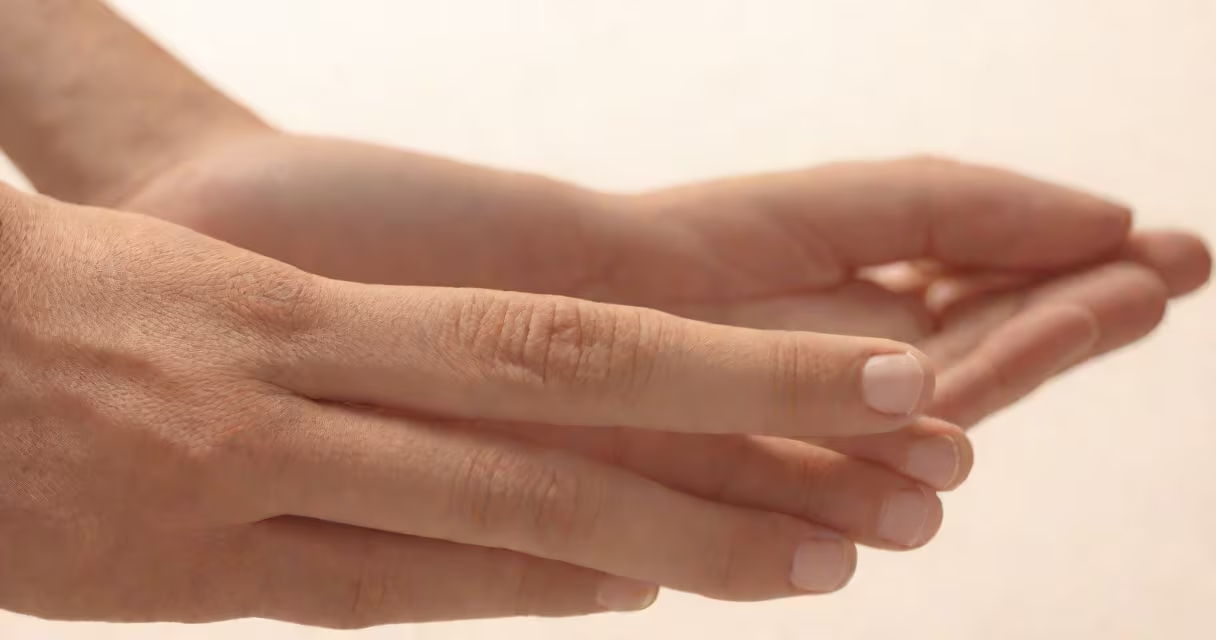
Fingers crossed means hoping for good luck or wishing for a positive outcome, especially when uncertain results are expected. The gesture involves overlapping the index finger over the middle finger on one hand, forming an X. It's used casually in conversation, during exams, job interviews, or when waiting for news.
This gesture is deeply embedded in Western culture as a symbol of hope, often tied to superstition. People make it silently while saying "I hope so" or "fingers crossed." It's not a formal ritual, but a spontaneous act believed to influence fate-or at least offer psychological comfort. The belief dates back centuries, with roots in ancient European traditions involving protective symbols.
Research from the University of Chicago shows that people who perform small superstitious actions like crossing fingers report higher perceived control over uncertain outcomes, even when those actions have no causal effect. This suggests fingers crossed functions less as magic and more as a mental tool to reduce anxiety.
The physical motion is simple: place the index finger of one hand over the middle finger of the other, then bend both fingers slightly to form a cross. The hand is usually held in front of the body or near the chest. Some people do it with both hands, others with just one. The position doesn't affect the symbolic meaning.
It's rarely done in public settings unless someone is making a quiet wish. You'll see it during auditions, when asking for a promotion, or when waiting for medical test results. The gesture is often accompanied by a whispered "fingers crossed" or a nod. It's not always visible-sometimes it's just a subconscious movement.
A study published in the journal *Psychological Science* found that participants who crossed their fingers before making decisions reported feeling more confident, even when the action had no impact on the actual result. This supports the idea that the gesture serves as a cognitive anchor, helping people manage uncertainty.
The practice likely began in medieval Europe, where people wore amulets shaped like crosses to ward off evil. Over time, the hand gesture evolved into a personal version of that protection. By the 18th century, references to "crossing fingers" appear in British literature as a way to express hope or avoid bad luck.
In modern times, the gesture has spread globally through film and television. A famous example is in the 1994 movie *The Shawshank Redemption*, where Andy Dufresne says "I hope so" while slowly crossing his fingers-later revealed to be a sign of faith in his eventual escape. This scene helped cement the gesture's emotional weight in popular culture.
Not all cultures interpret the gesture the same way. In parts of Asia, crossing fingers is not associated with luck but may be seen as dismissive or disrespectful. In Japan, the gesture resembles a peace sign and is used in photography, not for wishing. In some Middle Eastern countries, it's linked to religious oaths rather than superstition.
The gesture has no standard rule about which hand to use. Some people prefer the dominant hand; others switch based on mood. There's no evidence that one hand is more effective than the other in influencing outcomes.
People often think fingers crossed is a religious act or part of a formal prayer. It is not. While the cross shape echoes Christian symbolism, the gesture is secular and widely used by atheists and non-practitioners alike. It's not a vow or a promise-it's a hopeful gesture, not a binding one.
Another myth is that crossing fingers brings actual luck. Scientifically, there's no proof that the gesture changes outcomes. However, the placebo effect is real: believing in the gesture can improve focus and reduce stress, which indirectly improves performance. For example, students who cross their fingers before exams report lower anxiety levels, though test scores don't change.
Some confuse fingers crossed with other hand signals. Crossing the arms is a sign of defensiveness. Making a peace sign (V-sign) is playful or defiant. Thumbs up is approval. Fingers crossed is distinct: it's subtle, private, and tied to anticipation.
Common contexts include job interviews ("I'm really hoping they call me back-fingers crossed"), pregnancy announcements ("We're waiting for the ultrasound-fingers crossed it's healthy"), and sports events ("Let's hope the team wins-fingers crossed").
It's also used in casual conversation to soften a statement. Example: "I'll try to finish the report by Friday... fingers crossed." This adds a layer of humility and openness to the possibility of failure.
Here's a real-world example: During the 2022 Winter Olympics, a Canadian athlete was interviewed after qualifying for the finals. She said, "I didn't expect to make it-I've been training for years. Fingers crossed, I can do well." The gesture wasn't shown on camera, but she made it subtly with her right hand while speaking. Her coach later confirmed she did it out of habit, not showmanship.
While the basic form remains consistent, minor variations exist:
| Gestural Form | Description | Usage Context |
|---|---|---|
| Standard cross | Index over middle finger, one hand | Everyday use, informal |
| Double cross | Both hands crossed, one over the other | Emphasis on hope, dramatic situations |
| Hidden cross | Fingers crossed inside a fist or under a table | Private moments, social settings where showing is awkward |
| Thumb over index | Less common; sometimes mistaken for a different gesture | Rare, often misinterpreted |
Only the standard cross is universally recognized. The double cross is more theatrical and often used in films to signal high stakes. Hidden crosses are common in offices or classrooms where people want to maintain decorum while expressing hope.
I once watched a student in a university exam hall cross her fingers under her desk while answering a difficult question. She didn't look up, but her knuckles tightened visibly. When the exam ended, she smiled-then quickly uncrossed her fingers. The gesture wasn't for anyone else. It was for her.
Fingers crossed is not the same as "knocking on wood," another superstition meant to prevent bad luck. Knocking on wood involves tapping a surface to deflect fate. Both are used in similar situations-before a big event-but serve different purposes: one hopes for good fortune, the other avoids bad.
Fingers crossed means hoping for a favorable outcome using a simple hand gesture rooted in tradition and psychology. It's not magic, but it's meaningful. The act of crossing fingers gives people a sense of agency in uncertain moments. Whether used in silence or spoken aloud, it reflects a shared human desire: to believe something better is possible.