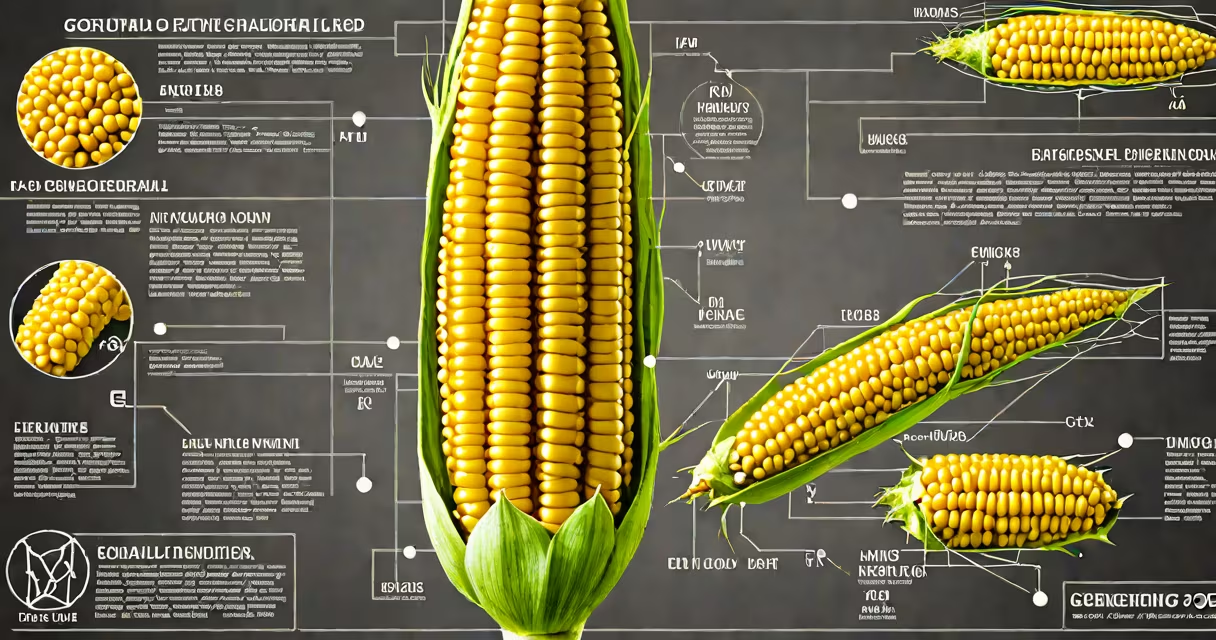
Genetically engineered food refers to crops or animals whose DNA has been altered using biotechnology tools to introduce specific traits-such as pest resistance, drought tolerance, or enhanced nutritional content-beyond what natural breeding can achieve.
This process involves inserting genes from other organisms, including bacteria, viruses, or even unrelated plants, into a host organism's genome. The goal is to produce desired outcomes faster and more precisely than traditional crossbreeding methods.
The U.S. Department of Agriculture (USDA) defines genetically engineered crops as those developed through recombinant DNA technology, where foreign genes are integrated into the plant's genome to confer new characteristics. These modifications are not random; they are targeted and measurable.
Scientists identify a gene responsible for a useful trait-like producing a protein toxic to certain insects-and insert it into a crop's DNA. For example, Bt corn contains a gene from the soil bacterium *Bacillus thuringiensis* that produces a toxin harmful only to specific pests, reducing the need for chemical pesticides.
The insertion is done using tools such as gene guns or *Agrobacterium*-mediated transformation. Once inserted, the new gene becomes part of the plant's hereditary material and is passed to offspring. The resulting plants are then tested for stability, expression levels, and safety.
Unlike selective breeding-which takes years and relies on existing genetic variation-genetic engineering allows direct transfer of traits across species barriers. A tomato can be modified with a fish antifreeze gene to survive colder temperatures, though such products remain rare in commercial markets.
Common genetically engineered crops include soybeans, corn, cotton, and canola. These dominate U.S. farmland, with over 90% of planted acres being GM varieties as of 2022, according to the USDA.
| Crop | Modified Trait | Common Use |
|---|---|---|
| Roundup Ready Soybeans | Resistance to glyphosate herbicide | Herbicide-tolerant farming |
| Bt Corn | Production of insecticidal protein | Reduced need for chemical sprays |
| High-Oleic Soybeans | Altered oil profile for healthier fats | Food oils and industrial applications |
| Non-Browning Arctic Apple | Gene silencing to prevent browning | Consumer convenience and reduced waste |
Gene editing technologies like CRISPR-Cas9 have expanded capabilities beyond simple gene insertion. These allow precise edits within the organism's own genome-such as deleting a gene that causes susceptibility to disease-without adding foreign DNA. This distinction matters legally and commercially, as some countries regulate gene-edited foods differently than transgenic GMOs.
Genetically engineered crops are widely adopted in the United States, Brazil, Argentina, and Canada. They are used primarily to increase yields, reduce losses from pests and weeds, and lower labor and input costs for farmers.
A 2014 meta-analysis published in *PLOS ONE* reviewed 147 studies and found that GM crops increased yields by 22%, reduced pesticide use by 37%, and boosted farmer profits by 68% compared to conventional counterparts.
Developing nations also benefit. In India, Bt cotton adoption led to a 24% increase in yield and a 50% reduction in pesticide applications between 2002 and 2012, according to research by the International Food Policy Research Institute (IFPRI).
Genetically engineered food is often confused with hybridized or organically grown food. Hybridization involves crossing two parent lines to combine favorable traits-this is natural selection with human guidance. Organic standards prohibit genetic engineering entirely, but not all non-GM foods are organic.
Another myth is that GMOs cause cancer or allergic reactions. The World Health Organization (WHO) states that "no adverse health effects have been demonstrated" from consuming approved GM foods. Regulatory bodies like the FDA, EFSA, and WHO require rigorous safety assessments before approval.
Not all genetic modifications involve foreign DNA. Gene editing techniques like CRISPR do not insert external genes. A 2021 study in *Nature Biotechnology* showed that CRISPR-edited mushrooms resisted browning without introducing any foreign sequences-yet they still fall under GMO regulations in many jurisdictions due to classification frameworks, not biological risk.
In 2019, I visited a farm in Iowa growing Roundup Ready soybeans. The farmer explained that he could spray herbicide directly over the crop during the growing season without harming the plants-a practice impossible with non-GM varieties. He saved time, fuel, and labor while maintaining field productivity. His yield remained stable despite late-season weed pressure.
This example illustrates a key point: GM crops aren't about altering nature arbitrarily-they're tools designed to solve practical problems. In this case, efficient weed control enabled larger-scale production with fewer inputs.
Understanding what genetically engineered food means requires distinguishing between intentional, laboratory-based changes and accidental mutations or traditional breeding. It's not a single category but a spectrum of techniques-from transgenic inserts to precise gene edits-all aiming to improve food security, sustainability, and resilience.
When evaluating claims about GM food, focus on peer-reviewed evidence and regulatory decisions rather than emotional narratives. The science consistently shows that approved genetically engineered foods pose no greater health risk than their non-GM equivalents.