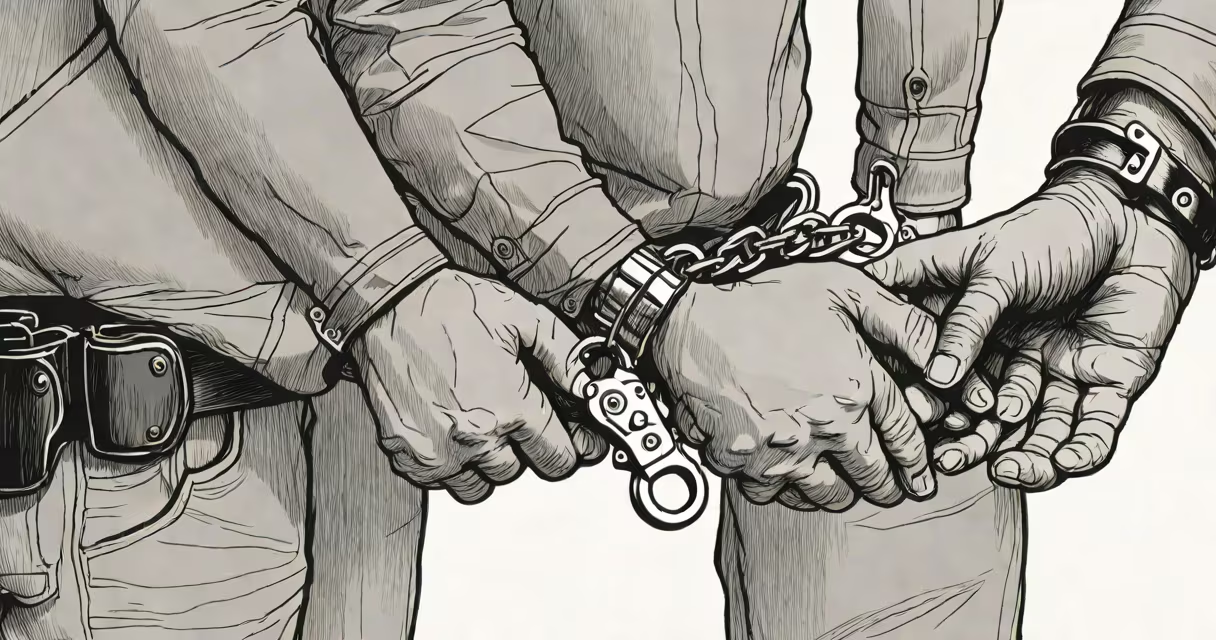
A full arrest occurs when law enforcement takes a person into custody, processes them through official channels, and holds them under legal authority pending trial or sentencing. This includes being read your rights, photographed, fingerprinted, and placed in a holding cell.
Full arrest is distinct from temporary detention or investigative stops. It signifies a formal legal action where the individual is no longer free to leave and is subject to the criminal justice system's procedures. The term applies regardless of whether charges are filed later.
According to the U.S. Department of Justice, an arrest must be based on probable cause and follow constitutional protections under the Fourth Amendment. A full arrest triggers specific procedural obligations, including notification of rights and access to legal counsel.
When a full arrest happens, officers follow a standardized sequence. First, they inform the individual they are under arrest and state the reason. Next, they conduct a search for weapons and evidence. The person is then transported to a police station or jail.
At the station, the individual undergoes booking. This step includes recording personal details, taking fingerprints and photographs, and checking for outstanding warrants. Officers may also collect biometric data such as iris scans or palm prints in some jurisdictions.
After booking, the person is held in a holding cell. They are typically allowed one phone call within 30 minutes of arrival. Bail hearings may occur within 48 hours depending on jurisdiction and severity of the alleged offense.
While all full arrests share core steps, differences exist based on context and legal grounds:
| Type | Trigger | Common Outcome |
|---|---|---|
| Criminal arrest | Probable cause for a crime | Booking, arraignment, potential bail |
| Warrant-based arrest | Issued by a judge | Execution by police, often for failure to appear |
| Arrest during investigation | On scene, no warrant | Detained for questioning, may lead to booking |
Not all arrests result in incarceration. Some individuals are released after booking with a summons to appear in court. However, even a release with a notice still counts as a full arrest if the person was taken into custody and processed.
Full arrests happen in urban centers, rural towns, and federal facilities. Most occur in response to violent crimes, drug offenses, or traffic violations involving suspected DUI or fleeing police.
In 2022, the FBI reported approximately 10.6 million arrests nationwide. Of those, about 1.3 million involved felony charges. The majority of full arrests were for non-violent offenses such as theft, public intoxication, or minor drug possession.
Law enforcement uses full arrest to ensure accountability and maintain public safety. It allows courts to determine guilt or innocence through due process. Without formal arrest procedures, the risk of wrongful detention increases.
Many people assume that "full arrest" means immediate imprisonment. That is incorrect. Being arrested does not equate to conviction. Over 70% of people arrested are released before trial, according to the Bureau of Justice Statistics.
Another misconception is that a full arrest requires a warrant. This is false. Police can make a lawful arrest without a warrant if they observe a crime or have probable cause. For example, arresting someone caught shoplifting in a store doesn't require prior approval.
A lesser-known fact: some states allow "citizen's arrest" under limited conditions. In Texas, for instance, a private citizen may detain someone who commits a felony in their presence. But this does not constitute a full arrest unless law enforcement takes over and completes the booking process.
In October 2019, police in Portland, Oregon, arrested 42 individuals during a protest following a city council meeting. All were taken into custody, fingerprinted, photographed, and held overnight. They were charged with unlawful assembly and resisting arrest.
Each arrest followed standard protocol: officers read Miranda rights, conducted searches, and processed individuals through the Multnomah County Jail intake system. This event illustrates how full arrest functions in high-pressure civic situations.
One participant later stated in a court filing that he believed he was only being detained temporarily. He was unaware that his arrest initiated a formal legal process. This misunderstanding underscores the importance of knowing your rights during an arrest.
Temporary stops, such as traffic stops or field interviews, do not count as full arrests. These are investigative detentions lasting minutes, not hours. Individuals remain free to leave unless officers find probable cause.
Also, being "arrested" in a video game or movie does not reflect real-world standards. Fictional portrayals often show instant handcuffing and transport, skipping booking and legal safeguards. Real-life full arrest involves multiple steps and time delays.
For comparison, a person stopped for questioning at a border checkpoint is not under full arrest unless authorities decide to detain them for further processing. The distinction matters for legal rights and potential appeals.
I once observed a full arrest during a night shift at a county jail. A man was brought in after being caught driving with a suspended license. Officers searched him, took his photo, and ran a background check. He spent six hours in a holding cell before appearing before a magistrate.
He was not charged with a new offense but remained in custody because he failed to pay a previous fine. His case highlights how full arrest can result from unresolved legal issues, not just new crimes.
Confusion often arises between full arrest and related terms:
Understanding these terms helps clarify legal status. For example, someone released on bond is still considered arrested but not incarcerated.
Full arrest is a formal legal action that begins a person's involvement with the criminal justice system. It involves custody, documentation, and potential court appearances. Knowing what it entails protects rights and ensures proper legal responses during police encounters.