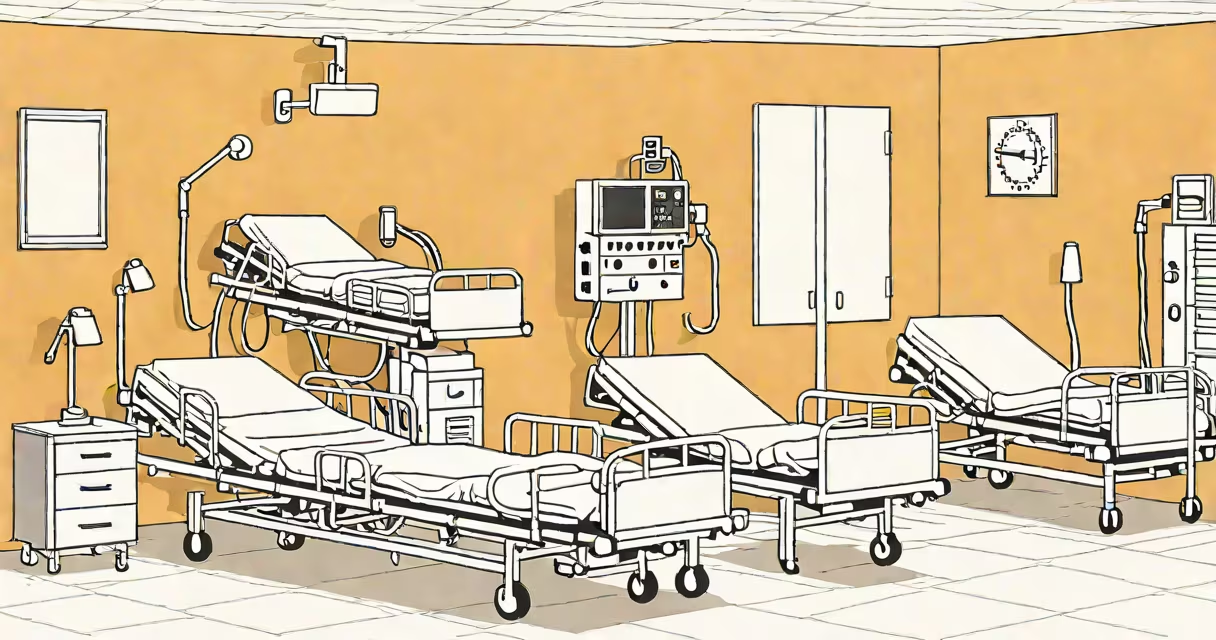
Inpatient care involves staying overnight in a hospital for treatment, while outpatient care allows patients to receive services and return home the same day. These terms define the setting and duration of medical services based on clinical need and facility policy.
Inpatient status begins when a doctor orders a formal admission, typically requiring a bed in a hospital unit. This applies to surgeries, childbirth, intensive treatments, or recovery from serious illness. The patient remains under continuous supervision, with access to diagnostics, nursing staff, and emergency resources. A typical inpatient stay lasts at least one night, though durations vary by condition-common stays range days for elective procedures, and longer for complex cases like heart surgery or stroke recovery.
Outpatient care includes visits to clinics, urgent care centers, or hospital departments where patients do not stay overnight. Examples include routine checkups, lab tests, imaging scans, minor surgeries, and follow-up appointments. Most outpatient visits last less than four hours. Patients leave the facility within hours of arrival, often returning home the same day. This model supports faster turnaround and lower costs compared to inpatient stays.
Hospitals classify patients based on clinical necessity and resource availability. Admission requires a physician's order, insurance pre-authorization, and bed availability. Once admitted, patients are assigned a room, monitored continuously, and treated by a team including nurses, specialists, and social workers. Discharge occurs only after stabilization and completion of required therapy.
Outpatient services operate on appointment schedules. Patients arrive, undergo evaluation or procedure, and depart within hours. No bed is required. Services are billed differently-outpatient visits usually fall under "facility fees" and "professional fees," while inpatient care includes daily room charges, medication administration, and ancillary services.
For example, a patient undergoing knee replacement surgery is admitted as inpatient. They spend the night in the hospital, receive pain management, physical therapy, and monitoring. After three days, they're discharged to a rehabilitation center. Conversely, a patient getting a colonoscopy at a GI clinic is seen as outpatient. They arrive early, receive sedation, the procedure takes 30 minutes, and they go home the same day.
The table below outlines key differences between inpatient and outpatient care:
| Feature | Inpatient | Outpatient |
|---|---|---|
| Stay Duration | At least one night | Same day, no overnight stay |
| Common Procedures | Surgery, childbirth, ICU care | Lab tests, X-rays, minor surgery |
| Cost Range (US) | $1,500-$15,000+ per day | $100-$1,000 per visit |
| Insurance Billing | Per diem rate, global surgical package | Fee-for-service, bundled codes |
Some services blur the line. For instance, a patient may have a diagnostic MRI as outpatient but require inpatient admission afterward due to findings. Conversely, a patient may be admitted for observation after an outpatient ER visit if symptoms worsen.
Many assume all hospital visits are inpatient. That's false. Over 70% of hospital-based procedures in the U.S. are outpatient, according to the Centers for Medicare & Medicaid Services (CMS). A patient visiting the emergency department for chest pain may be admitted as inpatient if tests show a heart attack-but if results are normal, they're discharged as outpatient.
Another misconception is that outpatient care is less thorough. On the contrary, outpatient facilities follow strict clinical guidelines. The American College of Surgeons reports that 95% of laparoscopic surgeries performed in outpatient settings have complication rates below 1%, comparable to inpatient outcomes.
I once observed a patient scheduled for cataract surgery in an outpatient eye center. The procedure took 15 minutes. The patient was awake, received local anesthesia, and left with clear vision within two hours. No hospital bed was needed. This case illustrates how advanced outpatient medicine delivers high-quality care efficiently.
One non-obvious difference: inpatient care is subject to stricter documentation rules. The Joint Commission mandates that inpatient records include daily progress notes, care plans, and discharge summaries. Outpatient records focus on visit-specific entries and may not require daily updates.
Also, inpatient stays trigger different coding systems. The ICD-10-CM system uses specific diagnosis codes for inpatient admissions, such as Z53.0 (encounter for admission for examination and evaluation). Outpatient visits use different codes, like Z00.00 (encounter for general health examination).
When insurance denies coverage, the distinction matters. A patient receiving chemotherapy in an outpatient infusion center may face higher out-of-pocket costs than if the same treatment were administered during an inpatient stay-because insurers often reimburse inpatient settings at higher rates due to bundled care.
Understanding these terms helps patients anticipate costs, prepare for care, and communicate effectively with providers. Knowing whether a service is inpatient or outpatient affects billing, recovery time, and access to support services.