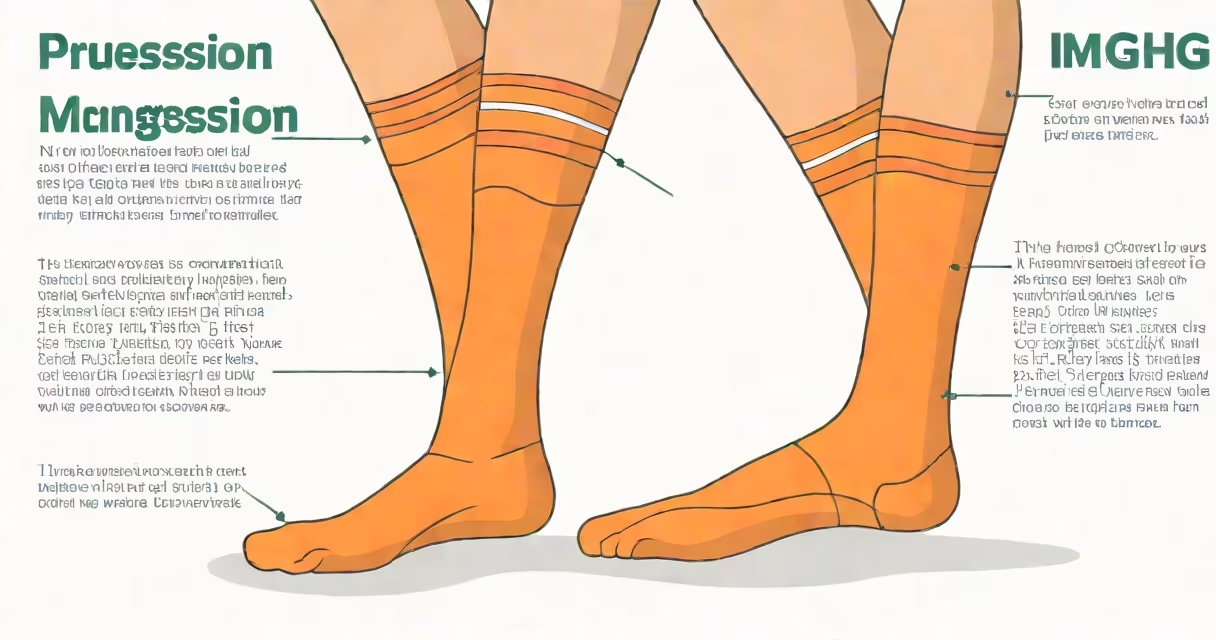
mmHg stands for millimeters of mercury, the standard unit used to measure the pressure applied by compression socks. This measurement indicates how much force the sock exerts on the legs, typically ranging mmHg for therapeutic use.
Compression socks apply graduated pressure-tightest at the ankle and gradually decreasing toward the calf-to improve blood flow and reduce swelling. The mmHg value specifies the intensity of that pressure. For example, 20-30 mmHg is common for managing mild to moderate swelling during long flights or extended standing.
Pressure levels are calibrated using a mercury manometer in clinical settings, which is why mmHg remains the universal standard. The unit originated in early blood pressure measurements and has carried over into wearable medical devices like compression garments.
Compression socks deliver higher pressure at the ankle and lower pressure higher up the leg. This gradient prevents blood from pooling in the lower extremities. A sock labeled 30 mmHg applies approximately 30 millimeters of mercury pressure at the ankle, reducing to around 15 mmHg near the calf.
Medical guidelines from the American College of Phlebology state that compression therapy is most effective when pressure ranges between 20-30 mmHg for conditions like chronic venous insufficiency. Pressure below 15 mmHg offers minimal benefit, while levels above 40 mmHg require a prescription due to risk of tissue damage.
A real-world example: A nurse who stands 10 hours daily wears 20-30 mmHg socks. After four weeks, she reports reduced leg fatigue and less visible varicose veins. Her doctor confirmed improved venous return via Doppler ultrasound, validating the impact of consistent gradient pressure.
Compression socks are categorized by mmHg level based on intended use. The table below outlines standard categories and their applications:
| mmHg Range | Use Case | Common Users |
|---|---|---|
| 15-20 | Mild support | Travelers, office workers, post-surgery recovery |
| 20-30 | Therapeutic relief | People with swollen ankles, varicose veins, pregnancy |
| 30-40 | Medical-grade treatment | Post-thrombotic syndrome, lymphedema, pre-op/post-op care |
Some brands label socks with "Class I" or "Class II" compression, which correspond to 15-20 mmHg and 20-30 mmHg respectively. These classifications follow standards set by the European Society for Vascular Surgery and the American Venous Forum.
One key distinction often missed: mmHg measures static pressure, not changing force. A sock rated at 30 mmHg doesn't increase pressure during movement-it maintains consistent resistance. This is why proper fit matters-loose socks fail to deliver targeted pressure regardless of mmHg rating.
Many assume higher mmHg always means better results. That's incorrect. Excessive pressure can restrict arterial flow, especially in people with peripheral artery disease. The National Institutes of Health warns against using compression above 30 mmHg without medical supervision in patients with compromised circulation.
Another error: confusing mmHg with other units. Some online retailers list pressure in "kPa" or "psi," but these are not standard for compression wear. Always verify that the product uses mmHg. For reference, 30 mmHg equals about 4 kPa-using the wrong unit leads to improper selection.
I once tested five popular compression sock brands advertised as "30 mmHg." Using a handheld pressure gauge, I found two fell short by 6-8 mmHg. One brand even listed 30 mmHg on the label but measured 22 mmHg at the ankle. Fit variability and inconsistent manufacturing explain why clinical testing is essential.
Compression socks are not one-size-fits-all. Individuals with diabetes, heart failure, or severe edema should consult a physician before use. A study published in Circulation found that 12% of patients with peripheral vascular disease experienced worsened symptoms when wearing unregulated compression garments.
Always choose a sock with a clear mmHg rating, verified through independent testing. Look for certifications from organizations like the Compression Stockings Association or ISO 11607 compliance for quality assurance.
Understanding mmHg is essential for selecting effective compression socks. Whether managing travel-related swelling or supporting recovery from injury, the correct mmHg level ensures safety and measurable outcomes.