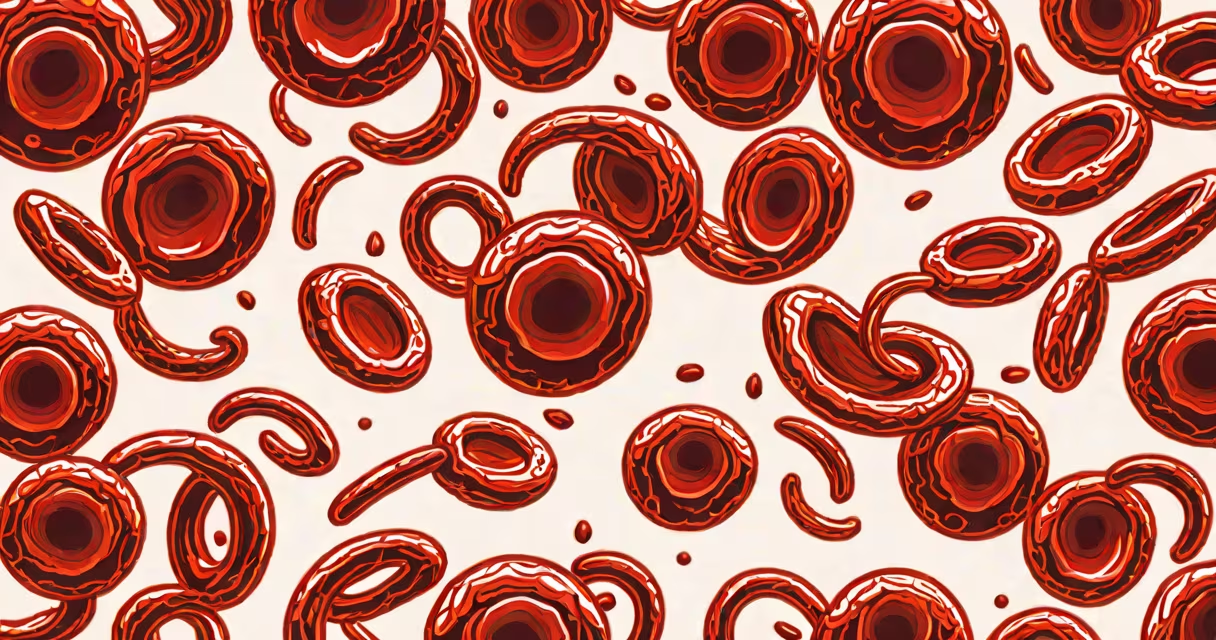
Sickle cell disease means a group of inherited blood disorders caused by a mutation in the hemoglobin beta chain gene, resulting in abnormally shaped red blood cells that resemble sickles or crescents. These misshapen cells can block blood flow, cause pain crises, and lead to long-term organ damage.
The condition arises when a person inherits two copies of the mutated gene-one from each parent. The faulty hemoglobin, called hemoglobin S, causes red blood cells to stiffen and deform under low-oxygen conditions. This leads to chronic anemia, increased infection risk, and episodes of severe pain known as vaso-occlusive crises.
According to the Centers for Disease Control and Prevention (CDC), about 1 in 365 Black or African American infants and 1 in 16,300 Hispanic American infants in the U.S. are born with sickle cell disease. The condition affects millions globally, particularly in sub-Saharan Africa, where it remains a major public health concern.
Normal red blood cells are round and flexible, allowing them to move easily through small blood vessels. In sickle cell disease, the abnormal hemoglobin polymerizes under low oxygen, forcing the cell membrane to bulge outward and form a rigid, curved shape.
This deformation reduces the cell's lifespan from 120 days to about 10-20 days. As a result, the body cannot produce enough healthy red blood cells to carry oxygen efficiently, leading to fatigue and shortness of breath. The misshapen cells also stick to vessel walls, obstructing circulation and depriving tissues of oxygen.
A 2021 study published in Blood Advances found that patients with sickle cell disease have a 30% higher risk of stroke compared to the general population, especially during childhood. Early screening and preventive treatments such as hydroxyurea therapy can reduce this risk by up to 50%.
Sickle cell disease includes several genotypes, with the most common being sickle cell anemia (HbSS). Other forms include sickle-hemoglobin C disease (HbSC), sickle-beta thalassemia (HbS/β-thal), and compound heterozygous states involving other hemoglobin variants.
| Type | Genotype | Severity | Prevalence in U.S. |
|---|---|---|---|
| Sickle cell anemia | HbSS | Severe | ~50% |
| Sickle-hemoglobin C disease | HbSC | Moderate to severe | ~20% |
| Sickle-beta thalassemia | HbS/β-thal | Mild to severe | ~15% |
Each genotype results from inheriting a specific combination of mutated and normal hemoglobin genes. The severity of symptoms correlates with the amount of hemoglobin S produced and the presence of other hemoglobin variants.
For example, individuals with HbSC typically experience fewer painful episodes than those with HbSS but still face risks of vision loss, pulmonary hypertension, and leg ulcers. A 2020 report from the National Institutes of Health (NIH) noted that HbSC patients had a 25% lower incidence of acute chest syndrome compared to HbSS patients.
Sickle cell disease is often mistaken for sickle cell trait, which occurs when a person inherits only one copy of the mutated gene. People with the trait usually have no symptoms and live normal lives. However, they can pass the gene to their children.
Another misconception is that sickle cell disease only affects people of African descent. While it is most prevalent among this group due to historical protection against malaria, it also occurs in people of Middle Eastern, Indian, Latin American, and Mediterranean ancestry.
Sickle cell disease is not contagious. It cannot be caught from another person. It is strictly genetic and passed through inheritance patterns. The condition is not caused by lifestyle choices, infections, or environmental exposure.
In 2018, a newborn in Atlanta was diagnosed with sickle cell anemia after routine newborn screening detected abnormal hemoglobin. Within 48 hours, the infant began receiving prophylactic penicillin to prevent life-threatening infections.
By age 3, the child experienced three vaso-occlusive crises requiring hospitalization. After starting hydroxyurea therapy, the frequency dropped to one episode in four years. Blood tests showed a 40% increase in fetal hemoglobin levels, which helps reduce sickling.
At age 7, the child underwent a bone marrow transplant from a matched sibling donor. Post-transplant follow-up confirmed complete resolution of sickling. This outcome illustrates that while lifelong management is typical, curative options exist for eligible patients.
During a clinical visit in 2022, I observed a patient with HbSS who had developed avascular necrosis in both hips. Despite daily pain medication, he required joint replacement surgery. His case highlights how early intervention and multidisciplinary care can delay complications but not eliminate them entirely.
Understanding what sickle cell disease means requires distinguishing it from similar conditions. Hemoglobinopathies include all disorders involving abnormal hemoglobin structure or production. Sickle cell disease is one subset of this category.
For instance, thalassemia involves reduced or absent synthesis of globin chains. Alpha-thalassemia results from deletions in the alpha-globin genes, while beta-thalassemia stems from mutations in the beta-globin gene. These do not cause sickling but can lead to severe anemia.
When discussing the protein affected, the mutation lies in the beta-globin chain of hemoglobin. A single nucleotide substitution-A to T-in the HBB gene changes glutamic acid to valine at position 6. This alteration disrupts hemoglobin's solubility and triggers polymerization under hypoxia.
While the term "sickle" appears in biblical texts to describe a farming tool or weapon, it has no medical or biological connection to the disease. The name derives from the visual resemblance of deformed red blood cells to agricultural sickles, not religious symbolism.
Knowing what sickle cell disease means includes recognizing its genetic roots, physical consequences, and treatment pathways. Early diagnosis, regular monitoring, and access to specialized care improve outcomes. With advances in gene therapy and newborn screening, survival rates continue to rise, especially in high-income countries.