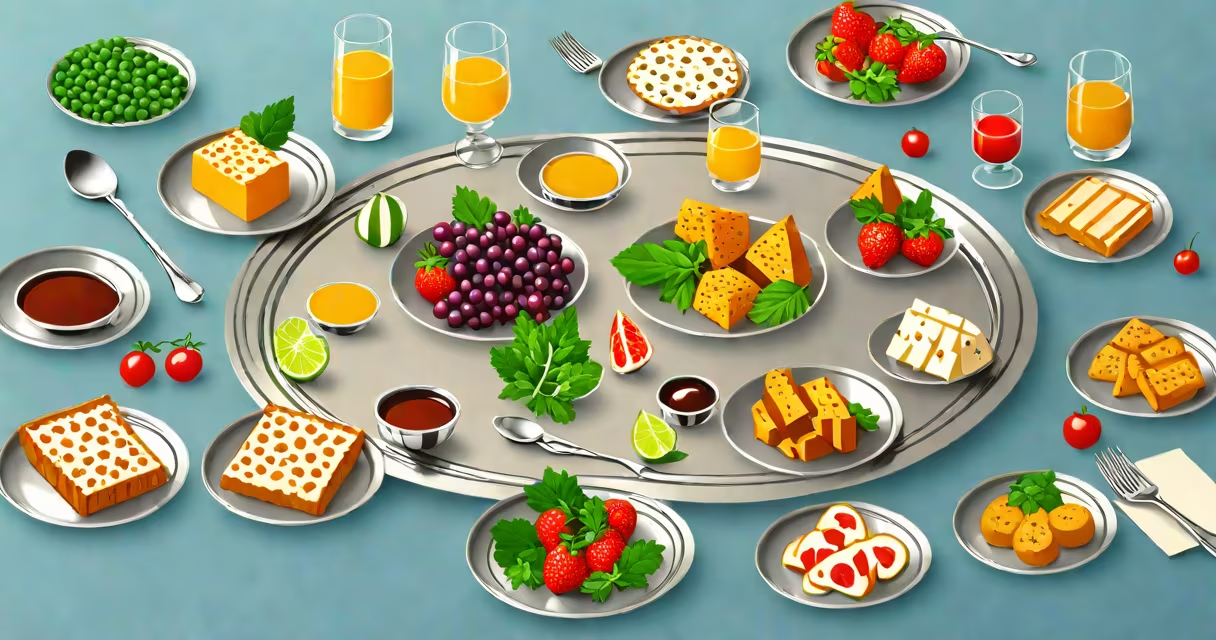
The seder plate holds six symbolic foods that represent key elements of the Exodus narrative and the themes of liberation, memory, and faith during Passover. Each item corresponds to a specific aspect of the Israelites' process from slavery in Egypt to freedom in the Promised Land.
The seder plate is central to the Passover Seder meal, a ritual dinner held on the first two nights of Passover. It typically includes a shank bone (zeroa), a roasted egg (beitzah), bitter herbs (maror), a mixture of chopped apples, nuts, and wine (charoset), parsley or celery (karpas), and matzah. These items are placed on a single tray and serve as visual and tactile anchors for the retelling of the Exodus story.
According to the Jewish Virtual Library, the seder plate's design evolved over centuries, with regional variations in the types of herbs or the form of the charoset. The placement of the items follows a traditional order based on the sequence of events in the Exodus account, reinforcing the narrative structure of the Seder.
During the Seder, participants follow a structured order called the Haggadah, which guides them through the recitation of prayers, blessings, and storytelling. The seder plate is referenced at several points in the Haggadah, particularly when discussing the ten plagues, the exodus from Egypt, and the rebuilding of the Temple in Jerusalem.
Each food item is touched, tasted, or blessed in turn. For example, the maror (bitter herbs) is eaten to evoke the bitterness of slavery. The karpas (green vegetable) is dipped in salt water to symbolize tears shed during bondage. The charoset, a sweet paste resembling mortar, recalls the bricks the Israelites were forced to make under Pharaoh's rule.
A common misunderstanding is that the seder plate must contain exactly six items. While six is standard, some families use a seven-item version that includes a second piece of matzah or a small bowl of water for the ritual hand washing. The core function remains consistent: to embody the story through physical objects.
The following table outlines the six primary components of the seder plate and their symbolic meanings:
| Item | Hebrew Name | Symbolic Meaning |
|---|---|---|
| Shank bone | Zeroa | Passover sacrifice; God's outstretched arm in delivering the people from Egypt |
| Roasted egg | Beitzah | Temple offering; mourning for the destruction of the Second Temple; rebirth and renewal |
| Bitter herbs | Maror | The harshness of slavery; suffering endured by the Israelites |
| Charoset | Charoset | Mortar used in brick-making; sweetness despite hardship; unity of labor and faith |
| Parsley or celery | Karpas | Hope and renewal; green life emerging from winter; the first taste of freedom |
| Matzah | Matzah | Unleavened bread; haste of departure; absence of pride or ego in spiritual process |
One non-obvious detail often overlooked is that the zeroa (shank bone) is not always a real lamb bone. Many modern seder plates use a chicken wing or even a symbolic representation due to the absence of the Temple and the inability to perform sacrifices. This adaptation preserves the meaning while acknowledging contemporary religious practice.
Another misconception is that the charoset must be made from apples and walnuts. While this is common in Ashkenazi tradition, Sephardic and Mizrahi Jews often use dates, figs, or almonds mixed with wine and cinnamon. The variation reflects regional culinary traditions while maintaining the core symbolism of labor and resilience.
People frequently confuse the seder plate with the Seder table setting. The seder plate is a single tray with symbolic foods. The Seder table includes the four cups of wine, the Haggadah book, candles, and other ceremonial items. The plate is part of the larger ritual setup but distinct in purpose.
Some assume the seder plate is only used in Orthodox homes. In reality, Reform, Conservative, and secular Jewish families also use it. The level of observance varies, but the symbolic role remains consistent across denominations. According to Chabad.org, the seder plate is a unifying element in Jewish identity, connecting generations through shared ritual.
I once hosted a Passover Seder for a group of friends from different backgrounds. One guest asked why the egg was roasted. I explained that it represented both the sacrificial lamb and the cycle of life. After tasting the charoset, another friend remarked, "I never realized how much history is packed into a single plate." That moment confirmed the power of tangible symbols in transmitting memory.
The seder plate continues to serve as a living archive of Jewish history and values. Its items are not static decorations-they are engaged with through eating, blessing, and discussion. This active participation helps the story of liberation remains vivid and personal.
For many families, preparing the seder plate is a ritual in itself. Children are often invited to help arrange the items, fostering intergenerational learning. The act of placing the maror next to the charoset creates a visual metaphor: suffering and sweetness coexist, and freedom emerges from struggle.
When the seder plate is set correctly, it becomes a focal point for reflection. It reminds participants that freedom is not just political-it is spiritual, communal, and embodied. The foods are not just symbols; they are invitations to remember, to feel, and to act.
Understanding what the seder plate represents connects individuals to a 3,000-year-old tradition. It transforms abstract concepts like exile and redemption into sensory experiences. The plate is not merely a container-it is a narrative device, a teaching tool, and a vessel of collective memory.