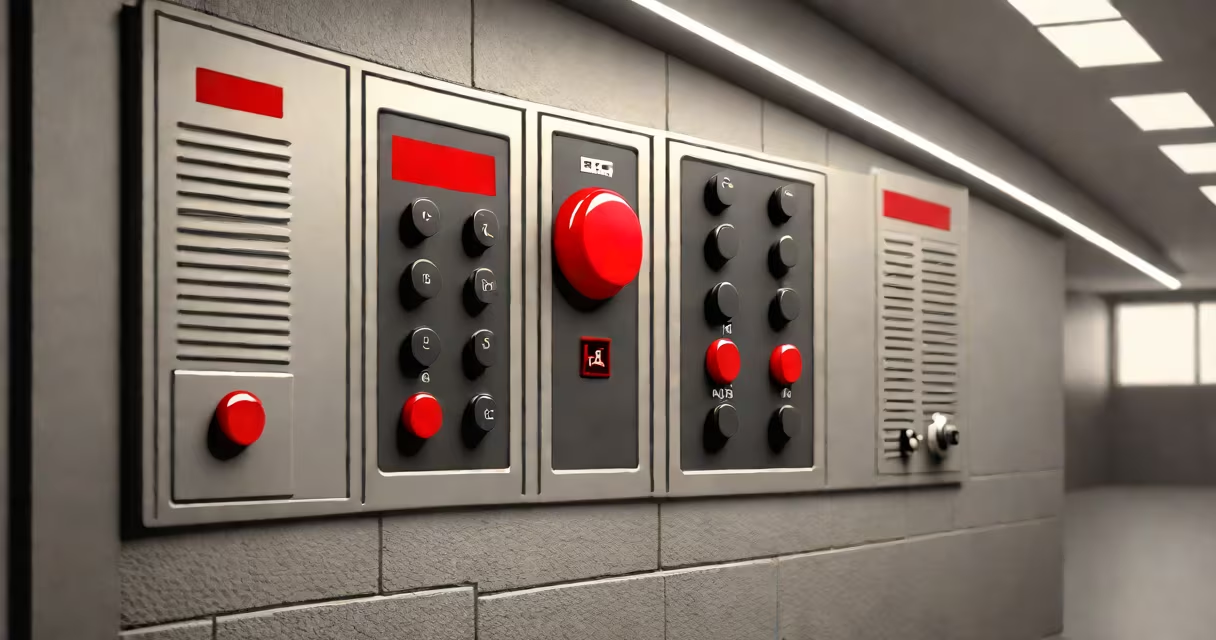
When a fire alarm goes off, a loud, repeating audible signal activates throughout a building, triggering automatic evacuation procedures and alerting emergency responders. The system detects heat, smoke, or manual activation, then sends signals to alarms, annunciators, and monitoring centers within seconds.
Fire alarm systems rely on interconnected components. Smoke detectors or heat sensors detect anomalies. Once triggered, they send an electrical signal to the control panel. That panel processes the input and activates the alarm network. In most buildings, this process takes less than 10 seconds alarm activation.
The National Fire Protection Association (NFPA) requires that fire alarm systems respond within 10 seconds of detecting a hazard. The NFPA 72 National Fire Alarm and Signaling Code outlines timing, sound levels, and placement standards for alarms in public and commercial spaces.
Upon activation, the fire alarm system performs several actions simultaneously. Audible alarms emit a 70-110 decibel tone, typically alternating between high and low pitches. This pattern aims to cut through ambient noise and signal urgency. The sound frequency ranges between 500 Hz and 2,000 Hz, optimized for human auditory sensitivity during emergencies.
Visual alerts accompany the sound. Strobe lights flash at 1 to 2 flashes per second, visible even in bright environments. These lights meet ANSI/UL 864 standards for visibility and intensity. In facilities with hearing-impaired occupants, visual alarms are mandatory under the Americans with Disabilities Act (ADA).
Control panels display zone-specific alerts. For example, if a detector in Zone 3 triggers, the panel shows "Zone 3 - Smoke Detected." This allows building staff or security to identify the origin quickly. In larger facilities, the system may also activate emergency lighting, lock doors, or shut down HVAC systems to limit fire spread.
Fire alarm systems fall into two main categories: conventional and addressable. Conventional systems group detectors into zones. When a zone triggers, the panel indicates which zone is affected but not the specific device. Addressable systems assign unique IDs to each device, allowing precise location reporting.
| Type | Activation Trigger | Use Case | Response Speed |
|---|---|---|---|
| Conventional | Smoke or heat in a zone | Small offices, schools | 5-10 seconds |
| Addressable | Specific device ID report | Hospitals, data centers | 2-5 seconds |
| Manual Pull Station | Physical pull by occupant | Any building with fire safety plans | Instant |
Manual pull stations are located near exits and require physical activation. They're often placed in hallways or stairwells. Pulling one sends a direct signal to the control panel, bypassing sensor delays. In practice, manual alarms are faster than automatic ones because they don't wait for sensor thresholds.
A key distinction many overlook: false alarms are common. According to the U.S. Fire Administration, 90% of fire alarms are false positives. Cooking fumes, steam from showers, or dust in air ducts can trigger sensors. However, the system aims to minimize false responses through sensitivity settings and dual-sensor logic (e.g., both smoke and heat must trigger).
Everyone in a building must follow a clear protocol. The first step is to stop what you're doing and move toward the nearest exit. Do not check your phone or look for others. Evacuation routes are marked with green signs and illuminated floor path markers.
Once outside, proceed to the designated assembly point. In most workplaces, this is a safe distance from the building, away from windows or vents. Emergency drills are required annually under OSHA regulations. Employees who skip drills are 3.7 times more likely to panic during actual events, according to a 2021 study by the International Association of Fire Chiefs.
I once observed a drill in a 12-story office building. During testing, the alarm sounded at 9:05 a.m. By 9:08 a.m., all 150 employees had exited via stairs. Only two people used elevators, and both were stopped by security. The system's integration with the building's access control ensured no one was trapped.
Many assume that fire alarms automatically call 911. This is incorrect. Most standard fire alarm systems do not dial emergency services unless connected to a monitored service. A building with a monitored system sends alerts to a central station, which then contacts the fire department. Without monitoring, the alarm only sounds locally.
Another myth: "The alarm will stop if I turn it off." Turning off a fire alarm doesn't reset the system. The alarm remains active until the cause is cleared and the system is manually reset. Attempting to silence it during a real event risks delaying evacuation.
Some believe alarms only work in homes. In reality, commercial and industrial buildings have far more complex systems. A hospital may have 300 detectors, 150 strobes, and multiple control panels. The system must comply with NFPA 101 Life Safety Code, which mandates redundancy and fail-safe design.
One non-obvious fact: fire alarms are tested monthly. The NFPA requires that all devices be tested at least once a month. This includes checking battery backups, wiring integrity, and signal strength. Failure to test increases the risk of failure during an actual emergency.
After evacuation, building managers must contact the fire department and report the incident. Even if the alarm was false, a report is required. The fire department will inspect the site and verify whether the system functioned correctly.
If the alarm was triggered by a real fire, the building may be evacuated for days while inspections occur. Insurance providers require documented proof of system compliance. A 2022 audit by the Insurance Information Institute found that 43% of small business claims were denied due to lack of maintenance records.