Two-thirds of a cup (2/3) is a common baking measurement equal to about 10.67 tablespoons or 5.33 fluid ounces. It's slightly less than 1 full cup and more than half a cup.
Measuring 2/3 cup accurately requires understanding how fractions relate to standard measuring cup sizes. Most kitchens have measuring cups marked in 1/4, 1/3, 1/2, and 1-cup increments. Since 2/3 doesn't match a single standard mark, you must combine or estimate.
For dry ingredients like flour or sugar, use a flat utensil to level off the top. For liquids, pour until the surface reaches the 2/3 mark on the side of the cup. Always check at eye level to avoid parallax error.
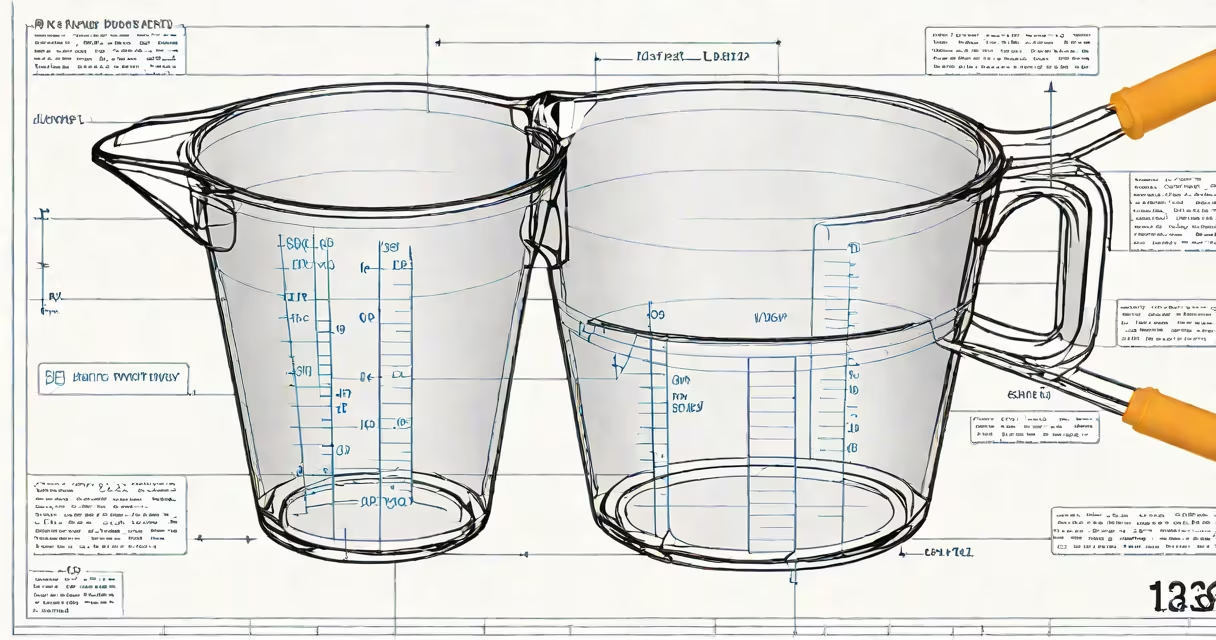
2/3 cup is not a standard line on most measuring cups. Instead, it falls between the 1/2-cup and 1-cup marks. The 1/2-cup line is halfway up the cup, while the 1-cup line is at the top. 2/3 lies roughly two-thirds of the way from the bottom to the top.
To measure 2/3 cup precisely, fill a 1-cup measuring cup to the 1/2-cup line, then add 1/6 more. Since 1/2 + 1/6 = 2/3, this method ensures accuracy. Alternatively, use a tablespoon: 2/3 cup equals 10 full tablespoons plus 2 teaspoons.
When scaling recipes, 2/3 cup is often rounded to 1/2 cup in casual cooking. But in baking, where precision matters, skipping the extra 1/6 can alter texture and rise. A cake requiring 2/3 cup of milk will be denser if only 1/2 cup is used.
There are two main types: nested metal or plastic cups and clear liquid measuring cups with a spout and scale markings. Nested cups are better for dry ingredients because they don't trap air. Clear cups are ideal for liquids due to their visible meniscus.
For 2/3 cup, a clear liquid measuring cup with 1/4-cup and 1/3-cup lines offers the most precision. You can align the 2/3 mark by estimating between the 1/2 and 1-cup lines. Some models even show 2/3.
| Measurement Type | 2/3 Cup Equivalent | Best Use Case |
|---|---|---|
| Tablespoons | 10.67 tbsp | Dry ingredients, small batches |
| Fluid ounces | 5.33 fl oz | Liquids, precise recipes |
| Cups | 0.67 cup | General baking, consistent results |
| Milliliters | 158 mL | International recipes, metric systems |
Using a kitchen scale gives the most accurate result. 2/3 cup of all-purpose flour weighs about 85 grams. This eliminates volume variation caused by packing or settling.
Many people mistake 2/3 cup for 1/2 cup or 3/4 cup. These are distinct: 1/2 = 0.5, 2/3 ≈ 0.67, 3/4 = 0.75. Confusing them alters ingredient ratios.
A frequent error is assuming that "2 3" means two separate measurements-like 2 cups and 3 tablespoons. That's incorrect. In recipe language, "2 3" always means 2/3, especially when written as a fraction. Context matters: "2 3 cup" means 2/3 cup; "2 cups 3 tablespoons" means two full cups plus three tablespoons.
Another misunderstanding is thinking that 2/3 cup equals 1/3 cup doubled. While 1/3 + 1/3 = 2/3, doubling a 1/3-cup measure introduces cumulative error. If the original 1/3 cup was slightly off, the double will be worse. Always measure 2/3 directly.
Consider a vanilla cake recipe calling for 2/3 cup of vegetable oil. Using a 1-cup clear measuring cup, pour oil until the surface reaches the 2/3 mark. Check at eye level to avoid overfilling.
If you only have a 1/4-cup measure, fill it twice (1/4 + 1/4 = 1/2), then add another 1/6. To get 1/6, divide a 1/4-cup measure into four equal parts-each is 1/16 cup. Two of those make 1/8, which is close to 1/6. But this method is imprecise.
For better accuracy, use 10 full tablespoons plus 2 teaspoons. 10 tbsp = 5 fluid ounces, 2 tsp = 0.33 fl oz. Total: 5.33 fl oz = 2/3 cup. This avoids estimation errors and works reliably across kitchens.
I once baked a batch of muffins using a 1/3-cup scoop twice. The batter was too thick, and the muffins sank in the middle. After recalculating, I realized I'd misread the recipe and used 2/3 cup as two 1/3-cup portions. The difference wasn't large-but enough to affect structure. Since then, I've always measured 2/3 cup directly.
Understanding 2/3 cup helps you convert other fractions. For example, 2/3 of 1/2 cup is 1/3 cup. To calculate: 2/3 × 1/2 = 2/6 = 1/3. This applies when halving a recipe that calls for 1/2 cup.
For larger volumes, 2/3 cup is 1/3 of a 2-cup container. If a recipe uses 2 cups of water, 2/3 cup is exactly one-third of that amount.
When converting to metric, 2/3 cup equals 158 milliliters. This is useful for international recipes or when using a digital scale. Always verify conversion factors-some sources list 2/3 cup as 160 mL, but the standard is 158 mL based on U.S. customary units.
Always double-check your measuring tools. A worn or warped cup can throw off results. Replace old cups if the markings are faded or the base is uneven.
Knowing what is 2 3 in a measuring cup ensures consistency in cooking and baking. soups, accurate measurement prevents failure and improves outcomes.