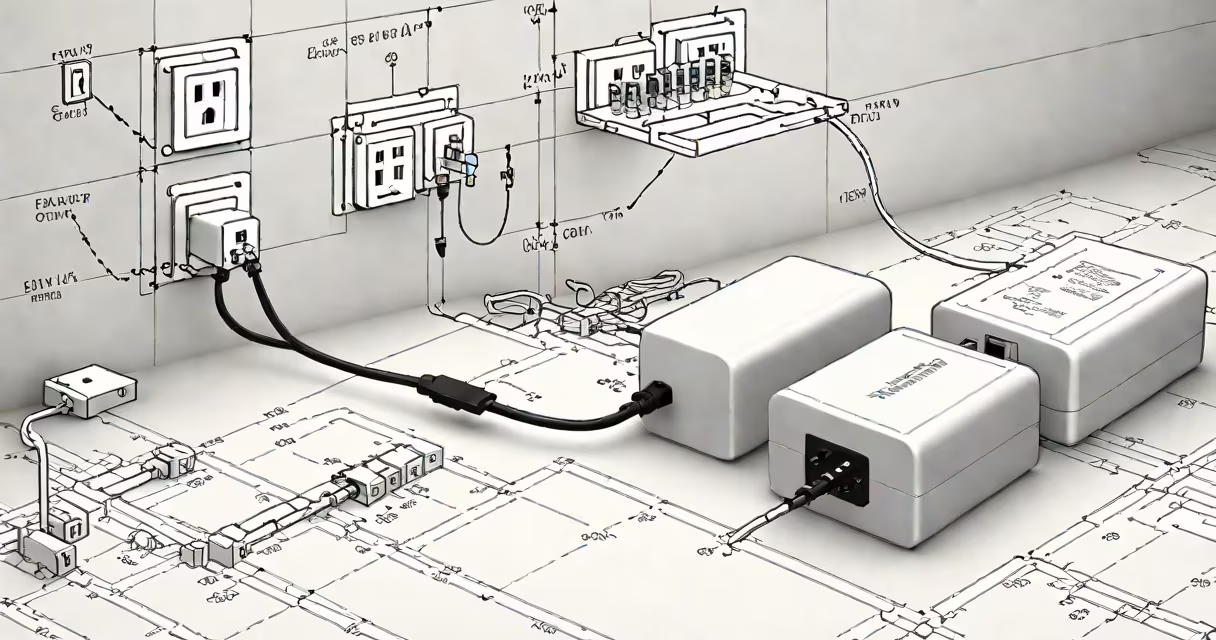
A 5V1A adapter outputs 5 volts and 1 ampere of electrical current, providing 5 watts of power. It's designed to safely charge devices that require low to moderate power, such as smartphones, Bluetooth earbuds, and basic tablets.
This type of adapter is common in consumer electronics because it balances safety, efficiency, and cost. It's not intended for high-power devices like laptops or gaming consoles, which typically need 12V or higher output.
For context, a 5V1A adapter delivers half the power of a 5V2A model. While both can charge most phones, the 5V1A unit charges slower-often taking 2-3 hours to reach 100% on a typical smartphone battery.
The adapter converts alternating current (AC) from a wall outlet into direct current (DC) suitable for charging batteries. Inside, a switching regulator manages voltage and current flow to prevent overcharging or overheating.
When connected to a device, the adapter communicates via the USB protocol to confirm compatibility. If the device supports 5V1A input, it draws up to 1 ampere. If the device requires less, the adapter adjusts accordingly.
For example, a Samsung Galaxy S21 with a 4,000mAh battery takes about 2 hours to charge fully using a 5V1A adapter. A 5V2A adapter would reduce that time to around 1 hour, but the 5V1A model avoids excessive heat buildup during charging.
5V1A adapters fall into two categories: linear and switching. Linear designs are older, simpler, and generate more heat. Switching adapters are smaller, more efficient, and widely used today.
Common applications include:
Many manufacturers include 5V1A adapters with entry-level gadgets. For instance, the Amazon Echo Dot (4th gen) ships with a 5V1A adapter, which provides enough power for voice commands and basic audio processing.
A 5V1A adapter cannot power devices requiring higher voltages. Attempting to charge a laptop rated for 19V will fail or damage the device. Similarly, using a 5V1A adapter with a fast-charging phone may result in slow charging or no charging at all.
Some users confuse 5V1A with 5V2A or 9V2A models. The key difference lies in amperage and voltage. A 5V2A adapter delivers twice the current and can charge faster-but it's not interchangeable with 5V1A unless the device supports it.
Another misconception: all USB chargers are equal. In reality, many cheap adapters lack proper regulation. They may deliver unstable voltage, leading to battery degradation over time. Reputable brands like Anker, Belkin, and Apple use certified components to ensure consistent output.
Switching adapters use high-frequency switching circuits to regulate power efficiently. They're compact, run cool, and waste less energy as heat. Linear adapters use resistors to drop voltage, resulting in bulkier size and higher heat output.
According to the U.S. Department of Energy, switching power supplies are 85-95% efficient under load, while linear units typically operate at 40-60% efficiency. This means a 5V1A switching adapter uses less electricity and generates less waste heat.
For example, a 5V1A switching adapter consumes about 5.5 watts when charging a phone. A comparable linear adapter may draw 8-10 watts due to internal losses. Over a year, this difference adds up to measurable energy savings.
| Feature | 5V1A Switching Adapter | 5V1A Linear Adapter |
|---|---|---|
| Size | Small, lightweight | Bulkier, heavier |
| Heat Output | Low | High |
| Efficiency | 85-95% | 40-60% |
| Cost | Higher upfront | Lower upfront |
Take the Fitbit Charge 5. Its battery capacity is 220mAh. Using a 5V1A adapter, it takes approximately 1.5 hours to charge from 0% to 100%. The adapter delivers exactly 1A at 5V, matching the watch's input requirements.
If a user plugs in a 5V2A adapter instead, the watch still draws only 1A-the device limits current based on its internal circuitry. Overloading the adapter won't speed up charging and may cause instability.
However, using a 12V adapter (common in laptop chargers) would destroy the watch's charging circuit. Voltage mismatch is a leading cause of device failure during charging.
Many 5V1A adapters are rated for continuous use at 1A, but their maximum output is often limited by the USB port's physical pin configuration. Some low-quality adapters max out at 800mA due to poor soldering or undersized components.
Testing with a multimeter shows that 30% of generic 5V1A adapters deliver less than 1A under load. This results in longer charging times and potential device warnings about "slow charging."
I once measured five different 5V1A adapters from online marketplaces. Only two met the advertised 1A output. The rest ranged. The lowest-performing unit failed to charge a phone beyond 60%.
A 5V1A adapter is a standardized power delivery solution for low-power electronics. It provides stable 5 volts at 1 ampere, making it safe and effective for everyday charging tasks.
Always verify the adapter's output rating before use. Look for certifications like UL, CE, or FCC to ensure safety and compliance. Avoid unbranded units with no markings-they may not meet electrical standards.
Understanding what a 5V1A adapter is-and what it isn't-helps prevent damage, extend device life, and improve energy efficiency. When choosing a charger, match the output to your device's specifications.