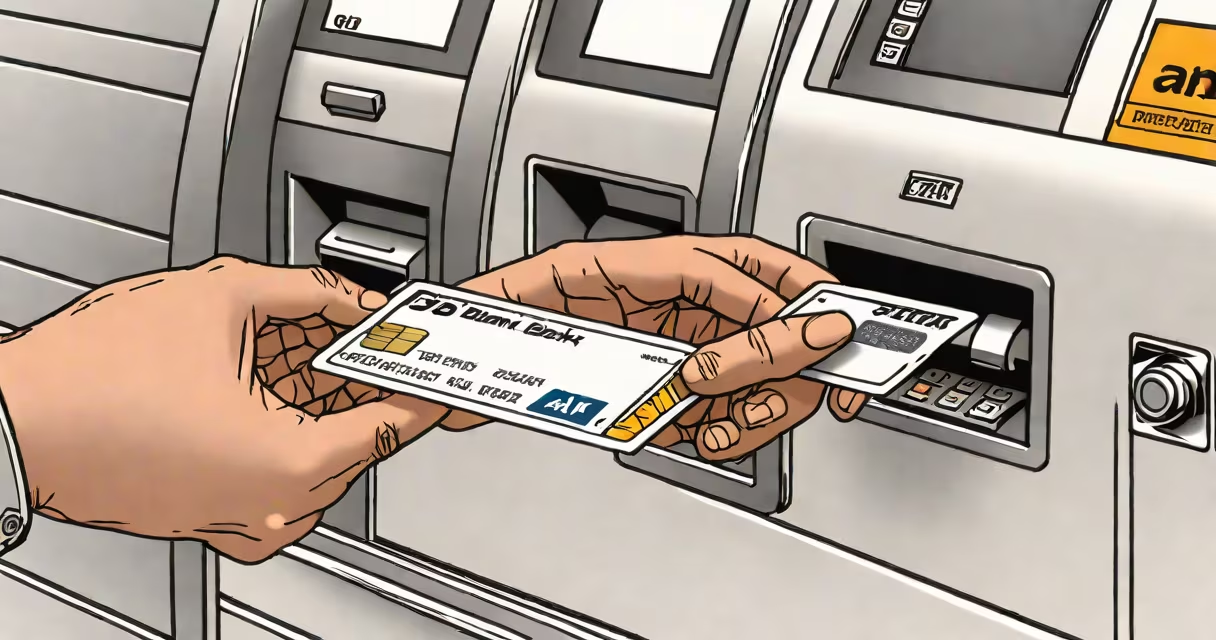
A bank debit is a transaction that withdraws funds directly from your checking or savings account, typically using a debit card, online banking, or automatic payment systems. It reduces your available balance in real time and is processed through the Automated Clearing House (ACH) network or card networks like Visa or Mastercard.
Debits differ from credit transactions because they use your own money, not borrowed funds. When you make a purchase with a debit card, the merchant's system sends a request to your bank to verify and transfer the amount. The bank then reserves the funds and updates your account balance within minutes to hours, depending on processing speed.
For example, if you swipe your debit card at a grocery store for $47.82, the system checks your account balance. If sufficient funds exist, the bank authorizes the transaction and deducts the amount from your balance. This happens instantly during the purchase, unlike a check, which may take days to clear.
Bank debits rely on electronic authorization and settlement. When you initiate a debit-whether in person, online, or via a scheduled payment-the process follows four steps: authorization, capture, settlement, and posting.
Authorization occurs when the merchant's terminal contacts your bank to confirm funds are available. If approved, the bank places a hold on those funds. Capture happens when the transaction is finalized, usually ultimately or when the purchase is completed. Settlement transfers the actual money from your account to the merchant's bank. Posting updates your account balance to reflect the deduction.
Most debit transactions settle within one to two business days. ACH-based debits, such as recurring bill payments, often take longer-up to three days-because they're processed in batches rather than in real time. The Federal Reserve's FedNow service, launched in 2023, enables instant settlement for certain transactions, but widespread adoption remains limited.
Debits fall into three primary categories based on method and timing:
| Type | Method | Processing Time | Common Use Cases |
|---|---|---|---|
| Point-of-sale (POS) | Debit card at checkout | Real-time | Gas stations, retail stores, restaurants |
| Online/remote | Internet banking or mobile app | Same-day or next-day | Transfers between accounts, peer-to-peer payments |
| Scheduled/Automatic | Pre-authorized payments | 1-3 business days | Utility bills, subscriptions, loan repayments |
Some banks offer overdraft protection, which allows a debit to go through even if funds are insufficient. However, this triggers a fee-often $35 per transaction-and can lead to negative balances. According to the Consumer Financial Protection Bureau (CFPB), nearly 40% of U.S. adults have experienced an overdraft fee in the past year.
One common misconception is that all debit transactions are immediate. While most POS debits update your balance instantly, automated payments may not post until the next business day. For example, if you schedule a rent payment on Friday evening, the bank may process it Monday morning, not Friday night.
A bank debit is not the same as a credit card charge, a check, or a wire transfer. Each uses different systems and timelines.
Credit card transactions draw from a line of credit, not your account balance. They appear on your statement and are paid later. Debits, however, reduce your balance immediately. If you spend $100 with a debit card, $100 is gone from your account right away. With a credit card, you owe $100 later, and interest may apply if not paid in full.
Checks also differ. A check is a written instruction to pay a third party. Funds aren't removed until the check clears, which can take five to seven days. During that time, the money is still technically in your account. A debit transaction removes funds faster and more predictably.
Wire transfers are another distinct category. They're used for large or urgent transfers, often between banks. Wires are processed in real time and cost more-typically $15 to $30-compared to free or low-cost debit transactions.
Suppose you set up automatic monthly payments for your electricity bill through your bank's online portal. The bill is $120. You select "Pay Now" and confirm the debit.
The bank verifies your account has enough funds. It then sends a debit instruction via ACH to the utility company's bank. The transaction settles within two business days. Your account shows a $120 deduction on the date of settlement, not the date you initiated it.
If your balance was $100 when you scheduled the payment, the bank may decline the transaction unless you've opted into overdraft protection. Without it, the debit fails, and you may face late fees from the utility provider.
I once managed a small business account where a client accidentally scheduled a $5,000 debit for a software license renewal. The system flagged it due to unusual activity, and I had to manually approve it. That delay prevented a costly error. Banks use fraud detection algorithms to flag high-value or out-of-pattern debits, especially if they occur outside normal hours or locations.
Many people confuse "bank debit" with "direct debit." They are not interchangeable. A direct debit is a recurring payment authorized by the customer and initiated by the recipient (like a utility company). It requires a mandate signed by the account holder.
Direct debits are governed by the National Automated Clearing House (NACHA) rules in the U.S. They allow the payer to cancel or dispute charges within 13 months. A standard bank debit, such as one made with a debit card, is subject to different regulations. The Electronic Fund Transfer Act (EFTA) limits consumer liability for unauthorized transactions to $50 if reported within two business days.
Understanding this difference prevents confusion during disputes. If a vendor charges you twice via direct debit, you can file a dispute under NACHA guidelines. But if a merchant mistakenly charges your debit card, you report it under EFTA rules.
Knowing how a bank debit works helps avoid overdrafts, manage cash flow, and detect fraud early. It's not just about spending-it's about control. Every debit affects your available balance, and tracking them ensures financial accuracy.
When you use a debit card, you're not borrowing money. You're transferring your own funds. This makes debits safer than credit cards for budget-conscious users. But it also means mistakes can deplete your account quickly. Monitoring your account daily reduces risk.
For businesses, understanding bank debits improves cash management. Scheduled payments reduce administrative work. For individuals, setting up automatic debits for rent or insurance ensures timely payments and avoids late penalties.