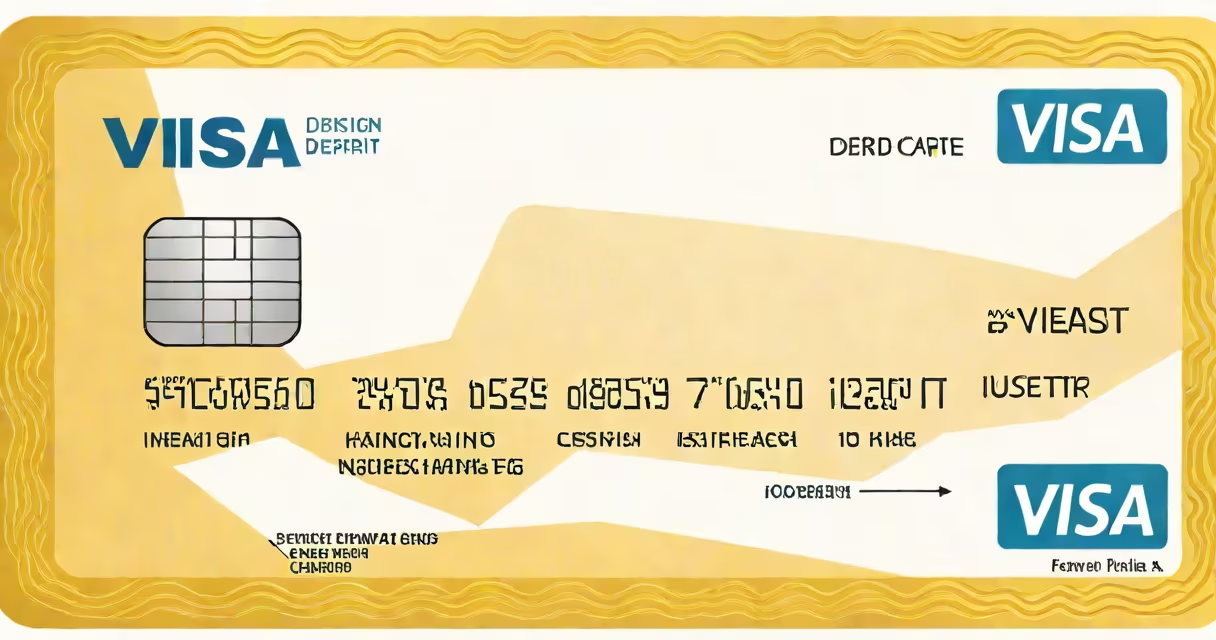
A card number on a Visa debit card is a 16-digit unique identifier assigned to a specific account, used to authenticate and authorize electronic transactions. It appears on the front of the card and is required for online, in-store, and ATM purchases.
The number is issued by the financial institution that issued the card and corresponds directly to the cardholder's bank account. It enables payment processors to route transactions through the Visa network and verify funds availability in real time.
Visa requires all debit cards using its network to follow a standardized format. The first six digits identify the issuer (bank or credit union), the next nine represent the account number, and the final digit is a check digit calculated via the Luhn algorithm to detect input errors.
When a card is swiped, tapped, or manually entered, the merchant's system sends the card number to the payment processor. The processor forwards it to Visa's authorization network, which checks whether the issuing bank approves the transaction based on available balance and fraud risk.
For example, if you use your Visa debit card at a grocery store, the terminal reads the magnetic stripe or chip data, extracts the card number, and sends it to Visa. Within seconds, the system returns an approval or decline response based on the bank's decision.
Card numbers are never stored on merchant servers after a transaction unless the business uses tokenization. Even then, the original number is replaced with a unique digital token to reduce exposure to theft.
Visa debit card numbers follow a consistent structure:
| Position | Digits | Function |
|---|---|---|
| 1-6 | Issuer Identification Number (IIN) | Identifies the issuing bank or credit union |
| 7-15 | Account Number | Unique to the cardholder's account |
| 16 | Check Digit | Validates the number using the Luhn algorithm |
For example, a card number like 4123456789012345 has:
Visa mandates that all card numbers pass the Luhn algorithm validation. This prevents accidental entry errors and blocks many fraudulent attempts during initial processing.
Many people assume that sharing the card number alone allows someone to withdraw money. That's false. A card number alone cannot access funds. Additional details such as the CVV (three-digit security code on the back), expiration date, and sometimes the cardholder's name are required for most transactions.
However, if a thief obtains the full card number, CVV, and expiration date, they can make unauthorized purchases online or over the phone. This is why cardholders should never share their card number without verifying the recipient's legitimacy.
A lesser-known fact: Some older systems still allow transactions with incomplete data, especially in physical stores where the card is swiped rather than inserted or tapped. This increases risk during skimming attacks, where criminals install fake card readers at ATMs or gas stations.
Suppose you're buying a $45 jacket on an e-commerce site. You enter:
The website sends this data to the payment gateway. The gateway validates the card number using the Luhn algorithm. Then it routes the request through Visa's network to your bank. Your bank confirms sufficient funds and returns an approval code. The purchase completes within 3 seconds.
If the bank detects unusual activity-like a sudden purchase in another country-it may flag the transaction and contact you for verification. This is part of Visa's Fraud Management Structure, which analyzes behavior patterns across millions of transactions daily.
A card number is not the same as a PIN, CVV, or account number. The PIN (Personal Identification Number) is a four-digit code used at ATMs and point-of-sale terminals for identity verification. The CVV is a three-digit security code printed on the back of the card. The account number is a separate identifier used internally by banks and not displayed on the card.
Some users confuse the card number with the routing number used for direct deposits or wire transfers. Routing numbers are nine digits long and appear on the bottom of checks, not on the card.
Another misconception: the card number is not linked to a credit limit. Since it's a debit card, spending is limited to the balance in the associated checking account. There is no credit line tied to the number itself.
I once received a notification from my bank about a $120 purchase at a foreign retailer using my Visa debit card number. The transaction was flagged because it occurred in a country where I'd never shopped. I immediately called customer service and confirmed the transaction was declined. My card was blocked, and a new one was issued within 24 hours.
This incident highlighted how the card number alone doesn't grant access-security layers like location-based alerts and real-time monitoring prevent abuse. Without those safeguards, even a stolen number could lead to significant loss.
Never share your card number publicly. Avoid entering it on unsecured websites (look for "https://" and a padlock icon in the browser bar). Use virtual card numbers offered by some banks and fintech apps for online shopping. These generate temporary numbers tied to a spending cap.
Regularly review your bank statements. Most institutions offer free transaction alerts via email or app. Set up notifications for any purchase above $10, regardless of amount.
According to the Federal Reserve, 92% of debit card fraud incidents in 2023 were detected and reversed within 48 hours due to automated monitoring systems. This underscores the importance of timely reporting.