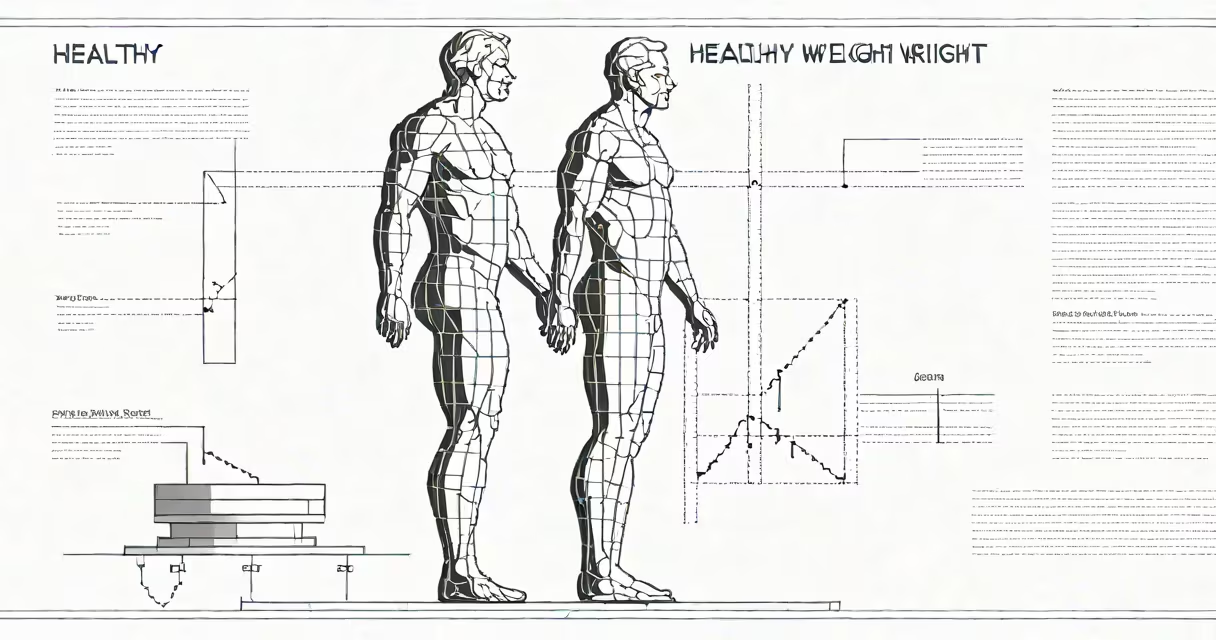
A healthy weight range is the body weight associated with lower risk of chronic disease, typically defined by body mass index (BMI) values between 18.5 and 24.9. This range correlates with optimal metabolic function, cardiovascular health, and longevity. The American Council on Exercise cites BMI as a standard screening tool for weight-related health risks.
BMI calculates weight relative to height using the formula: weight in kilograms divided by height in meters squared. A score below 18.5 indicates underweight, 25-29.9 is overweight, and 30 or higher is obese. These thresholds are based on large-scale epidemiological studies, including those from the National Institutes of Health (NIH).
For example, a person who is 5 feet 6 inches tall (1.676 meters) should weigh between 110 and 145 pounds to fall within the healthy BMI range. A 150-pound individual at this height has a BMI of 25.4, which classifies them as overweight. This illustrates how small changes in weight can shift classification, even with stable health metrics.
BMI is not a direct measure of body fat but a proxy used because it correlates strongly with health outcomes across populations. The World Health Organization (WHO) uses BMI cutoffs globally to classify weight status and inform public health policy.
Despite its widespread use, BMI has limitations. It doesn't distinguish between muscle and fat mass. A muscular athlete may have a high BMI yet low body fat percentage. For this reason, healthcare providers often combine BMI with waist circumference, body composition analysis, or blood markers to assess health risk accurately.
Research published in The Lancet shows that individuals with BMI values in the 20-25 range have the lowest mortality rates across multiple ethnic groups. This supports the clinical consensus that maintaining a BMI near the upper end of the healthy range offers long-term survival benefits.
While BMI remains the most widely used metric, other tools offer more nuance. Waist-to-hip ratio, body fat percentage, and lean body mass measurements provide deeper insight into metabolic health.
| Tool | Healthy Range | Use Case |
|---|---|---|
| BMI | 18.5-24.9 | Population screening, initial health assessment |
| Waist Circumference | Men < 40 inches (102 cm); Women < 35 inches (88 cm) | Assessing visceral fat and diabetes risk |
| Body Fat Percentage | Men: 10-20%; Women: 20-30% | Tracking fitness progress, body composition |
Waist circumference is particularly useful because abdominal fat is linked to insulin resistance and heart disease. A study in JAMA Internal Medicine found that waist size was a stronger predictor of early death than BMI alone.
Many people assume that a "healthy" weight means fitting into a specific clothing size or achieving a certain appearance. This confuses aesthetics with health. A person can be within the healthy weight range but still have poor metabolic health due to diet quality, physical activity levels, or genetic factors.
Another misconception is that everyone should aim for the same BMI. The NIH acknowledges that BMI thresholds may need adjustment for different populations. For example, Asian populations tend to face higher diabetes risk at lower BMIs than White populations. The WHO recommends using BMI cutoffs of 18.5-22.9 for Asian adults to reflect this difference.
I once measured my own body fat using bioelectrical impedance during a fitness evaluation. My BMI was 23.7-within the healthy range-but my body fat percentage was 28%, placing me in the "overfat" category according to the American Council on Exercise. This revealed that BMI alone didn't capture my metabolic risk, prompting a shift toward nutrition and strength training rather than weight loss.
Start by calculating your BMI using your height and weight. If it falls in the 18.5-24.9 range, you're in the healthy weight zone. But don't stop there. Check your waist measurement. If it exceeds recommended limits, consider lifestyle changes even if your BMI is normal.
Remember: a healthy weight range isn't a single number. It's a spectrum shaped by biology, environment, and personal health history. The goal isn't to reach a specific weight-it's to maintain a sustainable, balanced state that supports energy, immunity, and resilience.
Understanding your personal healthy weight range involves more than math. It requires context, consistency, and attention to how your body feels, moves, and functions over time. Use BMI as a starting point, but validate it with real-world health indicators.