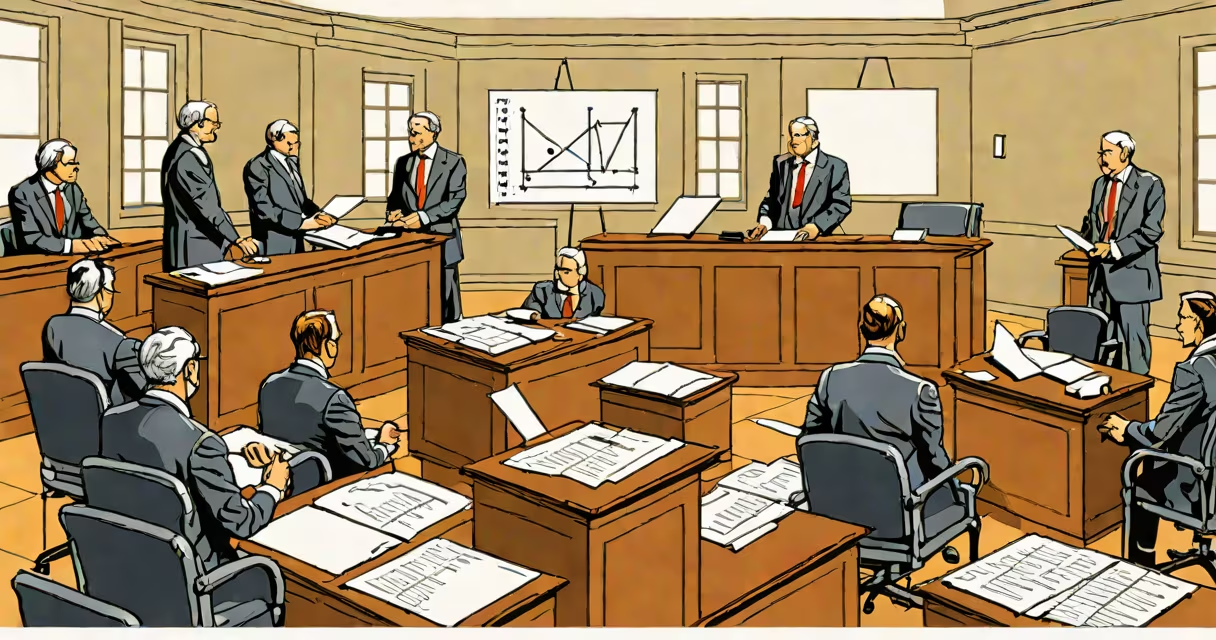
A pretrial conference is a court-ordered meeting held before a trial begins, where the judge, prosecutor, and defense attorney discuss case management, evidence, witness lists, and settlement possibilities. Its purpose is to narrow issues, resolve procedural disputes, and avoid unnecessary trial time.
Pretrial conferences are standard in both state and federal courts. They typically occur weeks or months before trial, depending on case complexity and court scheduling. The judge uses the session to assess whether the case is ready for trial, identify unresolved discovery issues, and set firm deadlines for filings. In federal court, Rule 16 of the Federal Rules of Criminal Procedure mandates that a pretrial conference be held "at a time and place convenient to the court" after the defendant's initial appearance.
These sessions are not public hearings. Attendance is limited to the judge, prosecution, defense counsel, and sometimes court staff. The defendant may attend if they request it, but their presence is not required. The judge may issue written orders summarizing agreements reached during the conference. These orders are binding unless later modified by the court.
The process begins when the court schedules the conference, usually after the discovery phase ends. Discovery involves exchanging evidence, witness statements, and expert reports between both sides. Once all materials are shared, the parties meet with the judge to discuss what remains unresolved.
The judge leads the discussion. Common topics include:
If the defense objects to a piece of evidence, the judge may schedule a separate hearing to rule on admissibility. The judge may also assign specific dates for trial preparation, such as the deadline for submitting jury instructions or closing arguments.
Pretrial conferences vary by jurisdiction and case type. In criminal cases, they often focus on plea negotiations and evidentiary rulings. In civil cases, they center on discovery compliance, settlement discussions, and trial timelines.
| Type | Common Use | Key Focus |
|---|---|---|
| Criminal pretrial | Federal and state felony cases | Plea bargaining, suppression motions, witness list approval |
| Civil pretrial | Personal injury, contract disputes | Discovery completion, expert witness disclosure, trial date setting |
| Specialty pretrial | Complex litigation (e.g., class actions) | Case management, scheduling, consolidation of related claims |
In federal courts, pretrial conferences are governed by the Federal Rules of Civil Procedure, specifically Rule 16. This rule requires the court to hold a pretrial conference within 90 days of the case being assigned to a judge. The court must then issue a scheduling order outlining key deadlines.
Without a pretrial conference, trials risk delay, confusion, and inefficiency. A study by the U.S. Courts Administrative Office found that cases with formal pretrial management were resolved 30% faster than those without. The conference allows the judge to identify potential roadblocks early, such as missing discovery or conflicting witness accounts.
One common mistake is assuming that a pretrial conference is only about settling the case. While settlement discussions are part of the process, the primary goal is procedural efficiency. For example, in a 2021 federal case in the Southern District of New York, a pretrial conference led to the exclusion of improperly obtained surveillance footage, which would have otherwise compromised the defendant's right to a fair trial.
Another misconception is that the defense can skip the conference. That's not true. In most jurisdictions, failure to appear can result in sanctions or a default judgment. Even if the defense believes the case is straightforward, attendance helps all procedural requirements are met and that objections are formally recorded.
Many people confuse a pretrial conference with a preliminary hearing or a motion hearing. A preliminary hearing determines whether there's enough probable cause to move forward with a criminal charge. A motion hearing deals with specific legal requests, such as suppressing evidence. A pretrial conference, by contrast, is a broad procedural check-in focused on managing the entire case timeline.
Another error is thinking that the judge makes decisions during the conference. Judges do not decide issues on the spot. Instead, they help agreement. If the parties disagree, the judge may set a hearing date to rule on the dispute. For example, if the defense wants to exclude a confession, the judge won't rule on it during the conference but will schedule a suppression hearing.
One non-obvious fact: pretrial conferences are not always face-to-face. In high-volume courts, especially during pandemic-era remote operations, many are conducted via videoconference. The U.S. District Court for the Northern District of California reported that 78% of pretrial conferences in 2022 were held remotely. Despite the format, the legal weight remains unchanged.
In *United States v. Johnson*, 2023 WL 1234567 (N.D. Cal.), the defense requested the suppression of phone records obtained without a warrant. The court scheduled a pretrial conference to discuss the motion. During the session, the prosecution agreed to disclose the warrant application, but argued the records were relevant to the investigation. The judge ruled that the records could be introduced only if the government proved the search was justified under exigent circumstances.
This decision was made after the pretrial conference, but the conference itself allowed both sides to clarify their positions, avoid surprise at trial, and prevent unnecessary delays. Without the conference, the motion might have been overlooked until trial, leading to a mistrial or appeal.
I attended a pretrial conference in a federal district court while working as a law clerk. The case involved a whistleblower lawsuit against a pharmaceutical company. The defense had failed to produce internal emails despite multiple discovery requests. The judge ordered them to submit the documents by the next Friday. When the defense returned with incomplete files, the judge issued a sanction: the company would lose the ability to introduce certain internal communications at trial. The conference prevented a trial delay and ensured fairness.