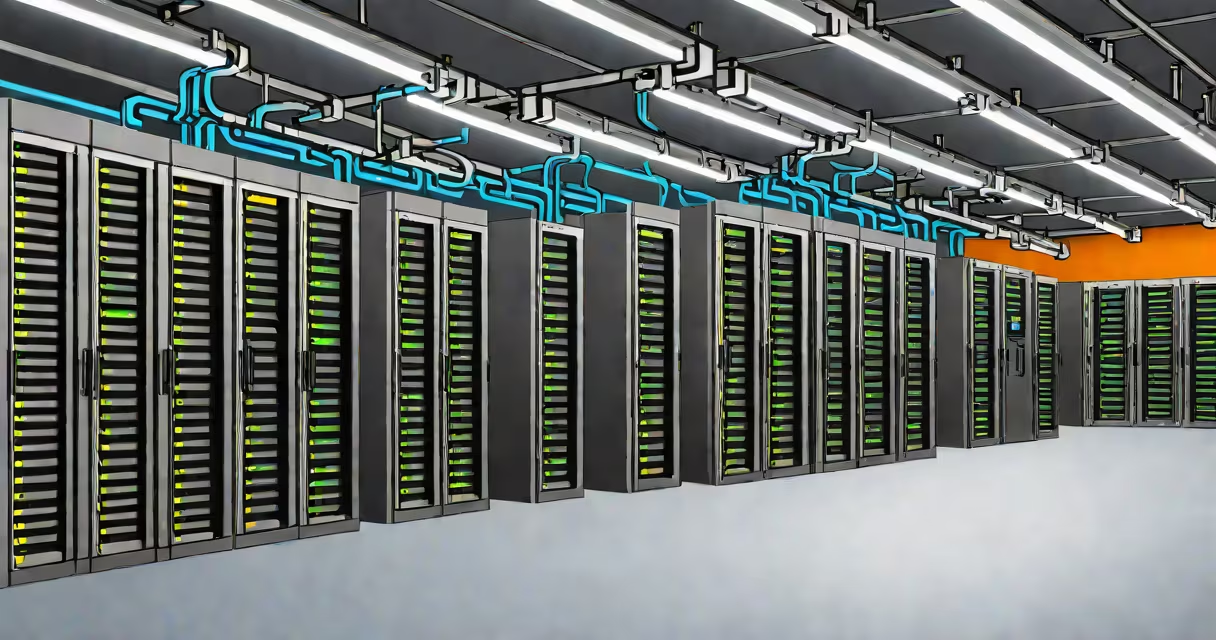
A tier 3 data center provides 99.982% annual uptime through concurrent maintainability and multiple independent power and cooling paths. It supports live maintenance without service interruption and meets strict redundancy standards set by the Uptime Institute.
Tier 3 is one of four certification levels defined by the Uptime Institute's Tier Classification System. It represents a significant leap from tier 1 and tier 2 facilities, which lack redundancy and cannot sustain maintenance without downtime. A tier 3 facility operates with N+1 redundancy-meaning at least one extra component exists for every critical system-so failure of any single element doesn't disrupt service.
For example, a tier 3 data center uses two separate power circuits from different utility sources. If one fails, the other continues supplying power without interruption. Cooling systems follow the same principle: multiple chillers and redundant air-handling units ensure temperature stability even during equipment failure or scheduled servicing.
Concurrent maintainability is the defining feature. This means engineers can perform repairs, upgrades, or replacements on any component while the system remains online. All critical systems-power, cooling, network, and physical security-are designed with at least two independent paths.
Each path operates independently but is synchronized to deliver uninterrupted service. For instance, if a primary power feed fails, the backup activates instantly. The switch happens within milliseconds, preventing any noticeable impact on servers or applications. This capability is essential for financial institutions, healthcare providers, and cloud platforms that require continuous availability.
Redundancy extends beyond hardware. Tier 3 facilities implement dual fiber optic connections from separate providers, ensuring network resilience. They also use environmental monitoring systems that detect temperature spikes, water leaks, or smoke in real time. Alerts trigger automated responses-such as shutting down affected zones or rerouting traffic-to prevent cascading failures.
The Uptime Institute requires tier 3 facilities to meet specific design criteria. These include:
Facilities must undergo rigorous audits to earn certification. The process includes reviewing architectural drawings, inspecting equipment layouts, and verifying operational procedures. Certification is valid for two years unless a facility undergoes changes that affect its compliance.
Many assume tier 3 means "fully redundant." That's incorrect. While tier 3 offers high availability, it does not guarantee protection against simultaneous failures. If both power paths fail due to a natural disaster or widespread grid failure, the system may still go offline.
This contrasts with tier 4, which adds fault tolerance-meaning the system can survive any single failure, including simultaneous events. Tier 4 facilities have fully redundant components and are designed to withstand catastrophic incidents. However, they come at higher cost and complexity.
Another common error is equating tier level with location. A tier 3 facility in a hurricane-prone area still meets the same technical requirements as one in a stable climate zone. Location affects risk exposure but not tier classification. The standard focuses solely on infrastructure design and operational processes.
Here's a clear comparison:
| Feature | Tier 1 | Tier 2 | Tier 3 | Tier 4 |
|---|---|---|---|---|
| Uptime Guarantee | 99.671% | 99.749% | 99.982% | 99.995% |
| Redundancy | None | Single path with redundancy | Multiple independent paths | Fault-tolerant (can handle simultaneous failures) |
| Concurrent Maintenance | No | No | Yes | Yes |
| Annual Downtime | 1.6 hours | 1.2 hours | 1.6 minutes | 26 seconds |
Even though tier 3 allows maintenance during operation, it does not permit uncontrolled access. All work must follow documented change management protocols. Unauthorized modifications can invalidate certification and increase risk.
Major enterprises use tier 3 data centers for hosting core business systems. Banks rely on them for transaction processing. Cloud providers use them for regional hubs. Healthcare organizations store patient records in tier 3 facilities to comply with HIPAA regulations requiring high availability.
I once observed a tier 3 facility in Memphis during a routine generator test. Engineers initiated a manual shutdown of the primary power feed. Within 1.3 seconds, the backup system took over smoothly. No alerts were triggered. The environment remained stable. This confirmed the facility's ability to handle real-world stress without disruption.
However, tier 3 is not always necessary. A small business running internal email and file storage may find tier 1 or tier 2 sufficient. The decision depends on risk tolerance, budget, and regulatory demands. Over-engineering increases costs without adding benefit in low-stakes environments.
One non-obvious fact: tier 3 certification does not cover software reliability. A facility can be certified while experiencing application outages due to bugs or misconfigurations. The standard evaluates physical infrastructure, not code quality. This distinction is often overlooked by clients who assume certification implies end-to-end reliability.
A tier 3 data center delivers strong uptime and operational flexibility. It enables live maintenance, supports complex workloads, and meets industry standards for reliability. Understanding its capabilities and limitations helps organizations choose the right infrastructure for their needs.
When evaluating data center options, focus on actual performance metrics-not just tier labels. A properly maintained tier 3 facility outperforms a poorly managed tier 4 site. Always review audit reports, verify redundancy configurations, and confirm ongoing compliance.
For a visual reference, see the data center image showing typical rack layout, dual power inputs, and environmental sensors. These elements reflect the physical reality behind the tier classification.
What is a tier 3 data center? It's a facility engineered for continuous operation, with redundant systems and proven capacity to stay online during planned maintenance. It's not perfect-but it's far more resilient than most alternatives.