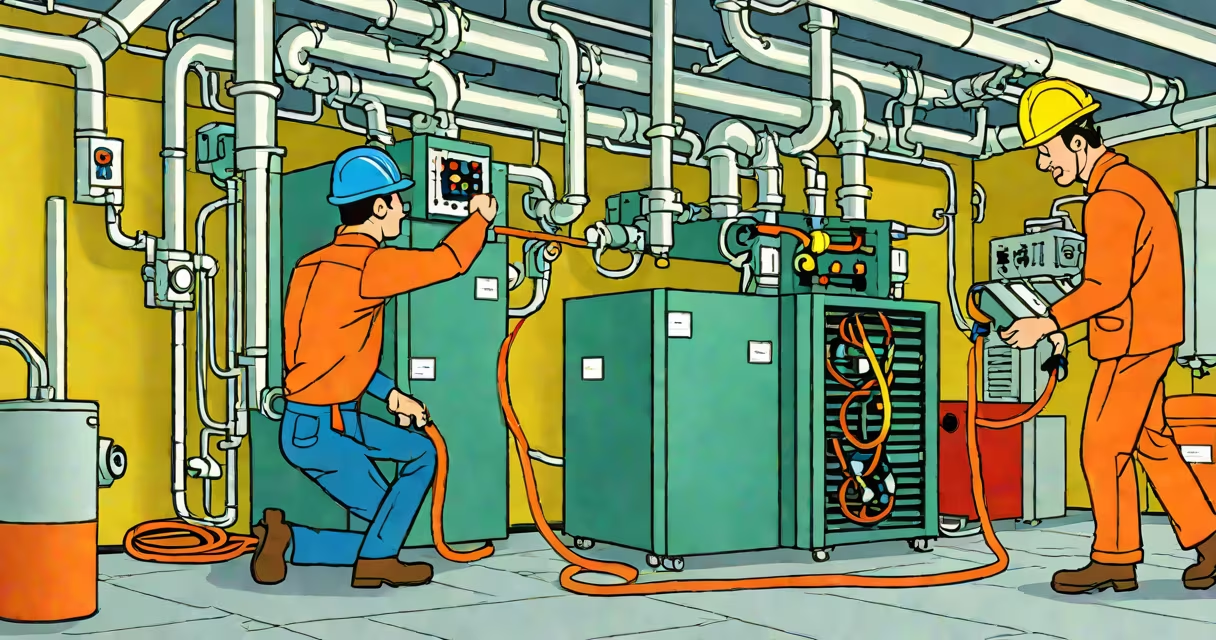
An ESCO, or energy service company, is a business that designs, installs, and finances energy efficiency upgrades in buildings while guaranteeing measurable energy savings. These companies operate under performance-based contracts, meaning they earn revenue only if the promised energy reductions are achieved.
ESCOs typically work with schools, hospitals, government facilities, and large office complexes. They assess energy use, recommend improvements like lighting retrofits, HVAC optimization, or building envelope upgrades, then implement and monitor the changes. The client pays for the project through savings realized on utility bills, often over a 5- to 15-year term.
For example, a school district might partner with an ESCO to replace 500 outdated fluorescent lights with LED fixtures. The ESCO covers the upfront cost, installs the new lights, and ensures energy use drops by at least 40%. Over five years, the district saves $35,000 annually on electricity. The ESCO earns a share of those savings, recouping their investment and making a profit only if the savings materialize.
ESCOs follow a structured process rooted in verified measurement and guaranteed outcomes. The process begins with an energy audit, which uses actual utility data and on-site inspections to identify inefficiencies. This audit generates a baseline of current energy consumption, allowing the ESCO to model expected savings.
Next, the ESCO develops a customized package of upgrades-such as installing variable frequency drives on pumps, adding smart thermostats, or sealing air leaks. These measures are selected based on projected payback periods and impact on energy use. Once approved, the ESCO secures funding, procures equipment, and manages installation.
After implementation, the ESCO monitors performance using submeters or utility data. Savings are verified monthly against the baseline. If savings fall short, the ESCO covers the difference. This risk-sharing model distinguishes ESCOs from standard contractors, who do not assume financial liability for results.
ESCO projects fall into three primary categories, each with distinct financial structures and risk profiles:
| Type | How It Works | Who Bears Risk | Example |
|---|---|---|---|
| Shared Savings | Client pays for upgrades via savings from reduced energy bills. ESCO shares a percentage of ongoing savings. | Client | LED lighting retrofit in a city hall; savings split 60/40 over 10 years. |
| Guaranteed Savings | ESCO guarantees a minimum level of savings. If targets aren't met, the ESCO makes up the shortfall. | ESCO | HVAC upgrade in a hospital; ESCO covers any gap between promised and actual savings. |
| Energy Performance Contract (EPC) | Full turnkey solution. ESCO finances, installs, and maintains systems. Client pays over time from savings. | ESCOS | Complete building automation system installed in a university dormitory. |
The guaranteed savings model is most common in public sector projects. According to the U.S. Department of Energy, over 80% of federal facility energy projects use this structure because it removes budget risk for agencies.
Many people confuse ESCOs with general contractors or energy auditors. An auditor identifies problems. A contractor fixes them. An ESCO guarantees results and finances the solution. The key difference lies in accountability: ESCOs are paid only if energy use drops.
Another misconception is that ESCOs only serve large clients. While many projects involve municipal buildings or campuses, small businesses can qualify too. The U.S. Environmental Protection Agency notes that small commercial buildings with annual energy bills over $25,000 are eligible for ESCO services under state incentive programs.
A lesser-known fact: ESCOs are regulated under the Energy Policy Act of 2005. This law requires transparency in contract terms and mandates third-party verification of savings. Failure to comply can result in penalties and loss of certification. The National Association of Energy Service Companies (NAESCO) enforces standards and provides accreditation for qualified firms.
In 2018, the City of San Diego partnered with an accredited ESCO to replace 30,000 streetlights with LEDs. The project cost $12 million, funded entirely by the ESCO. The city had no upfront capital outlay.
Post-installation monitoring showed a 62% reduction in energy use across the network. Annual savings totaled $1.8 million. The ESCO received 70% of the savings for 10 years, covering their costs and earning a return. After year 10, the city retained full ownership of the system and kept all future savings.
This project was completed within 18 months and reduced CO₂ emissions by 14,000 metric tons annually-equivalent to removing 3,000 cars from the road each year.
As climate goals tighten and energy prices fluctuate, organizations seek ways to reduce operational costs without increasing debt. ESCOs offer a proven mechanism to achieve both. The American Council for an Energy-Efficient Economy (ACEEE) reports that ESCO projects average 25% energy reduction and deliver a 12% internal rate of return over 10 years.
ESCOs support decarbonization efforts. The International Energy Agency estimates that energy efficiency improvements could deliver 40% of the emissions reductions needed by 2050. ESCOs are central to scaling these solutions in existing infrastructure.
I've seen an ESCO contract fail when the client didn't provide access to historical utility data. Without accurate baselines, savings modeling became unreliable. The project was paused until records were obtained. This taught me that success hinges not just on engineering, but on data integrity and collaboration.
Understanding what is an ESCO reveals a model where innovation, finance, and accountability converge. These companies don't just install better lights-they build long-term resilience into buildings. For any organization aiming to cut energy costs and carbon output, an ESCO partnership offers a low-risk path to measurable results.