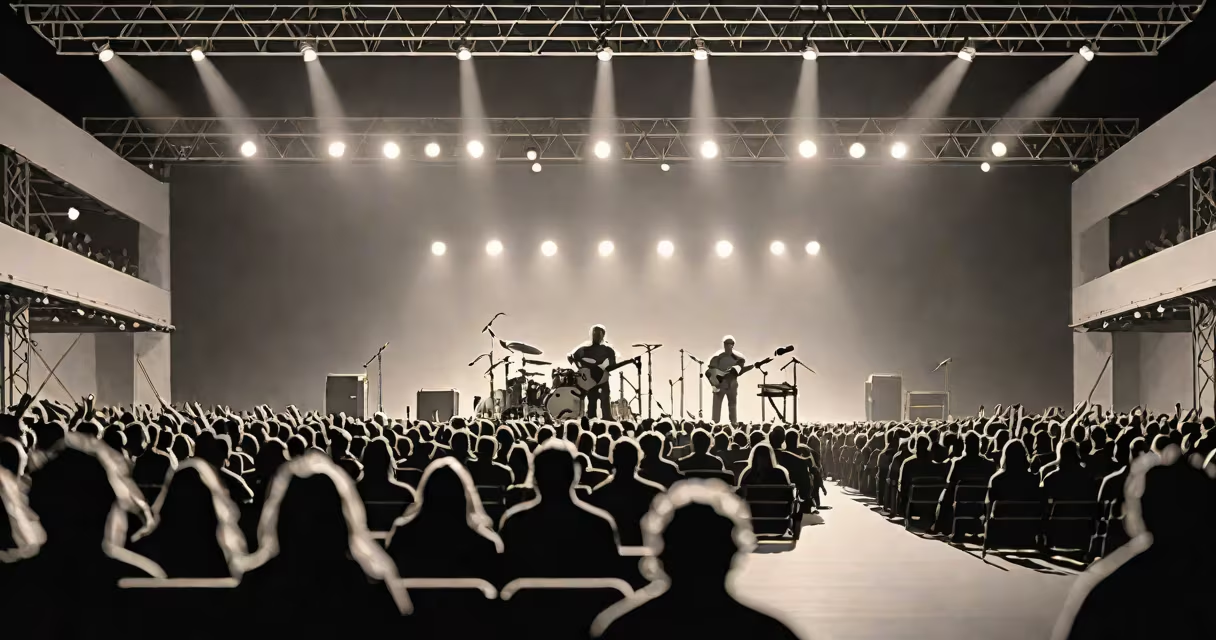
An event is a distinct occurrence with a clear beginning and end, often planned around a purpose such as celebration, communication, or coordination. Events are scheduled, measurable, and typically involve people gathering in person or virtually.
Events differ from ongoing processes or general activities. A birthday party is an event because it begins at 3 PM and ends at 6 PM. A daily work meeting is an event if it's scheduled for 10 AM to 11 AM. The key factor is specificity in time and intent.
The term "event" appears in fields ranging from software development to sports. In programming, an event triggers a response-like a button click. In marketing, an event might be a product launch. In psychology, an event is a stimulus that affects behavior. Despite context, the core idea remains: a discrete happening with boundaries.
Every event follows a structure: planning, execution, and follow-up. Planning includes setting a date, location, agenda, and resources. Execution involves delivering the scheduled content. Follow-up may include feedback collection or documentation.
For example, a company-hosted webinar on May 15 at 2 PM qualifies as an event. It was scheduled in advance, had a speaker, a slide deck, and a Q&A session. Attendees joined via Zoom. Afterward, the company sent a recording and survey. This timeline confirms it as an event-not just a meeting or a broadcast.
Events rely on coordination. A music festival with multiple stages, performers, and vendors requires detailed scheduling. One delay can disrupt the entire flow. Tools like Google Calendar, Asana, or Microsoft Teams help manage timelines and responsibilities.
Events fall into categories based on purpose, scale, and format. Common types include:
| Type | Purpose | Example | Duration |
|---|---|---|---|
| Business | Decision-making, networking | Product launch, team offsite | Half-day to full day |
| Personal | Celebration, milestone marking | Birthday, wedding | Several hours to a day |
| Public | Information sharing, community engagement | City council meeting, concert | Variable, often 2-4 hours |
| Technical | System response, automation trigger | API call, sensor activation | Milliseconds to seconds |
Not all events require physical presence. A virtual town hall or online workshop counts as an event if it has a defined time and goal. The rise of remote work has expanded the definition beyond in-person gatherings.
People often confuse events with general activities. A weekly team check-in is not an event unless it's formally scheduled and documented. An event implies intentionality and structure.
Another mistake is assuming all events are large-scale. A single email notification that triggers a system update is technically an event-even if it lasts less than a second. The smallest interaction can qualify.
A key distinction: events are not the same as outcomes. Hosting a conference is an event. The attendee satisfaction score afterward is a result. Confusing the two leads to poor measurement and planning.
In 2023, Apple held a product announcement event on September 12. It began at 1 PM Pacific Time and lasted 2 hours. The event included keynote speeches, live demonstrations, and a Q&A segment. Attendees accessed it via livestream.
This event met all criteria: it had a fixed time, a purpose (product unveiling), and a defined structure. It was not a casual conversation or a recurring meeting. The company promoted it weeks in advance, confirming its status as a formal event.
After the stream ended, Apple released a transcript and video on demand. Feedback forms were sent to viewers. These steps show standard event lifecycle management. The event was not just a broadcast-it was a coordinated experience.
I once managed a local science fair with 12 student teams presenting projects. Each presentation was scheduled for 10 minutes, followed by 5 minutes of judging. We used a shared calendar, assigned volunteers, and tracked delays. When one team ran over, we adjusted the schedule in real time.
That experience confirmed how tightly events depend on timing and structure. Without a defined start and end, coordination fails. The science fair wasn't just a series of talks-it was a sequence of events with roles, deadlines, and outcomes.
According to the Project Management Institute (PMI), an event is "a significant occurrence during a project lifecycle that marks a milestone or triggers a decision." Their *A Guide to the Project Management Body of Knowledge (PMBOK® Guide)*, 7th edition, defines events as discrete points in time that affect project progress.
The International Association of Professional Congress Organizers (IAPCO) states that "an event is a planned activity with a defined duration, audience, and objective." Their 2022 Global Event Industry Report notes that 78% of professional events include measurable goals and post-event evaluations.
These sources confirm that events are not random happenings-they are intentional, structured, and accountable.
Understanding what is an event helps clarify planning, reporting, and analysis. Whether organizing a board meeting or tracking software alerts, recognizing an event's boundaries improves efficiency and accuracy.