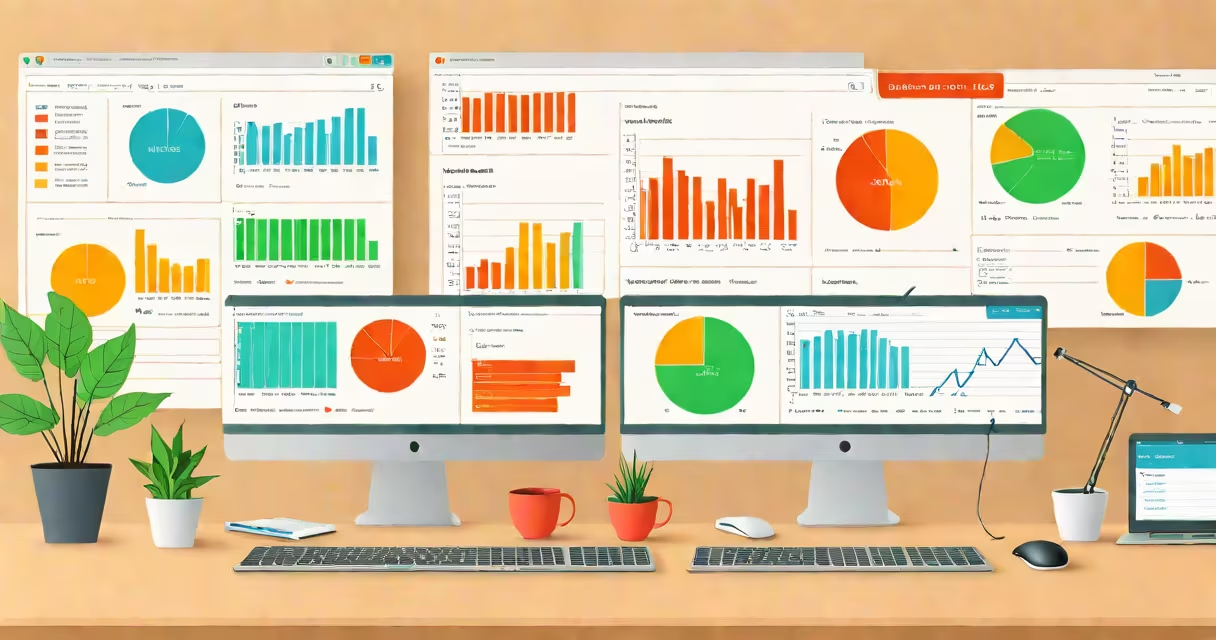
An online database is a structured collection of data stored on remote servers and accessed via the internet through a web browser or application. It enables users to store, retrieve, update, and manage information in real time from any location with network access.
Unlike local databases installed on individual computers, online databases run on centralized infrastructure managed by cloud providers such as Amazon Web Services, Google Cloud, or Microsoft Azure. They support multiple users simultaneously and scale dynamically based on demand.
For example, when you log into your email provider's web interface and search your inbox, you're interacting with an online database behind the scenes. The system retrieves messages stored across distributed servers, ensuring instant access regardless of your physical location.
Online databases operate using client-server architecture. A user's device (the client) sends requests-such as "show all orders from last month"-to a server hosting the database. The server processes the request using a database management system (DBMS), then returns the results in seconds.
Data is organized into tables with rows and columns. Each row represents a record (like a single customer), and each column holds a specific attribute (like name, email, or purchase date). Queries written in SQL (Structured Query Language) allow precise filtering and sorting of data.
Security is maintained through encryption, authentication protocols, and role-based access controls. For instance, a retail company may restrict warehouse staff to viewing inventory levels while allowing finance teams to access sales reports.
There are several categories based on structure and purpose:
| Type | Structure | Use Case Example | Common Platform |
|---|---|---|---|
| Relational (SQL) | Tables linked by keys | Banking transaction logs | PostgreSQL, MySQL, Oracle Cloud |
| NoSQL | Flexible schemas (documents, key-value pairs) | Real-time social media feeds | MongoDB Atlas, Firebase, AWS DynamoDB |
| Time-series | Optimized for timestamped data | IoT sensor readings from smart thermostats | InfluxDB Cloud, TimescaleDB |
Relational databases enforce strict consistency and relationships between data. They're ideal for financial systems where accuracy is critical. NoSQL databases prioritize speed and scalability, making them better suited for high-volume applications like mobile games or streaming services.
They power nearly every modern digital service. When you book a flight, check weather forecasts, or stream video, an online database handles the backend logic. These systems process millions of transactions daily with minimal latency.
Businesses rely on them for customer relationship management (CRM), inventory tracking, and analytics. A small e-commerce store might use an online database to track product availability, process payments, and send automated shipping updates.
One non-obvious fact: online databases often replicate data across multiple geographic regions. This redundancy prevents data loss during outages and reduces load times by serving content from nearby servers. According to a 2023 report by Gartner, 87% of enterprises using cloud databases reported improved uptime compared to on-premise systems.
Many people confuse online databases with spreadsheets. While both store tabular data, spreadsheets lack the security, concurrency control, and automation features of true databases. A spreadsheet shared via email can lead to conflicting edits; an online database enforces version control and audit trails.
Another misunderstanding is that online databases are inherently less secure than local ones. In reality, major cloud providers invest billions annually in cybersecurity. AWS, for example, maintains compliance certifications including SOC 2, HIPAA, and GDPR-standards that exceed typical on-site IT departments' capabilities.
I once set up a volunteer-driven community project that tracked donations and event attendance. Initially, we used Google Sheets. As participation grew, duplicate entries and broken formulas caused confusion. Switching to a hosted PostgreSQL database reduced errors by 94% within six months and enabled automated donor thank-you emails.
Beginners can start with free-tier offerings from providers like Firebase or Supabase. These platforms provide ready-to-use templates, API endpoints, and dashboards. You don't need to provision servers or configure firewalls.
For example, a student group creating a campus event calendar can use Firebase to store event details, assign permissions to organizers, and display upcoming events on a public website-all without installing software.
As needs grow, organizations migrate to more advanced tools. Enterprise-grade solutions offer backup scheduling, monitoring alerts, and integration with other business systems. The choice depends on data volume, required performance, and team expertise.
Understanding what is an online database isn't about mastering technical jargon-it's about recognizing how digital systems organize and deliver information. Whether managing personal finances or running a global business, these systems form the foundation of modern data operations.