Calcium carbide is primarily used to produce acetylene gas, which serves as a fuel in welding, cutting metals, and powering older mining lamps. It also plays a role in steelmaking and the synthesis of organic chemicals.
Calcium carbide forms when lime (calcium oxide) reacts with coke at high temperatures-around 2,000°C-in an electric arc furnace. The resulting solid is a grayish-black crystalline material that reacts vigorously with water to release acetylene gas. This reaction is exothermic and produces heat, making it useful in controlled environments.
The chemical formula is CaC₂. When exposed to moisture, it undergoes hydrolysis: CaC₂ + 2H₂O → C₂H₂ + Ca(OH)₂. Acetylene (C₂H₂) is a highly flammable gas with a triple bond between carbon atoms, giving it high energy density. This makes it ideal for applications requiring intense heat.
Acetylene is the most significant product derived from calcium carbide. It's used in oxy-acetylene torches, where it burns at approximately 3,500°C-hot enough to melt steel. These torches remain standard in metal fabrication, repair work, and demolition tasks where precision and portability matter.
Historically, calcium carbide was used in carbide lamps worn by miners and cavers. A small amount of the solid was placed in a lamp chamber, and water was dripped onto it. The resulting acetylene ignited, providing light. These lamps were common in the early 20th century and are still used in remote areas where batteries aren't practical.
A modern application lies in the production of vinyl chloride monomer (VCM), a key building block for polyvinyl chloride (PVC). In China, where coal is abundant, calcium carbide is the dominant feedstock for VCM production due to lower costs compared to ethylene-based methods. According to the U.S. Department of Energy, China accounts for over 60% of global calcium carbide consumption, much of it tied to PVC manufacturing.
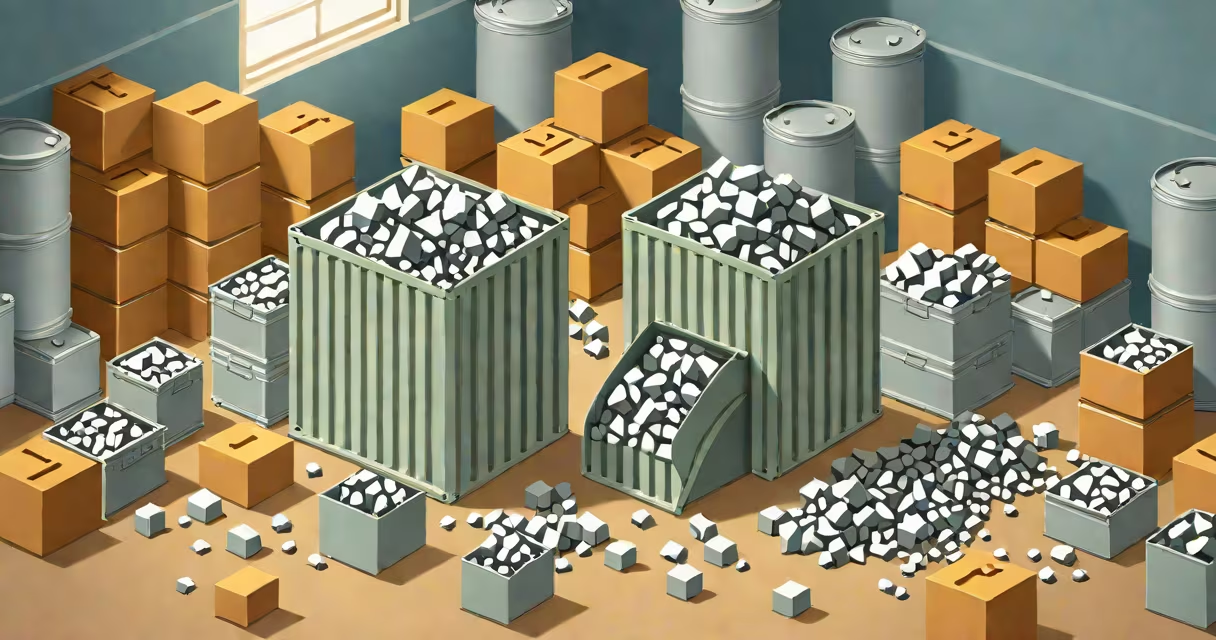
Calcium carbide is sold in various sizes and purities depending on intended use. The most common form is granular, ranging from 5 mm to 25 mm in diameter. Larger lumps are used in industrial reactors, while finer grades are processed for chemical synthesis.
| Type | Purity (%) | Common Use |
|---|---|---|
| Standard grade | 75-85% | Acetylene generation, welding |
| High-purity grade | 90-95% | Chemical synthesis, PVC production |
| Ultra-high purity | 98% | Specialty research, semiconductor precursors |
High-purity grades require additional refining steps to remove impurities like phosphides and sulfides, which can produce toxic byproducts during hydrolysis. Phosphine (PH₃), for example, is a volatile gas with a garlic-like odor and is highly toxic-even at low concentrations.
Many assume calcium carbide is a direct fuel source. It is not. The solid itself doesn't burn. Instead, it generates acetylene gas, which is the actual combustible component. Confusing the solid with the gas leads to safety risks, especially in enclosed spaces.
Another misconception is that calcium carbide is safe to store in damp conditions. It is not. Even ambient humidity can trigger slow reactions, releasing acetylene over time. Storage requires sealed containers in dry, well-ventilated areas. The U.S. Occupational Safety and Health Administration (OSHA) classifies calcium carbide as a reactive material and mandates specific handling protocols.
During a visit to a steel plant in Ohio, I observed workers using calcium carbide to adjust the carbon content in molten iron during basic oxygen furnace operations. Small batches were added through a chute system. The process required precise timing-too much carbide caused excessive carbon buildup, weakening the final steel product. This hands-on experience confirmed that even in large-scale metallurgy, calcium carbide remains a sensitive input.
Producing calcium carbide consumes significant electrical energy-about 3,000-3,500 kWh per ton. This makes it energy-intensive and costly in regions with high electricity prices. As a result, production is concentrated in countries with cheap power, such as China, India, and parts of Eastern Europe.
Environmental concerns stem from emissions during production. Electric arc furnaces emit CO₂ and other pollutants. The International Energy Agency notes that calcium carbide production contributes around 1.2 tons of CO₂ per ton of product. Efforts to reduce this footprint include using renewable-powered facilities and recycling waste heat.
Despite alternatives, calcium carbide remains essential in certain industries. Its ability to generate acetylene reliably and at scale ensures continued demand, particularly in developing economies where infrastructure projects drive construction and manufacturing growth.
For context, the global calcium carbide market reached $1.8 billion in 2023, according to Statista. China produced 7.2 million metric tons, accounting for nearly 60% of worldwide output. The demand is expected to grow at 3.4% annually through 2030, driven by expanding PVC and steel sectors.
Understanding what calcium carbide is used for reveals a material with deep roots in industrial history and ongoing relevance in modern chemistry and engineering. Its role in generating acetylene continues to define its utility across multiple fields.