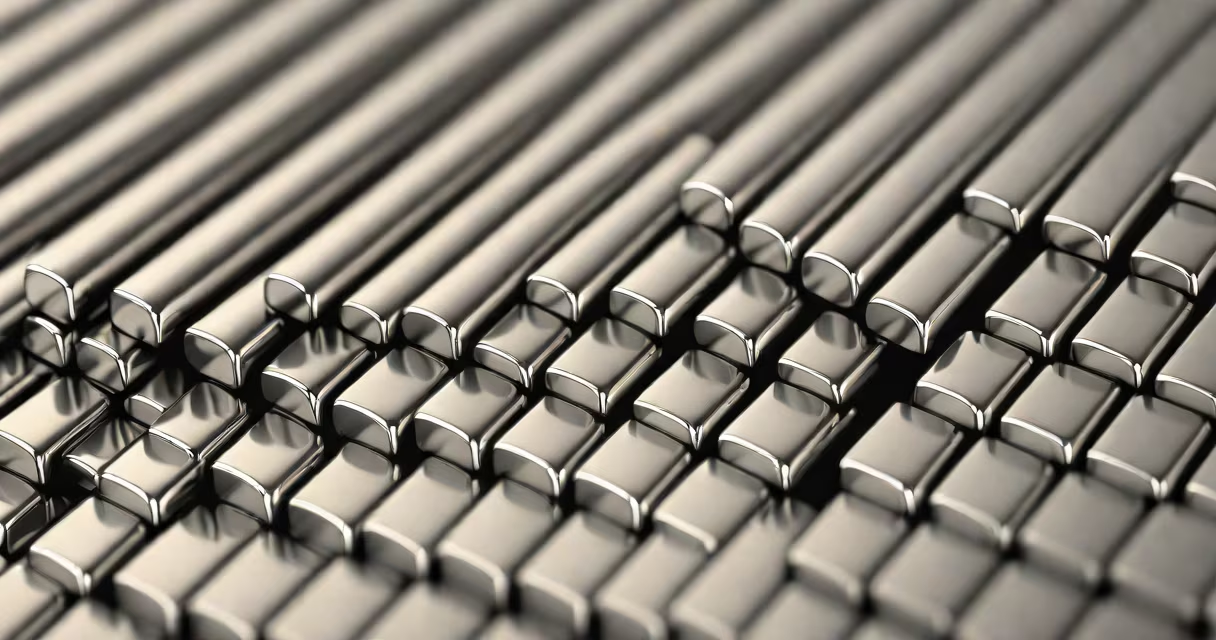
Chrome moly steel is a high-strength alloy steel containing chromium and molybdenum, engineered for durability under extreme stress, temperature, and pressure. It maintains structural integrity better than carbon steel at elevated temperatures and resists creep deformation over time.
Commonly designated as 41xx series (e.g., 4130, 4140), chrome moly steel derives its name from the primary alloying elements: chromium (typically 0.5-1.0%) and molybdenum (0.15-0.3%). These additions improve hardenability, strength, and resistance to wear and fatigue. The material is typically heat-treated to achieve specific mechanical properties, such as tensile strengths exceeding 1,000 MPa.
Manufacturers specify chrome moly steel using standardized designations from ASTM International and SAE International. For example, ASTM A335 Grade P22 specifies a chromium-molybdenum alloy used in high-temperature piping systems. SAE J403 defines the chemical composition and mechanical requirements for 4130 steel, ensuring consistency across industrial applications.
Chromium enhances hardness and oxidation resistance, forming a protective oxide layer on the surface. Molybdenum increases hardenability, allowing deeper and more uniform hardening during quenching. Together, they reduce the risk of cracking during heat treatment and improve performance in cyclic loading environments.
The combination of these elements allows chrome moly steel to retain strength at temperatures above 500°C (932°F). This makes it suitable for use in power plants, petrochemical refineries, and jet engine components. Unlike standard carbon steels, which lose strength rapidly above 400°C, chrome moly steel maintains over 80% of its room-temperature yield strength at 600°C.
A key feature is its response to controlled cooling after heating. When heated to around 850-950°C and then quenched in oil or water, the microstructure transforms into martensite-a hard, needle-like phase that provides high strength. Subsequent tempering reduces brittleness while preserving strength. This process enables precise tailoring of mechanical properties for specific uses.
Different grades of chrome moly steel serve distinct engineering needs. The most common are 4130, 4140, and 4340, each with unique compositions and applications.
| Grade | Chromium (%) | Molybdenum (%) | Tensile Strength (MPa) | Typical Use |
|---|---|---|---|---|
| 4130 | 0.8-1.1 | 0.15-0.25 | 620-860 | Bicycle frames, aircraft parts, tubing |
| 4140 | 0.8-1.1 | 0.15-0.25 | 860-1,030 | Shafts, gears, crankshafts, hydraulic cylinders |
| 4340 | 0.7-1.0 | 0.15-0.25 | 1,000-1,200 | High-performance engine components, landing gear |
Grade 4130 is often chosen for lightweight yet strong structures. Its weldability and formability make it ideal for custom fabrication. In contrast, 4340 requires careful heat treatment and is more prone to distortion during machining, but delivers superior fatigue resistance.
4140 is frequently used in automotive and industrial machinery because of its balance between strength and cost. It is available in bar, plate, and tube forms, with typical hardness ranging HB after proper heat treatment.
Chrome moly steel is essential in applications demanding reliability under stress. In the aerospace industry, 4130 steel forms fuselage fittings, landing gear struts, and engine mounts. NASA's Space Shuttle external tank used 4130 steel in structural joints due to its fracture toughness and weldability.
In energy infrastructure, ASTM A335 P22 pipe is used in steam generators and boiler systems in fossil-fuel power plants. These pipes operate at pressures up to 150 bar and temperatures exceeding 550°C. The alloy resists thermal fatigue and avoids embrittlement over decades of service.
A real-world example: a 2018 failure analysis published by the American Society of Mechanical Engineers (ASME) traced a pipeline rupture in a Texas refinery to improper welding of 4140 steel. The root cause was inadequate post-weld heat treatment, leading to hydrogen-induced cracking. This case underscores the necessity of correct processing procedures even with high-performance materials.
Chrome moly steel is not inherently "stainless." While chromium improves corrosion resistance, it does not provide the passive oxide layer seen in 300-series stainless steels. Chrome moly steel still requires coatings or protective finishes in corrosive environments. A 4130 component exposed to saltwater without protection will rust within months.
Another misconception is that all chrome moly steel is equally strong. The mechanical properties depend heavily on heat treatment. A 4140 bar that has not been tempered may shatter under impact. Conversely, properly processed 4130 can withstand repeated bending cycles without failure.
Some assume chrome moly steel is interchangeable with other alloys like titanium or Inconel. While all three resist high temperatures, their behavior differs. Titanium offers higher strength-to-weight ratio but is sensitive to contamination during welding. Inconel 625 performs better in oxidizing environments but costs nearly five times more than 4140 steel. Chrome moly steel remains the preferred choice when cost, availability, and moderate temperature resistance are priorities.
I once built a custom motorcycle frame using 4130 chrome moly steel tubing. The design required bends at 90-degree angles with minimal wall thinning. After preheating the tubes to 200°C and using a mandrel bender, I achieved clean curves without collapse. Post-bending, I performed a stress-relief anneal at 600°C for two hours, followed by air cooling. The resulting frame passed a 500-cycle fatigue test at 2g loads without visible deformation.
This project confirmed that chrome moly steel's performance hinges on process control. Even small deviations-like skipping preheat or using incorrect quench media-can lead to cracks or uneven hardness. Precision matters.
Chrome moly steel is a high-performance alloy designed for demanding environments where strength, toughness, and thermal stability are critical. Its use spans aerospace, energy, automotive, and heavy machinery sectors. Understanding its grades, processing requirements, and limitations prevents costly failures.
When selecting chrome moly steel, always verify the material specification (e.g., ASTM A335, SAE J403) and ensure proper heat treatment. Misapplication leads to premature failure. Correctly applied, it delivers long-term reliability in high-stress scenarios.