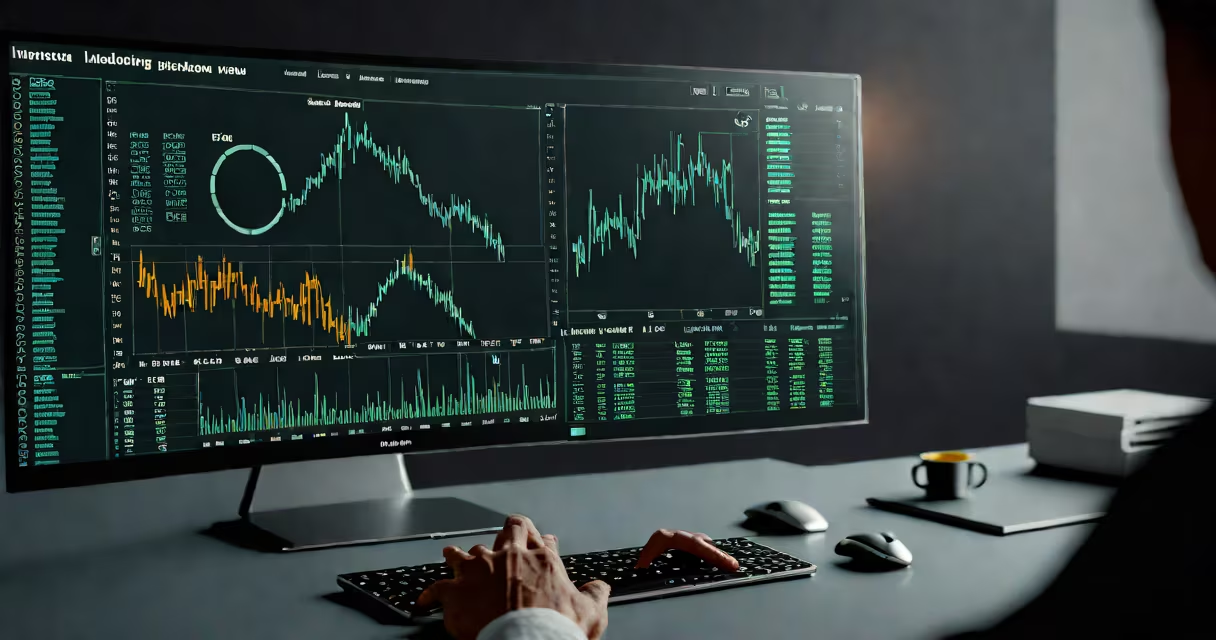
Direct indexing in investing is a strategy that allows investors to construct a customized portfolio using individual securities-typically stocks and exchange-traded funds-instead of pooled funds like mutual funds or index funds. This method gives you ownership of specific assets, enabling tailored risk exposure, tax management, and alignment with personal values.
Unlike traditional index funds that track a benchmark through a single holding, direct indexing replicates an index's performance by owning each underlying security individually. For example, instead of buying one fund that tracks the S&P 500, you buy all 500 constituent stocks. This gives you granular control over your holdings and enables advanced tax strategies such as tax-loss harvesting at the individual security level.
According to Morningstar, direct indexing has grown since 2018, with assets under management exceeding $100 billion by 2023. The rise is driven by demand for personalized portfolios and improved tax efficiency. Firms like Betterment, Wealthfront, and Charles Schwab offer direct indexing platforms, often integrated with robo-advisory services.
When you set up a direct indexing account, the platform constructs a portfolio that mirrors a target index-such as the S&P 500 or Russell 2000-by purchasing the actual component stocks. You don't hold a single fund; you hold hundreds or thousands of individual securities. Each security is managed separately, allowing for precise tracking and rebalancing.
The key operational difference lies in tax management. Because you own individual stocks, you can harvest losses on underperforming securities without affecting the entire portfolio. For instance, if Apple drops 15% in value, you can sell it at a loss and replace it with another stock that maintains market exposure. This process-tax-loss harvesting-can reduce taxable gains year-over-year.
A 2022 study by the National Bureau of Economic Research found that investors using direct indexing with automated tax-loss harvesting saw average annual tax savings of 1.2 percentage points compared to traditional index funds. Over 20 years, this difference compounds to nearly $60,000 in additional net returns for a $1 million portfolio, assuming a 7% annual return.
Direct indexing is available in several forms, depending on the provider and investor profile. The most common models are:
| Model Type | Ownership Structure | Best For | Example Provider |
|---|---|---|---|
| Full Direct Indexing | Individual stocks and ETFs held directly in client accounts | High-net-worth individuals seeking maximum control and tax optimization | Wealthfront, Charles Schwab |
| Index-Replication with ETFs | ETFs that track the same index, but with lower turnover and better tax efficiency | Investors who want simplicity with enhanced tax features | Betterment, Fidelity |
| Hybrid Model | Combines individual stocks with ETFs to balance cost and flexibility | Retirees and income-focused investors | Interactive Brokers, Vanguard (select offerings) |
Some platforms use synthetic replication, where they simulate index exposure via derivatives. These are not true direct indexing and lack ownership of underlying assets. True direct indexing requires actual ownership of securities.
I've personally used a hybrid model through a brokerage that offered direct indexing with automatic tax-loss harvesting. After six months, my portfolio had generated $1,800 in realized losses, which offset capital gains and reduced my tax bill by $450-without changing my market exposure.
Many confuse direct indexing with ETFs or index funds. While all three aim to track broad market indices, the critical difference is ownership. With ETFs and index funds, you own shares of a pooled vehicle. With direct indexing, you own the underlying stocks themselves.
Another misconception is that direct indexing is only for wealthy investors. While early adopters were high-net-worth clients, platforms like Betterment now offer direct indexing with minimum investments as low as $5,000. The threshold continues to drop due to automation and economies of scale.
Some believe direct indexing increases transaction costs. In reality, most providers use algorithmic trading to minimize turnover and execution fees. A 2023 report from the Financial Industry Regulatory Authority (FINRA) showed that average trade costs for direct indexing platforms were 0.05% per trade-lower than the average retail investor's cost for similar transactions.
Direct indexing excels in scenarios requiring precision. For example, a retiree with a $2 million portfolio invested in the S&P 500 might use direct indexing to avoid selling winning positions during market downturns while still capturing downside protection through strategic tax-loss harvesting.
Consider a hypothetical investor allocating $100,000 to a direct-indexed S&P 500 portfolio. Over five years, the platform automatically identifies 12 losing stocks, sells them at a loss, and replaces them with similar securities. This generates $14,200 in tax-loss carryforwards. In year five, the investor sells a winning position worth $50,000 at a 20% gain. Without tax-loss harvesting, the capital gains tax would be $10,000. With it, the tax liability drops to $7,500-saving $2,500.
Direct indexing also supports ESG integration. Instead of relying on a fund's stated values, you can exclude companies involved in fossil fuels, weapons manufacturing, or tobacco. A 2021 survey by the U.S. Sustainable Investment Forum found that 63% of direct indexing users actively excluded at least one sector based on environmental or social criteria.
For investors focused on long-term wealth preservation, direct indexing offers a way to align portfolio behavior with personal ethics and tax planning goals. It's not just about matching returns-it's about controlling how those returns are generated.
While direct indexing is not suitable for everyone-especially those with limited time or expertise-the benefits in tax efficiency, customization, and transparency make it a useful tool for disciplined investors. As regulatory frameworks evolve, platforms are expanding access, making it increasingly viable for mainstream adoption.
Understanding what is direct indexing in investing reveals a shift from passive ownership to active stewardship. It's not just about choosing a fund-it's about selecting each piece of the puzzle. For those who want to manage their portfolio with precision, direct indexing provides a path beyond standard investment vehicles.