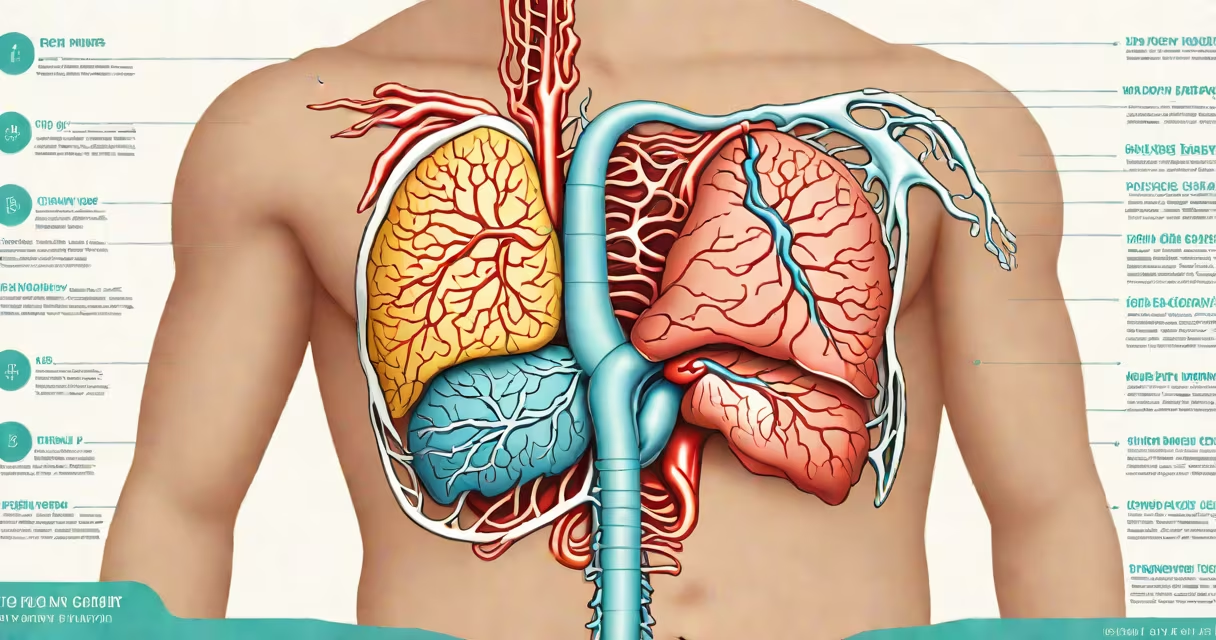
The right upper quadrant (RUQ) is the anatomical region in the upper right portion of the abdomen, bounded by the ribcage above, the right side of the body below, and the midline to the left. It houses important organs including the right lobe of the liver, the gallbladder, part of the right kidney, the hepatic flexure of the colon, and portions of the duodenum and pancreas.
Medical professionals use the RUQ to localize pain and guide diagnostic imaging. For example, sharp pain in the RUQ may indicate gallstones, while dull, persistent discomfort could suggest liver inflammation. The area is also clinically significant during physical exams, such as when palpating for hepatomegaly or checking for tenderness over the gallbladder (Murphy's sign).
According to the American Society of Anesthesiologists, the RUQ is one of four quadrants used to describe abdominal pathology, with each quadrant corresponding to specific organ systems. This system improves communication between clinicians and ensures accurate documentation of symptoms.
The liver occupies most of the RUQ. It weighs about 1.4 kg in adults and performs over 500 functions, including detoxification, protein synthesis, and bile production. The right lobe of the liver extends from the right side of the diaphragm down to the level of the ninth rib.
The gallbladder sits beneath the liver's right lobe, nestled in a fossa on the inferior surface. It stores and concentrates bile produced by the liver. When the gallbladder contracts, it releases bile into the small intestine through the common bile duct. Gallstones form in about 10-15% of adults in the U.S., with the majority occurring in people aged 40-60.
The right kidney lies posterior to the RUQ, partially protected by the lower ribs. Its upper pole is near the 11th rib, and it filters blood to remove waste products. The right adrenal gland sits atop the right kidney, producing cortisol and adrenaline.
| Organ/Structure | Primary Function | Common Pathology |
|---|---|---|
| Liver (right lobe) | Bile production, metabolism, detoxification | Hepatitis, cirrhosis, fatty liver disease |
| Gallbladder | Bile storage and release | Gallstones, cholecystitis |
| Right kidney | Waste filtration, fluid balance | Kidney stones, infection |
| Colon (hepatic flexure) | Stool formation and transit | Constipation, diverticulosis |
Pain in the right upper quadrant often signals underlying issues requiring evaluation. Acute RUQ pain lasting more than 30 minutes should prompt medical attention. Common causes include biliary colic from gallstones, hepatitis due to viral or alcohol-related damage, and peptic ulcers involving the duodenum.
A 2021 study published in Annals of Internal Medicine found that 32% of patients presenting with acute abdominal pain had a diagnosis related to the RUQ, with gallbladder disease being the most frequent. The study emphasized that early identification of RUQ pathology reduces hospitalization rates and improves outcomes.
One non-obvious fact: the gallbladder does not produce bile-it only stores and concentrates it. Bile is made continuously by the liver and released into the duodenum during digestion. Misunderstanding this leads to confusion about why gallbladder removal doesn't stop bile production.
Many people confuse right upper quadrant pain with heartburn or indigestion. However, heartburn typically presents as burning behind the sternum and worsens when lying down. RUQ pain usually persists through posture changes and may radiate to the right shoulder or scapular region.
Another misconception is that all RUQ pain stems from the gallbladder. While gallstones cause about 70% of acute RUQ pain cases, other conditions-such as liver abscesses, renal colic, or even shingles affecting the T7-T12 dermatomes-can mimic gallbladder symptoms.
For example, a 45-year-old woman presented with severe RUQ pain and nausea. Initial ultrasound showed no gallstones. Further imaging revealed a small liver abscess caused by *Entamoeba histolytica*. She was treated with antibiotics and recovered fully within six weeks. This case illustrates that RUQ pain must be evaluated thoroughly, not assumed to be gallbladder-related.
Seek immediate care if RUQ pain is accompanied by fever, jaundice (yellowing of skin or eyes), dark urine, pale stools, or unexplained weight loss. These signs may indicate serious conditions like obstructive jaundice, cholangitis, or liver cancer.
Chronic RUQ discomfort lasting more than two weeks warrants a visit to a primary care provider. Blood tests such as liver function tests (LFTs), bilirubin levels, and alkaline phosphatase can help identify liver or biliary system dysfunction. Imaging like ultrasound or CT scan confirms structural abnormalities.
During a routine check-up, I once identified mild hepatomegaly in a patient who reported vague RUQ discomfort. A follow-up ultrasound confirmed fatty liver disease. After lifestyle changes, his symptoms resolved. This experience reinforced that subtle signs in the RUQ can indicate systemic health issues.
Understanding what is in right upper quadrant helps patients and providers alike interpret symptoms accurately. Knowing which organs lie in this region allows for better communication, faster diagnoses, and targeted treatment plans.