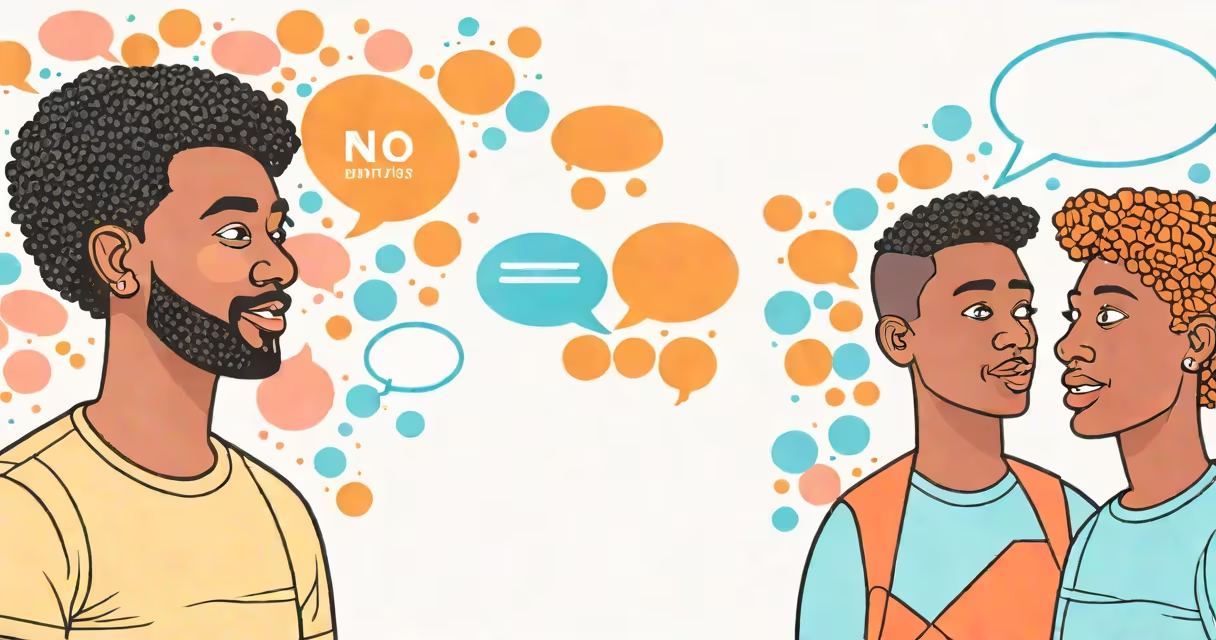
Implicit bias refers to automatic associations in the mind that influence judgments and behaviors without conscious awareness. Explicit bias involves conscious attitudes or beliefs that people can report and act upon deliberately. Together, they shape decisions in hiring, healthcare, education, and daily interactions.
These biases operate differently. Implicit bias forms through repeated exposure to cultural messages, social norms, and personal experiences. It's not about intent-it's about patterns of thought that develop unconsciously. Explicit bias, by contrast, is deliberate. It reflects values people hold and may express openly, such as saying "I don't trust people from certain neighborhoods."
Both types affect outcomes even when intentions are neutral. A doctor may consciously believe all patients deserve equal care, but still prescribe less pain medication to Black patients due to implicit racial associations. A hiring manager may claim to favor merit-based selection, yet consistently interview candidates from elite universities over equally qualified applicants from community colleges.
Implicit bias operates through mental shortcuts called heuristics. The brain processes vast amounts of information quickly by linking concepts based on past exposure. For example, decades of media portrayals associating men with leadership roles have led many people to subconsciously link "leader" with "male," even if they reject that idea intellectually.
Neuroscience research shows these associations activate in the amygdala and prefrontal cortex during rapid decision tasks. Functional MRI scans reveal increased activity in these regions when participants view faces of different races while making split-second judgments about threat or trustworthiness-even when instructed to ignore race.
Explicit bias relies on conscious belief systems. These are shaped by upbringing, education, political views, and lived experience. A person raised in a region with limited diversity may explicitly hold negative views about immigrants, not because of personal contact, but due to repeated narratives in family or media.
The following table outlines key differences between the two forms:
| Type | Origin | Control | Example |
|---|---|---|---|
| Implicit bias | Unconscious learning | Low (requires training) | Assuming a woman in a lab coat is a secretary, not a scientist |
| Explicit bias | Conscious belief | High (can be challenged) | Saying "I won't hire someone who speaks with a Southern accent" |
A real-world example comes from a 2016 study published in *Nature Human Behaviour*. Researchers sent identical résumés to job postings, varying only the name (e.g., "Emily" vs. "Jamal"). Applications with stereotypically White names received 50% more callbacks than those with Black-sounding names-despite identical qualifications. This reflects implicit bias in hiring, even among professionals who explicitly reject racism.
Another example: a teacher may explicitly believe all students are capable. Yet, they unconsciously give more attention to boys during math class, reinforcing gender gaps in STEM participation. This pattern persists even when teachers report no preference.
People often assume that if someone doesn't consciously hold a biased belief, they aren't biased at all. That's incorrect. A person can explicitly oppose sexism while still exhibiting implicit bias-such as rating a female candidate as less competent than a male candidate with identical achievements.
Also, implicit bias is not synonymous with prejudice. Prejudice implies active dislike or hostility. Implicit bias can exist without animosity. Someone may associate "older adults" with "slow thinking" without personally disliking seniors. But this association affects hiring, medical treatment, and social interactions.
A critical distinction: implicit bias is not a personal failing. It's a product of cultural conditioning. The American Psychological Association notes that everyone develops implicit associations through exposure to societal messages. These aren't moral flaws-they're cognitive patterns that can be identified and adjusted.
In healthcare, implicit bias leads to disparities. Black women are three times more likely to die from pregnancy-related causes than White women, according to CDC data. While socioeconomic factors play a role, research shows doctors are less likely to take Black patients' pain seriously-partly due to implicit associations linking Blackness with lower sensitivity to pain.
In education, students from marginalized groups face lower expectations. A 2020 study in *Educational Researcher* found that teachers rated the same student work lower when the student had a name associated with a racial minority. The effect was strongest in schools with low diversity.
One non-obvious fact: implicit bias can be measured reliably using tools like the Implicit Association Test (IAT). Developed by psychologists Anthony Greenwald and Mahzarin Banaji, the IAT asks users to rapidly categorize words and images. Reaction time differences indicate strength of association. Over 10 million people have taken the test since 1998, and results consistently show widespread implicit associations related to race, gender, age, and disability.
I once used the IAT during a workshop on equity in hiring. My results showed a moderate implicit preference for younger people over older ones-a pattern I didn't expect. That moment shifted my understanding: bias isn't always visible, but it shapes decisions even when we think we're fair.
Explicit bias can be changed through dialogue, education, and policy. When people confront their beliefs-especially in safe environments-they can revise them. Training programs that focus on perspective-taking reduce explicit bias over time.
Implicit bias requires different strategies. Because it operates below awareness, direct questioning won't eliminate it. Instead, interventions like perspective-taking exercises, diverse representation in media, and structured decision-making processes help reduce its impact.
For example, hospitals using standardized checklists for pain assessment reduced disparities in treatment. Schools adopting blind grading systems improved fairness in evaluations. Organizations using structured interviews-where all candidates answer the same questions-reduce the influence of both implicit and explicit bias.
One effective method is "bias interrupters"-small changes in process designed to disrupt automatic patterns. A university admissions committee introduced a rule requiring reviewers to justify each score before assigning it. This slowed decision-making and reduced the impact of unconscious preferences.
Understanding what is implicit and explicit bias allows individuals and institutions to design better systems. Awareness alone isn't enough. Action is required. Policies must be tested for bias. Feedback loops must be built. And accountability must be part of every decision process.
Recognizing both forms of bias strengthens fairness, improves outcomes, and builds trust. The goal isn't perfection-it's continuous improvement. By addressing both implicit and explicit bias, organizations can move toward equitable practices that reflect actual values.