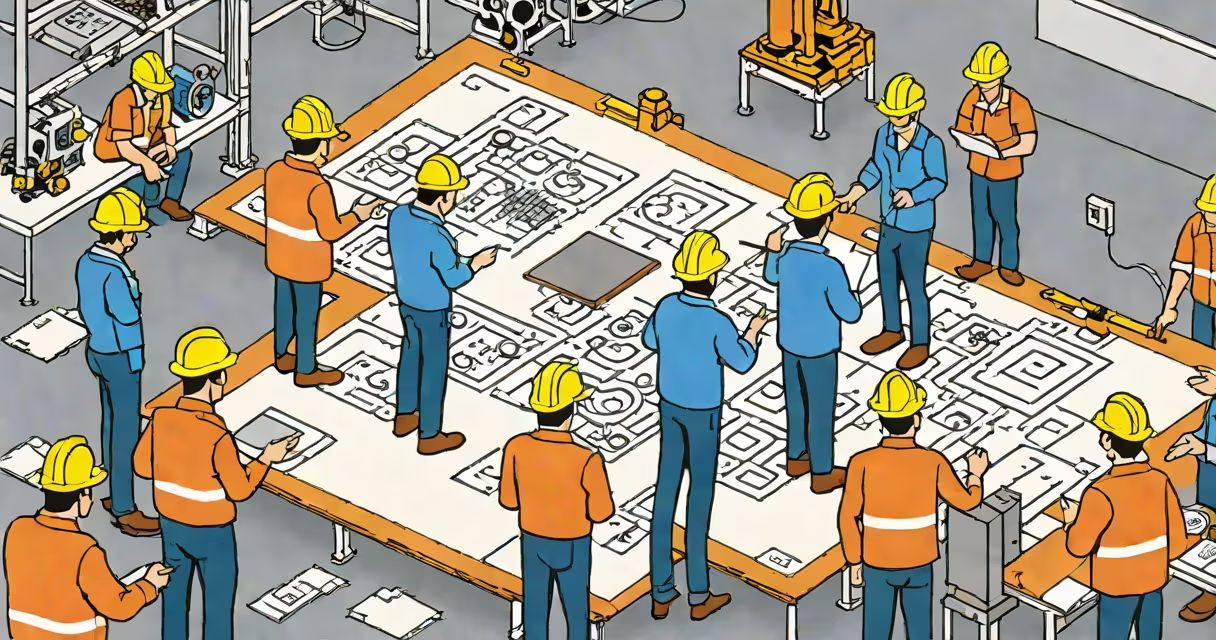
Kaizen in manufacturing is a systematic method of continuous improvement that focuses on making small, sustainable changes to processes to eliminate waste, reduce errors, and increase efficiency. Rooted in Japanese philosophy, it emphasizes employee involvement and incremental progress over radical overhauls.
The term "kaizen" translates to "change for the better" and is central to lean manufacturing principles. In practice, it involves frontline workers identifying inefficiencies in their workflows and proposing low-cost, immediate improvements. These changes accumulate over time, leading to significant operational gains without major capital investment.
According to the Lean Enterprise Institute, kaizen is not a one-time event but a disciplined, ongoing practice embedded in daily operations. It requires consistent engagement from all levels of staff, from machine operators to management, ensuring that improvement becomes part of the organizational culture rather than a project-based initiative.
Kaizen operates through a cycle of observation, analysis, implementation, and review. Teams gather regularly-often daily or weekly-to assess workflow bottlenecks, equipment downtime, material handling delays, or safety concerns. They then test minor adjustments, such as repositioning tools for easier access or adjusting workstation height to reduce strain.
Each improvement is documented using visual management tools like kaizen boards or 5S checklists. For example, a production line worker notices that a particular tool is frequently misplaced, causing a 15-second delay per cycle. By adding a labeled slot on the workbench, the team eliminates the search time. Over a month, this saves 120 minutes of lost time across shifts-equivalent to nearly one full workday of productivity.
Improvements are validated through data. A reduction in cycle time, fewer defects, or lower energy consumption confirms success. If results fall short, the team revisits the idea and refines it. This iterative nature helps changes are practical and measurable.
While all kaizen initiatives aim to improve performance, they differ in scale and execution. The two primary forms are:
| Type | Description | Example |
|---|---|---|
| Continuous Kaizen | Ongoing, small-scale improvements driven by employees at the shop floor level. | Reorganizing storage bins to reduce retrieval time by 20 seconds per item. |
| Breakthrough Kaizen | Larger, planned projects involving cross-functional teams and significant resource allocation. | Redesigning a conveyor system to cut throughput time by 30% across three production lines. |
Continuous kaizen is the foundation of most successful manufacturing environments. It relies on daily rituals like stand-up meetings, visual cues on the floor, and standardized problem-solving templates. Breakthrough kaizen is typically initiated when continuous improvements plateau, signaling the need for deeper process redesign.
A key distinction often missed is that kaizen is not about innovation-it's about optimization. It doesn't require new technology or large budgets. Instead, it leverages existing resources more effectively. As noted by the Association for Manufacturing Excellence, 85% of kaizen projects result in cost savings within six months, with minimal upfront investment.
Many assume kaizen is synonymous with automation or digital transformation. That's incorrect. While technology can support kaizen, the core principle remains human-driven improvement. An automated assembly line still benefits from kaizen when workers adjust sensor thresholds to reduce false alarms or refine part alignment sequences.
Another misconception is that kaizen applies only to large factories. In reality, it scales well to small workshops. A family-owned machining shop in Ohio reduced scrap rates by 18% over nine months by implementing daily kaizen reviews. Team members rotated roles weekly to spot inefficiencies, and one suggestion-adding a magnetic tray for small parts-cut material loss by 12%.
Toyota Production System (TPS) is the most cited model for kaizen implementation. Toyota's "Andon Cord" system allows any worker to stop the line if a defect is detected. This triggers a kaizen response: the team investigates root cause, implements a fix, and documents the lesson. Since 2005, Toyota has reported a 40% reduction in line stoppages due to this practice, according to a 2021 report by the International Journal of Production Research.
Kaizen is often confused with Six Sigma or Total Quality Management (TQM), but each serves a different purpose. Six Sigma uses statistical methods to reduce variation and defects, typically targeting specific problems with high precision. Kaizen, by contrast, improves flow and morale through constant, low-effort adjustments.
For example, a Six Sigma team might analyze why 2% of welded joints fail stress tests. They'd use control charts and root cause analysis to isolate variables like temperature or pressure. Kaizen would focus on whether the welder has proper lighting, ergonomic posture, or clear instructions-factors that don't require complex math but impact consistency.
Similarly, while 5S (Sort, Set in order, Shine, Standardize, Sustain) creates the physical environment for kaizen, it is not the same. 5S organizes the workspace; kaizen improves the process within it. A clean, labeled tool rack (5S) enables faster tool access, which supports kaizen goals-but the actual improvement comes from the worker's decision to use the correct tool faster, reducing cycle time.
I've seen this play out firsthand in a metal fabrication plant. After implementing 5S, the team noticed that the time to locate a specific drill bit dropped from 45 seconds to under 10. But the real gain came when a machinist suggested rotating the bin placement based on frequency of use. That single adjustment saved 1.2 hours per shift across 12 stations-without changing tools or layout.
Manufacturers face constant pressure to reduce costs, shorten lead times, and maintain quality. Kaizen offers a proven path forward without requiring massive restructuring. It builds resilience by empowering teams to solve problems locally, reducing dependency on external consultants or IT upgrades.
Studies show that companies using kaizen consistently report higher employee engagement and lower turnover. A 2022 survey by the National Institute of Standards and Technology found that plants with formal kaizen programs had 27% fewer safety incidents and 34% higher output per labor hour compared to peers without them.
When implemented correctly, kaizen transforms manufacturing from a reactive operation into a proactive, learning-oriented system. It turns every shift into a feedback loop where small wins compound into long-term competitiveness.