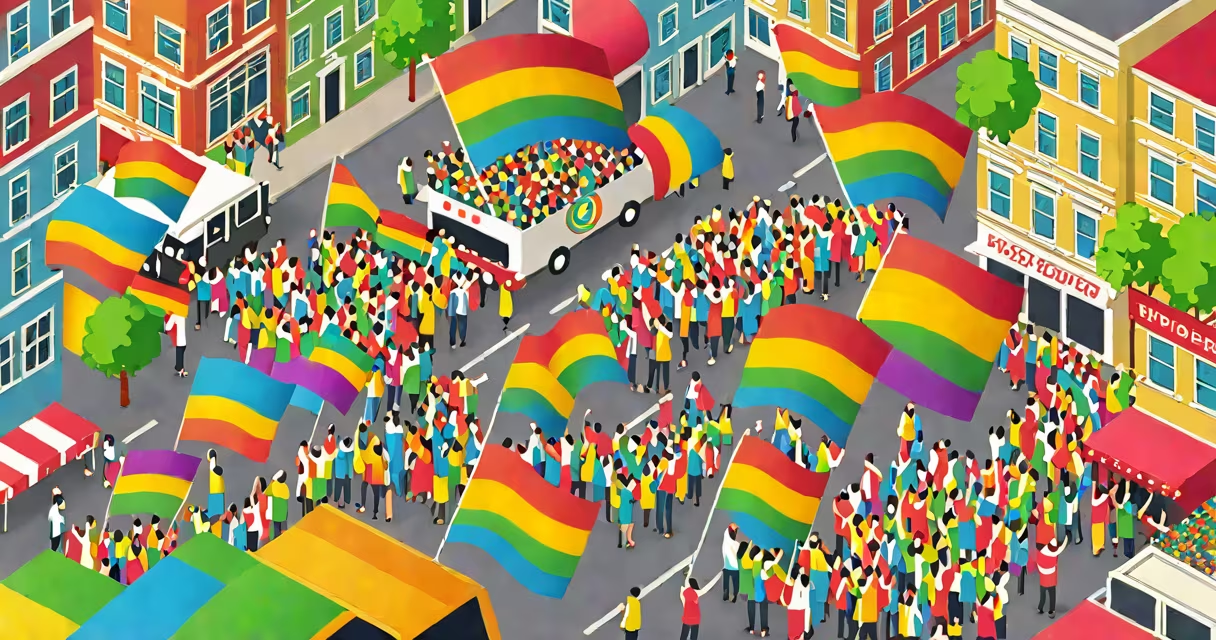
LGBTQ pride is an annual global observance that affirms the identities, rights, and resilience of lesbian, gay, bisexual, transgender, queer, and other gender and sexual minority people. It centers on visibility, community, and political resistance, rooted in historical acts of defiance like the 1969 Stonewall Uprising.
Pride began as a protest movement, not a celebration. The term "pride" emerged from the idea that being LGBTQ is not shameful-it is valid, worthy of dignity, and deserving of public recognition. Today, pride events include parades, rallies, art exhibitions, educational workshops, and memorials. They occur most widely in June, designated as Pride Month in many countries, especially the United States.
The core purpose of LGBTQ pride is to counteract stigma, celebrate diversity, and advocate for equal rights. It is both a personal affirmation and a collective act of political resistance. Events vary by location-some are large public marches, others are intimate community gatherings-but they share a common goal: to make LGBTQ lives visible and respected.
Pride operates through coordinated public events that blend celebration with advocacy. Organizers plan logistics such as permits, security, vendor spaces, and stage programming. Participants wear rainbow colors, display flags, and carry signs with slogans like "Love is Love" or "Trans Lives Matter." These symbols communicate solidarity and identity.
Events often include speeches from activists, politicians, and community leaders. In 2023, New York City's Pride Parade featured remarks from Governor Kathy Hochul and LGBTQ youth advocates. Performances range from drag shows to live music, drawing tens of thousands to city streets. Attendance numbers reflect both cultural acceptance and ongoing challenges-New York's event drew 2.5 million people in 2022, according to the NYC Parks Department.
Practices differ by region. In countries like Canada and Germany, pride events are state-supported and integrated into national civic life. In places like Uganda and Russia, pride is banned or met with violent crackdowns. In 2022, Russian police arrested over 1,000 people during a planned pride event in Moscow, per Human Rights Watch reports.
The rainbow flag, designed by Gilbert Baker in 1978, is the most recognized symbol. Originally eight colors, it was simplified to six-red, orange, yellow, green, blue, and purple-to represent diversity, life, healing, sunlight, nature, and harmony. The flag is flown at pride events worldwide, including on government buildings in cities like San Francisco and Toronto.
Other symbols include the pink triangle (originally a Nazi label for gay men, reclaimed as a symbol of resistance), the transgender flag (designed by Monica Helms in 1999), and the intersex flag (created in 2001). These flags are displayed alongside the rainbow flag to emphasize intersectionality within the LGBTQ community.
| Type of Event | Focus | Example Location | Attendance (Recent) |
|---|---|---|---|
| Parade | Public visibility, entertainment | New York City | 2.5 million (2022) |
| Rally | Political advocacy, speeches | Washington, D.C. | 200,000 (2023) |
| Community Festival | Education, arts, inclusion | San Diego | 150,000 (2022) |
| Quiet Gathering | Healing, support, reflection | Small towns, rural areas | Varies (often under 100) |
Not all pride events are loud or public. Some communities hold small, private gatherings focused on mental health, grief, or spiritual connection. In rural areas, pride may take the form of a single evening at a local library or church basement. These events serve populations who face isolation or fear of violence.
Pride is used to assert presence in spaces where LGBTQ people have historically been erased or marginalized. It is held in schools, workplaces, hospitals, and public squares. In 2021, the American Psychological Association reported that LGBTQ youth who participated in pride events showed lower rates of depression and suicidal ideation compared to those who did not.
Corporations now sponsor pride events, sometimes with mixed results. While corporate involvement increases visibility, critics argue it dilutes political messaging. In 2022, a backlash occurred when a major tech company promoted a rainbow-colored product during Pride Month while lobbying against anti-trans legislation. The controversy highlighted tensions between commercialization and activism.
A lesser-known fact: Pride was not always celebrated in June. The month was chosen because of the June 28, 1969, Stonewall Uprising in New York City. Police raided the Stonewall Inn, a gay bar, sparking days of protests. This event became a catalyst for organized LGBTQ rights movements. The first pride march was held in 1970 on the anniversary of Stonewall.
Many assume pride is solely about partying. That's incorrect. While joy is central, pride is grounded in history and struggle. The original 1970 marches included demands for legal protection, healthcare access, and an end to police brutality-issues still relevant today.
Another misconception: pride is only for gay men. It is not. The acronym LGBTQ includes multiple identities. Transgender people, intersex individuals, and nonbinary people have distinct experiences and needs. Pride events increasingly feature dedicated panels, medical services, and safe spaces for trans and nonbinary attendees.
There's also confusion about whether pride is religious. Some faith groups host inclusive pride events. Others oppose them. The Catholic Church, for example, officially opposes same-sex marriage but allows individual parishes to participate in pride celebrations. In 2023, a Catholic parish in Portland, Oregon, hosted a pride Mass attended by over 1,200 people.
I once attended a pride event in Austin, Texas, where a local drag performer led a workshop on pronoun usage for teens. The room filled with students who had never heard terms like "they/them" or "ze/zir" before. By the end, several participants said they felt seen for the first time. That moment reminded me that pride isn't just about flags-it's about language, belonging, and safety.
Understanding what is LGBTQ pride requires recognizing it as both a celebration and a call to action. It is not a passive display of identity. It is a public declaration that LGBTQ lives matter-and that we demand justice, equity, and love.