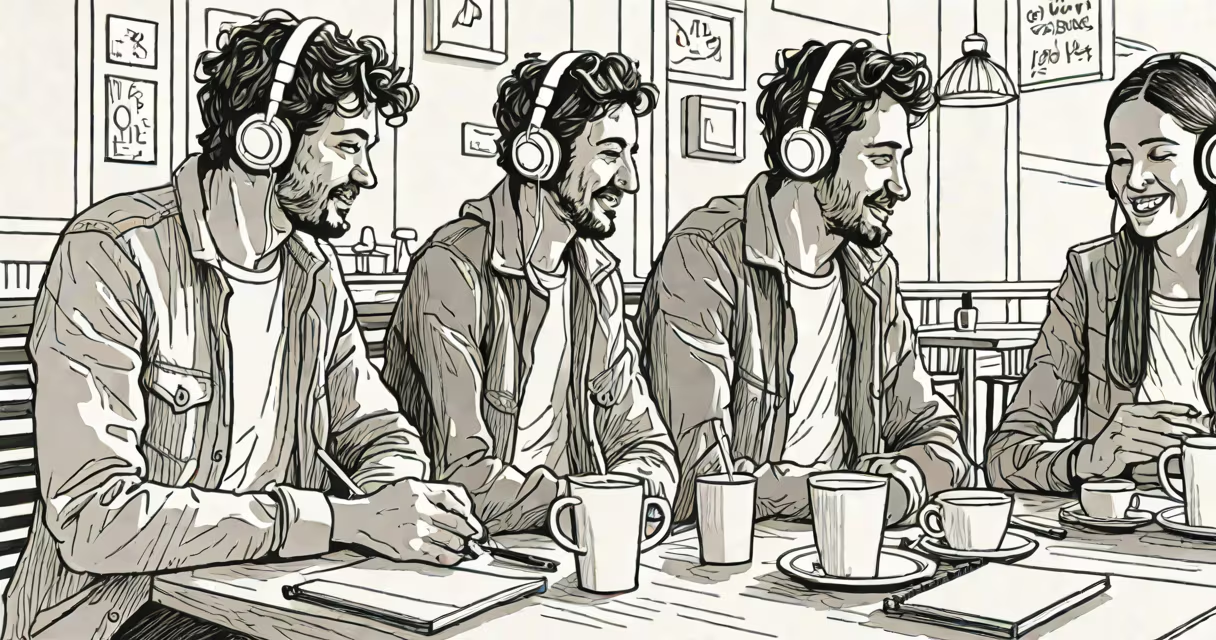
Language exchange is a reciprocal method where two individuals teach each other their native languages through live conversation, using mutual benefit to accelerate fluency. One person speaks their native tongue while the other practices speaking it, then they switch roles. This method builds real-world communication skills faster than studying grammar alone.
Unlike classroom settings or app-based drills, language exchange relies on authentic interaction. Participants speak naturally, correct each other gently, and adapt to accents, slang, and cultural context. The goal isn't perfection-it's functional understanding and confidence in real situations.
For example, a Spanish speaker learning English might meet with an American who wants to learn Spanish. They spend 30 minutes speaking only English, then switch to Spanish for another 30 minutes. Over time, both improve pronunciation, vocabulary, and conversational flow.
Participants agree on a shared time and format-face-to-face, video call, or audio-only. They set ground rules: one language per session, minimal translation, and focus on speaking. Most exchanges last 30 to 60 minutes, enough to build momentum without fatigue.
Each session follows a simple structure: warm-up (introductions or small talk), core activity (discussing a topic like travel, food, or hobbies), and wrap-up (feedback and new goals). A common mistake is letting one person dominate. To avoid this, partners take turns leading topics or use prompts like "Tell me about your favorite holiday."
Some platforms assign partners based on language pair, location, and skill level. Others allow free matching. The key is consistency-meeting weekly keeps momentum and reinforces retention. Research from the University of Michigan shows learners who engage in regular conversation retain 40% more vocabulary than those who rely solely on flashcards.
Not all language exchanges are the same. The most effective models balance structure with flexibility. Here's how they differ:
| Type | Format | Best For | Example |
|---|---|---|---|
| Peer-to-Peer | One-on-one, scheduled sessions | Personalized feedback, steady progress | A German student meets a Japanese speaker twice a week via Zoom. |
| Group Exchange | Multiple pairs in a single session | Low pressure, diverse exposure | An online forum hosts a weekly event with 10 language pairs rotating every 15 minutes. |
| App-Matched | Automated pairing via language apps | Convenience, global reach | Users on Tandem or HelloTalk connect instantly based on shared interests. |
Peer-to-peer exchanges offer the deepest connection. Group formats expose learners to multiple accents and dialects. App-matched exchanges provide instant access but risk mismatched expectations-some users want casual chat, others seek formal tutoring.
One non-obvious fact: successful exchanges often involve setting a theme per session. Instead of "talk about your job," try "describe your dream vacation." Themes reduce anxiety and spark richer dialogue. A 2022 study published in Language Learning Journal found that themed exchanges led to 27% higher engagement compared to open-ended conversations.
Many assume language exchange is just chatting. It's not. Without structure, sessions devolve into idle banter or one-sided teaching. The imbalance kills motivation. One person may dominate, leaving the other silent and discouraged.
Another myth: "I'll learn faster if my partner speaks slowly." Slowing down doesn't improve comprehension-it distorts natural speech patterns. Native speakers don't adjust their pace for learners in real life. Instead, use clear, simple sentences and ask for repetition when needed.
I once joined a French-English exchange where my partner spoke quickly and used idioms. After five sessions, I felt overwhelmed. I switched to a beginner-friendly platform and started using a shared document to track new words. Within three months, I could follow news broadcasts and hold basic debates. The difference wasn't talent-it was consistent, structured practice.
Traditional language learning focuses on isolated elements: grammar rules, vocabulary lists, listening exercises. These build knowledge but rarely lead to spontaneous speech. Language exchange bridges that gap by forcing real-time adaptation.
For instance, practicing how to apologize in Japanese during a role-play exchange helped me understand cultural nuance beyond textbook phrases. I learned that saying "sumimasen" isn't just "sorry"-it implies humility and responsibility. That insight came from hearing how native speakers used it in context, not from memorizing definitions.
Language exchange isn't just about speaking-it's about thinking in the target language. When you're forced to respond without translating mentally, your brain begins forming direct associations between words and meanings. This reduces hesitation and increases naturalness.
What is language exchange? It's a practical, human-centered way to gain fluency by trading skills with someone else. It turns passive learning into active participation. It's not magic-but it's far more effective than studying alone.