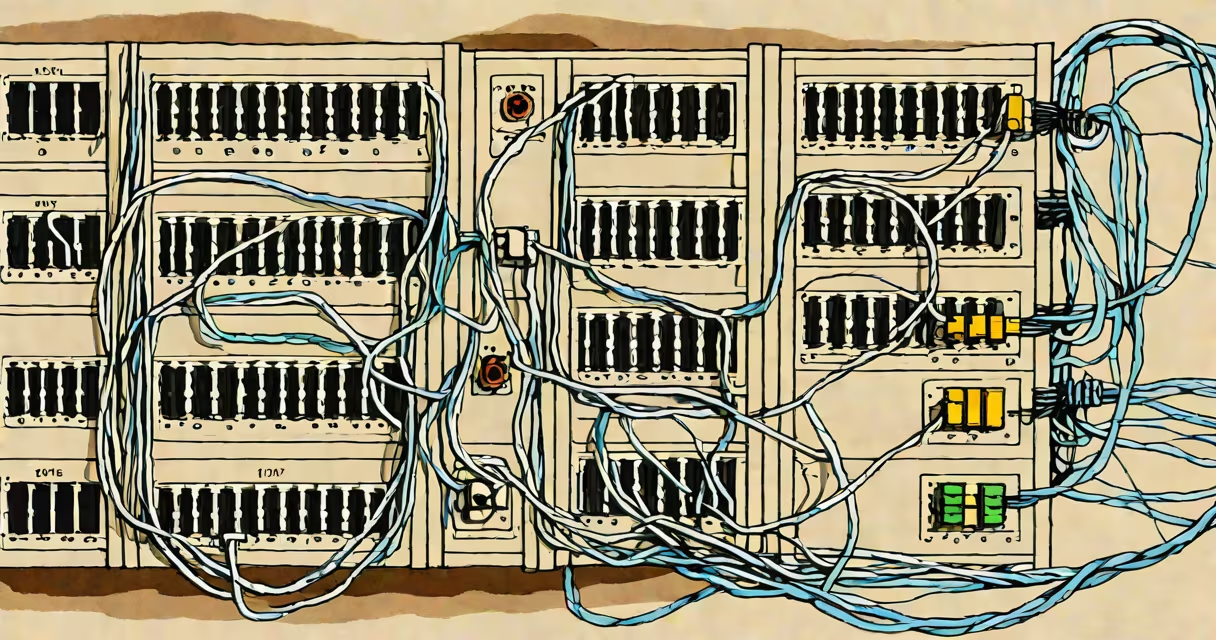
Link aggregation in networking combines multiple physical Ethernet connections into a single logical link to increase bandwidth, improve fault tolerance, and enable load balancing between devices. It's commonly used between switches and servers or between core and distribution switches.
When two or more network interfaces operate together under a single logical interface, they form a bonded connection. This allows traffic to be distributed across all active links, reducing congestion and improving throughput. If one physical link fails, traffic automatically reroutes through the remaining links, maintaining connectivity without interruption.
Link aggregation is standardized under IEEE 802.3ad (also known as LACP - Link Aggregation Control Protocol), which enables automatic negotiation between devices. Without LACP, static aggregation modes require manual configuration and do not detect link failures dynamically.
Link aggregation operates at Layer 2 of the OSI model. When enabled, the switch or router treats multiple physical ports as a single logical port. Traffic is split across the member links using hashing algorithms based on source/destination MAC addresses, IP addresses, or port numbers.
For example, if a server connects to a switch via four 1 Gbps Ethernet links, the combined bandwidth becomes 4 Gbps. Traffic flows are distributed across the links based on the hash of packet headers. This prevents any single link from becoming a bottleneck.
If one of the four links fails, the system detects the loss within milliseconds. The remaining three links continue forwarding traffic at reduced capacity. Once the failed link is restored, traffic resumes across all four links. This behavior ensures continuous service during hardware issues.
There are two primary methods for configuring link aggregation: static (manual) and changing (LACP-enabled).
| Mode | Protocol Used | Failover Speed | Use Case |
|---|---|---|---|
| Static (Manual) | None | Slow (depends on polling) | Simple setups where devices don't support LACP |
| Changing (LACP) | IEEE 802.3ad | Fast (real-time detection) | Enterprise networks requiring high availability |
Most modern switches and NICs support both modes. However, LACP is preferred because it actively monitors link status and adjusts traffic distribution in real time. Static mode requires manual setup and doesn't recover gracefully from link failures unless configured with keepalive mechanisms.
A common mistake is assuming that all aggregated links must have identical speed and duplex settings. While best practice recommends matching these parameters, many switches allow mixed-speed links (e.g., 1 Gbps and 10 Gbps) in a single aggregation group-but performance is limited to the slowest link.
Link aggregation is widely deployed in data centers, enterprise networks, and cloud infrastructure. It's essential for connecting servers to storage arrays, linking core switches, and linking network appliances such as firewalls and load balancers.
For instance, a web server handling 3 Gbps of incoming traffic might use two 1 Gbps links aggregated into a single 2 Gbps logical interface. If one link fails, the other continues serving traffic-preventing downtime during maintenance or cable damage.
Another key use case is avoiding single points of failure. A typical data center design uses dual-core switches with redundant paths. Link aggregation helps even if a single cable or switch port fails, the connection remains active. This is critical for applications requiring 99.99% uptime.
According to Cisco's documentation, link aggregation reduces the risk of network outages caused by cabling faults or port failures. In environments with high-throughput demands-such as video streaming or financial trading systems-aggregation provides predictable performance under load.
Many users assume that link aggregation increases the maximum speed of a single flow. That's incorrect. A single TCP stream cannot exceed the bandwidth of one physical link. For example, a 1 Gbps link cannot carry more than 1 Gbps of data per session-even if it's part of a 4 Gbps aggregated link.
Instead, aggregation improves throughput by distributing multiple flows across different links. Two separate file transfers from a client to a server can each use a different physical link, resulting in higher total transfer rates.
Another misconception is that link aggregation replaces routing or VLANs. It does not. Aggregated links still require proper VLAN tagging, routing configurations, and access control lists. They're a transport layer enhancement, not a replacement for network segmentation.
I once observed a misconfigured aggregation setup in a small business network. Four 1 Gbps links were bonded between a firewall and a core switch. But the firewall's interface was set to static mode while the switch used LACP. The result? Half the links remained inactive due to mismatched protocols. After aligning both ends to LACP, bandwidth utilization improved from 50% to nearly 95%.
Link aggregation in networking is not about boosting individual connection speeds-it's about combining multiple physical links into a resilient, high-capacity logical path. It enhances reliability, balances loads, and prevents downtime. Proper configuration requires consistent settings and protocol alignment between endpoints.
When implemented correctly, link aggregation delivers measurable improvements in network performance and stability. It's a foundational technique in modern data center and enterprise designs.