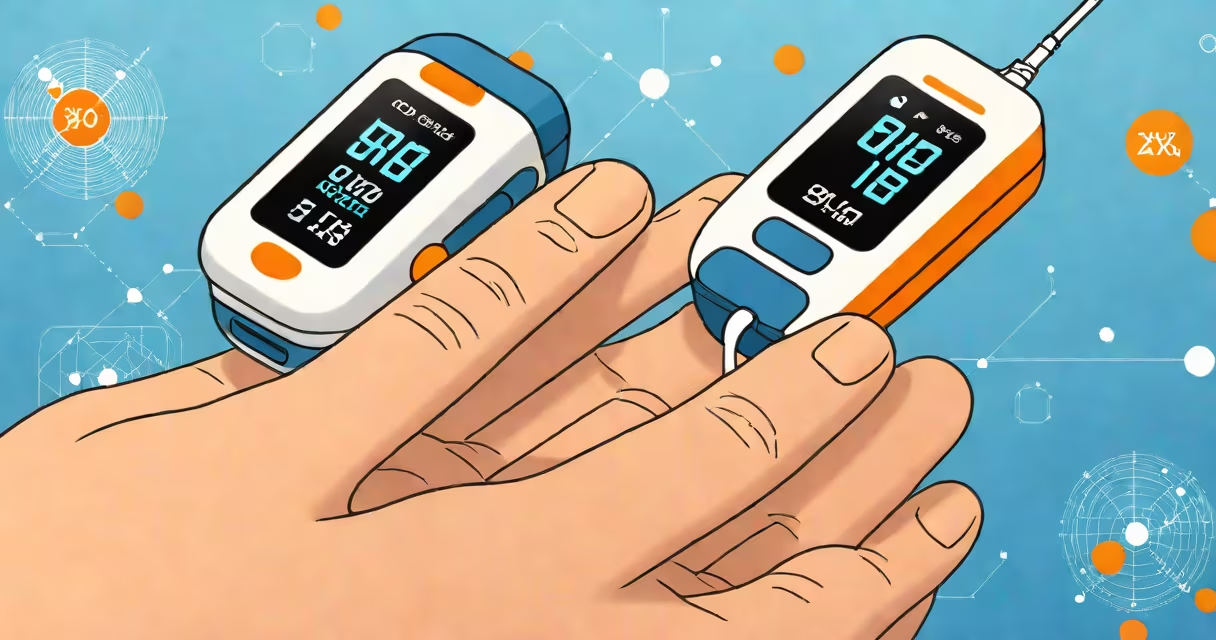
A normal body oxygen level, measured as peripheral capillary oxygen saturation (SpO2), falls between 95% and 100% in healthy individuals breathing room air at sea level. This range reflects adequate oxygen delivery to tissues and organs.
SpO2 is determined non-invasively using a pulse oximeter-a small device clipped to the fingertip or earlobe. The device emits light through the skin and measures how much oxygen binds to hemoglobin in red blood cells. A reading below 92% indicates hypoxemia, a condition requiring medical evaluation.
The American Thoracic Society defines normal arterial oxygen saturation (PaO2) as 80-100 mmHg in arterial blood tests. SpO2 correlates closely with PaO2, making pulse oximetry a reliable screening tool. Values below 90% are associated with increased risk of complications during surgery, hospitalization, and respiratory failure.
Pulse oximeters use two wavelengths of light-red and infrared-to calculate the ratio of oxygenated to deoxygenated hemoglobin. The device detects changes in blood volume with each heartbeat, filtering out motion artifacts and ambient light interference.
For clinical confirmation, doctors draw arterial blood gas (ABG) samples from an artery, usually the radial artery in the wrist. ABG testing provides precise measurements of PaO2, partial pressure of carbon dioxide (PaCO2), pH, and bicarbonate. While more accurate, ABG testing is invasive and reserved for critical care settings.
Home devices like finger-worn oximeters are widely available and cost $20-$60. They are useful for tracking trends during illness, high-altitude travel, or chronic lung disease management. However, accuracy varies-some models report readings up to 3% higher or lower than lab results under conditions like poor circulation or nail polish.
There are two primary ways to assess oxygen levels: SpO2 (peripheral capillary oxygen saturation) and PaO2 (arterial oxygen tension). SpO2 is measured externally; PaO2 requires a blood draw.
| Measurement Type | Method | Normal Range | Use Case |
|---|---|---|---|
| SpO2 | Pulse oximeter (non-invasive) | 95%-100% | Home monitoring, emergency triage, sleep studies |
| PaO2 | Arterial blood gas test (invasive) | 80-100 mmHg | Critical care, pre-anesthesia assessment, ICU monitoring |
SpO2 readings may lag behind actual changes in arterial oxygenation during rapid shifts, such as during acute asthma attacks or pulmonary embolism. For this reason, clinicians often combine SpO2 with clinical signs-like breathlessness, confusion, or cyanosis-to assess severity.
Oxygen is essential for cellular respiration. Without sufficient oxygen, mitochondria cannot produce ATP efficiently, leading to tissue damage within minutes. The brain is especially sensitive-neurons begin to die after four to six minutes without oxygen.
Chronic low oxygen levels, even mild ones, contribute to fatigue, impaired concentration, and long-term cardiovascular strain. A 2021 study published in Chest found that patients with persistent SpO2 below 92% had a 3.4-fold higher risk of hospitalization due to respiratory events over 12 months compared to those with stable levels above 94%.
During sleep, oxygen levels naturally dip slightly. A healthy person may see SpO2 drop to 90% during REM sleep, but recovery occurs quickly upon waking. Consistently low levels during sleep-especially below 90% for more than 5% of total sleep time-are a red flag for obstructive sleep apnea and require further evaluation.
Many people assume that a reading of 94% is "normal" because it's close to 95%. But according to the National Institutes of Health (NIH), SpO2 values below 95% should prompt investigation, particularly in individuals with heart or lung disease.
Another misconception is that pulse oximeters work reliably in all conditions. In reality, factors like cold extremities, low perfusion, dark nail polish, or motion reduce accuracy. A 2020 review in JAMA Internal Medicine showed that oximeters underestimated SpO2 by an average of 2.3% in patients with poor circulation, leading to false reassurance.
I once used a consumer-grade oximeter during a hiking trip at 10,000 feet elevation. My SpO2 dropped to 88%, which triggered a warning. I descended 500 feet and rechecked-reading rose to 93%. This confirmed altitude-induced hypoxia, which resolved with acclimatization. The device caught a real physiological change before symptoms developed.
SpO2 below 90% warrants immediate attention. Below 88%, especially with symptoms like shortness of breath, chest pain, dizziness, or confusion, requires emergency care. These values suggest inadequate oxygenation and potential organ stress.
Individuals with chronic obstructive pulmonary disease (COPD), pulmonary fibrosis, or congenital heart defects often maintain baseline SpO2 around 90-92%. For them, a drop below their personal baseline-even if still above 90%-can signal worsening disease and may require treatment adjustments.
Normal GGT levels provide context for liver function, but they don't reflect oxygen status. Similarly, a reading of 94% is not automatically safe-it depends on baseline health, activity level, and duration of the drop. A stable 94% in someone with COPD may be acceptable; a sudden drop from 98% to 94% in a healthy adult suggests early respiratory compromise.
Normal body oxygen level is 95%-100% in healthy adults. Values below 92% indicate clinically significant hypoxemia. Pulse oximetry offers quick, non-invasive insight but has limitations in accuracy under certain conditions. Always interpret SpO2 in context-consider baseline health, symptoms, and environmental factors like altitude.
Consistent monitoring helps detect early declines before irreversible damage occurs. Routine checks during illness, surgery, or high-altitude exposure are standard practice. When in doubt, consult a healthcare provider-not a device.