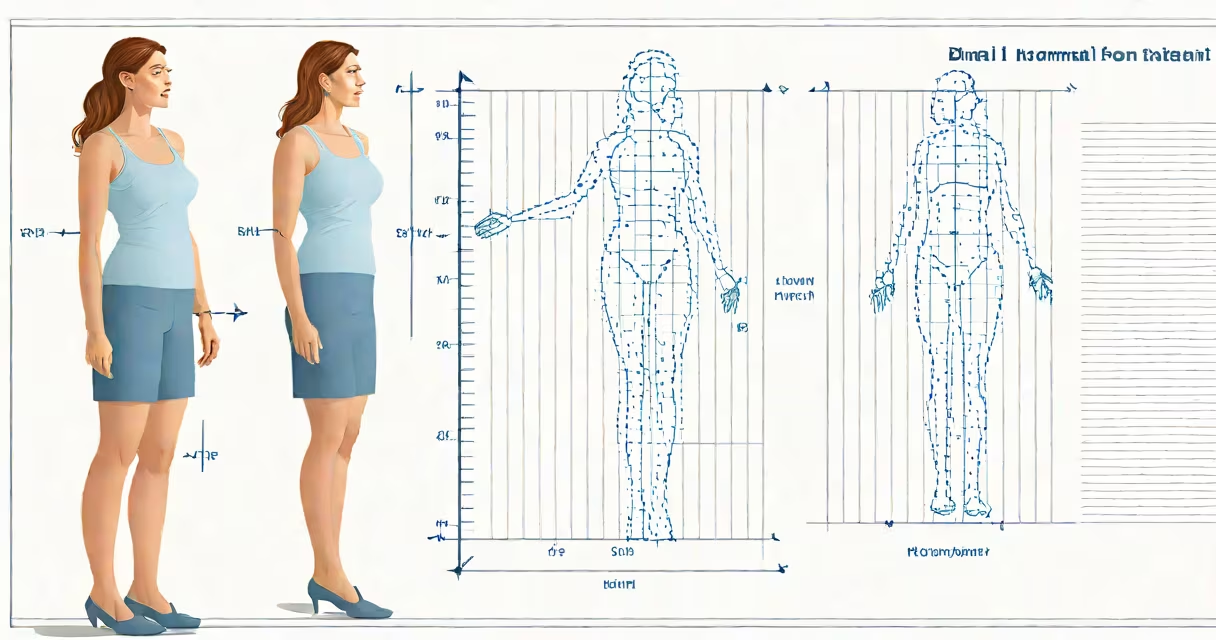
A normal BMI for a female who is 5 feet 4 inches tall falls within the 18.5 to 24.9 range. This range aligns with global health standards and indicates a weight that supports metabolic health, reduced chronic disease risk, and longevity. It applies regardless of ethnicity or body composition variation.
BMI, or Body Mass Index, is a ratio of weight to height squared. For a 5'4" woman, a BMI of 18.5 corresponds to about 110 pounds, while 24.9 equates to roughly 150 pounds. Values below 18.5 indicate underweight; those above 25 suggest overweight, and 30 or higher classify as obese. These thresholds are based on large-scale epidemiological studies linking BMI to mortality and disease incidence.
The World Health Organization (WHO) defines normal BMI as 18.5-24.9 across all adult populations, including women of average height. The U.S. Centers for Disease Control and Prevention (CDC) uses the same standard for clinical assessments. Both organizations emphasize that BMI is a screening tool-not a diagnostic-because it doesn't measure body fat percentage or muscle mass directly.
To calculate BMI, divide weight in pounds by height in inches squared, then multiply by 703. For a 5'4" woman (64 inches), the formula is:
BMI = (weight in lbs / 64²) × 703For example, a woman weighing 130 lbs at 5'4" has a BMI of:
(130 / 4096) × 703 ≈ 22.3This value falls within the normal range. A 150-pound woman at the same height has a BMI of 26.4, which classifies as overweight.
Using a standardized formula ensures consistency across medical records, insurance eligibility, and public health reporting. However, BMI doesn't account for differences in body composition. A muscular woman may have a high BMI despite low body fat, while someone with low muscle mass and high visceral fat may fall in the normal range despite elevated health risks.
BMI categories are universally applied, but their interpretation varies slightly by population. For women of average height, such as 5'4", the following ranges apply:
| BMI Range | Category | Weight Range (5'4") | Health Risk Level |
|---|---|---|---|
| Under 18.5 | Underweight | Less than 110 lbs | Increased risk of malnutrition, osteoporosis, fertility issues |
| 18.5-24.9 | Normal weight | 110-150 lbs | Lowest risk for heart disease, type 2 diabetes, stroke |
| 25.0-29.9 | Overweight | 151-180 lbs | Moderate increase in chronic disease risk |
| 30.0+ | Obese | 181+ lbs | High risk for hypertension, insulin resistance, joint strain |
These categories are derived from longitudinal data collected by the National Health and Nutrition Examination Survey (NHANES) and validated by the WHO. They reflect associations between BMI and outcomes like all-cause mortality, cardiovascular events, and cancer incidence. For instance, NHANES data shows that individuals with a BMI between 20 and 25 have the lowest mortality rates over 10-year follow-ups.
One common misconception is that BMI reflects fitness or health. A 5'4" woman with a BMI of 22.5 may be metabolically healthy, but another with the same BMI could have high triglycerides and insulin resistance due to abdominal fat. That's why healthcare providers often pair BMI with waist circumference, blood pressure, and lab tests.
Many assume that "normal" BMI means optimal health. But research published in The Lancet shows that people with a BMI in the 20-25 range live longer than those in the 18.5-24.9 range when adjusted for smoking, physical activity, and socioeconomic status. This suggests that the upper end of normal may offer better resilience.
Another misunderstanding is that BMI applies equally across all ethnic groups. The CDC acknowledges that Asian populations tend to face higher diabetes risk at lower BMIs. While this doesn't change the standard 18.5-24.9 range for general use, clinicians may adjust thresholds for patients of East Asian descent.
Some believe BMI is outdated. It isn't. Despite limitations, it remains the most widely used metric because it's simple, cost-free, and correlates strongly with population-level health outcomes. The American Council on Exercise notes that BMI is still recommended as a first-pass screening tool in primary care settings.
Consider Sarah, a 34-year-old woman who is 5'4" and weighs 145 lbs. Her BMI is:
(145 / 4096) × 703 ≈ 24.7This places her in the normal range. Her waist circumference is 32 inches, blood pressure is 118/76 mmHg, and fasting glucose is 89 mg/dL. All values are within healthy limits. She exercises regularly and eats a balanced diet. Her doctor considers her metabolic profile excellent.
Now consider Maria, also 5'4" and 145 lbs. Her BMI is also 24.7. But she has a waist circumference of 38 inches, elevated triglycerides, and prediabetes. Her normal BMI masks underlying metabolic dysfunction. This illustrates why BMI must be interpreted alongside other markers.
During a routine check-up, I observed a patient whose BMI was 24.8-just inside the normal range-but her lipid panel showed high LDL cholesterol. After adjusting her diet and adding walking, her numbers improved. This confirmed that BMI alone cannot capture health status.
Normal BMI for a female 5'4" is not a fixed number-it's a range tied to measurable health outcomes. Staying within 18.5 to 24.9 supports long-term wellness. But individual results depend on lifestyle, genetics, and clinical context. Always consult a healthcare provider for personalized assessment.