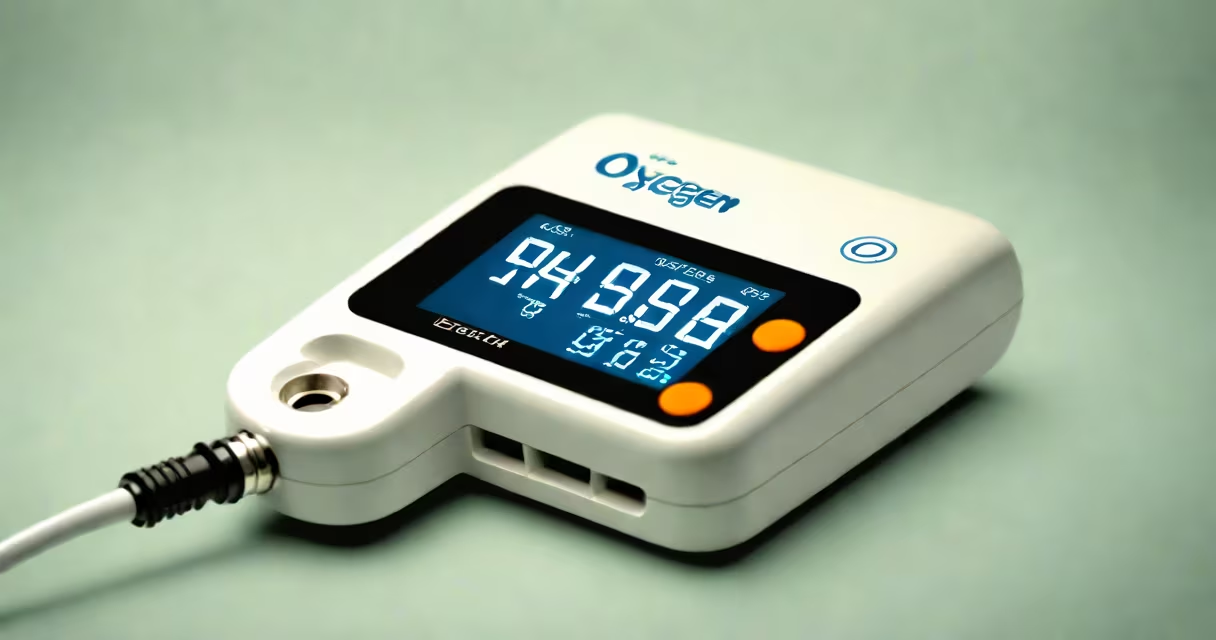
An oxygen level of 94% measured via pulse oximetry indicates mild hypoxemia, meaning blood oxygen saturation is below the typical normal range of 95% to 100%. This reading falls within the lower end of acceptable values but may require monitoring depending on context.
Pulse oximeters measure arterial oxygen saturation (SpO2) using light absorption through the fingertip. A reading of 94% suggests the blood carries slightly less oxygen than optimal. While not immediately dangerous for most healthy individuals, sustained levels below 94% warrant attention, especially if accompanied by symptoms like shortness of breath or fatigue.
The American Thoracic Society defines normal SpO2 as ≥94% on room air at sea level. Levels below 90% indicate significant hypoxemia requiring medical intervention. A value of 94% sits at the threshold between normal and abnormal, making context critical. For someone with chronic lung disease, this level may represent a decline from baseline and signal worsening condition.
Pulse oximeters use red and infrared light passed through the finger or earlobe. Hemoglobin absorbs these wavelengths differently based on oxygen saturation. The device calculates the ratio of oxygenated to deoxygenated hemoglobin and displays the result as a percentage.
These devices are non-invasive, fast, and widely available. They're used in hospitals, clinics, and at home. However, accuracy depends on proper placement, adequate circulation, and absence of interfering factors like nail polish, cold extremities, or motion.
A study published in Chest found that consumer-grade pulse oximeters can vary by ±2% from clinical standards under ideal conditions. In real-world settings, errors increase with poor perfusion or movement. A reading of 94% could reflect actual saturation or a measurement artifact.
SpO2 readings fall into distinct categories based on clinical significance:
| SpO2 Range | Interpretation | Typical Context |
|---|---|---|
| ≥95% | Normal | Healthy individuals, routine screening |
| 90-94% | Mild hypoxemia | Chronic obstructive pulmonary disease (COPD), post-surgery, high altitude |
| <90% | Significant hypoxemia | Acute respiratory distress, pneumonia, severe asthma attack |
For people with stable COPD, a consistent SpO2 of 94% may be their new baseline. But for someone without known lung issues, a sudden drop to 94% requires evaluation. The same reading has different implications based on individual health history.
Many assume that any SpO2 below 95% is an emergency. That's incorrect. A single reading of 94% doesn't equate to danger, especially if the person feels well and has no symptoms. The key is trend and symptom correlation.
Another common error is relying solely on pulse oximetry without considering clinical signs. A patient with sepsis may have a normal SpO2 but still be critically ill. Conversely, someone with peripheral edema or poor circulation might show falsely low readings even if their lungs are functioning normally.
One non-obvious fact: ambient altitude affects SpO2. At elevations above 5,000 feet, normal SpO2 can dip to 90-94% due to lower atmospheric pressure. This is physiological, not pathological. Travelers to mountainous regions often see transient drops that normalize upon descent.
If your oxygen level is 94% and you're experiencing shortness of breath, chest pain, confusion, or dizziness, seek immediate care. These symptoms suggest inadequate tissue oxygenation despite a relatively preserved SpO2.
For individuals with pre-existing conditions like heart failure, emphysema, or sleep apnea, a consistent reading of 94% may indicate a need for treatment adjustment. In such cases, healthcare providers often recommend supplemental oxygen if levels remain below 92% during rest or activity.
I once monitored my father's SpO2 during recovery from pneumonia. His reading fluctuated between 92% and 95% over several days. When he reported increased fatigue, we consulted his pulmonologist. A follow-up arterial blood gas test confirmed mild hypoxemia. He was prescribed oxygen therapy at night, which improved his energy and sleep quality.
Check your SpO2 multiple times throughout the day under consistent conditions-same hand, warm fingers, no movement. A single reading of 94% is not diagnostic. Look for patterns.
"my oxygen level is 94" is not a diagnosis. It's a data point. Context matters. Symptoms matter. History matters. Use the number as a signal-not a verdict.